

By making careful observations of the growth of a layer of molecules as they gradually cover the surface of a small silicon rectangle, researchers from the National Institute of Standards and Technology (NIST) and North Carolina State University (NCSU) have gained basic insights into how self-propagating self-assembly wave fronts develop and have produced the first experimental verification of recently improved theoretical models of such systems.

There's a war that's brewing and you may not be aware of it. It's right under our noses but it has been kept out of the mainstream media due to a growing web of deniers and obfuscaters who regard misinformation and doubt as allies. Like many insurrections it has been funded quietly but it's effects can be devastating to people in the war zones, like the line that stretches out the door at Tully's.

That war, my friends, is the War On Coffee.

Coffee is good. Coffee is good for you. Science has proved this on numerous occasions yet time and again I see sources in the mainstream media trying to establish doubt about the total awesomeness of coffee.

In the first trial of its kind in the world, 60 patients who have recently suffered a major heart attack will be injected with selected stem cells from their own bone marrow during routine coronary bypass surgery.

The Bristol trial will test whether the stem cells will repair heart muscle cells damaged by the heart attack, by preventing late scar formation and hence impaired heart contraction.

Dr Raimondo Ascione from the University of Bristol and colleagues at the Bristol Heart Institute (BHI) have been awarded a grant of £210,000 from the British Heart Foundation (BHF) to conduct the clinical trial.

Satellite tracking software freely available on the Internet and a smattering of textbook physics could be used by any organisation that can get hold of an intermediate range rocket to mount an unsophisticated attack on military or civilian satellites. Such an attack would require modest engineering capability and only a limited budget.

A terrorist organisation or rogue state could threaten essential satellite systems, say Adrian Gheorghe of Old Dominion University Norfolk, in Virginia, USA and Dan Vamanu of "Horia Hulubei" National Institute of Physics and Nuclear Engineering, in Bucharest, Romania. Military satellites, global positioning systems, weather satellites and even satellite TV systems could all become victims of such a simple attack.

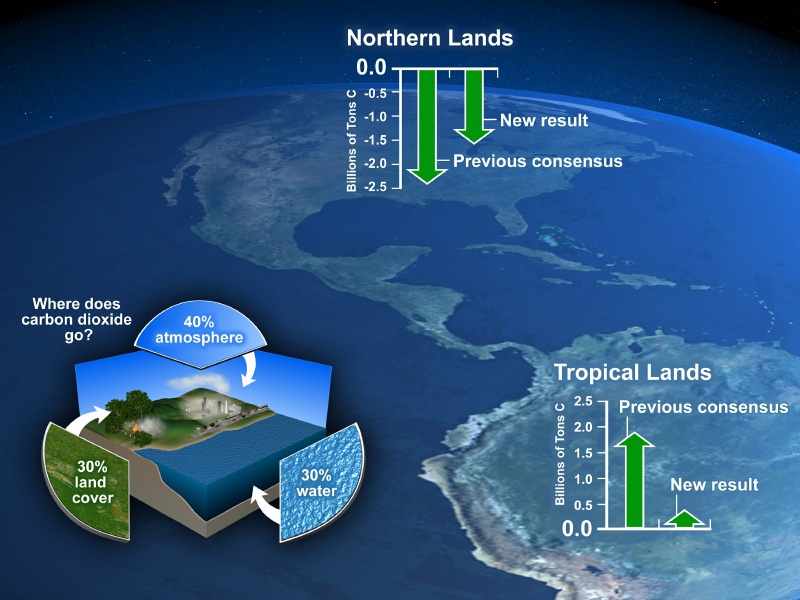
Forests in the United States and other northern mid- and upper-latitude regions are playing a smaller role in offsetting global warming than previously thought, according to a new study.

The study, which sheds light on the so-called missing carbon sink, concludes that intact tropical forests are removing an unexpectedly high proportion of carbon dioxide from the atmosphere, thereby partially offsetting carbon entering the air through industrial emissions and deforestation.

"This research fills in another piece of the complex puzzle on how the Earth system functions," said Cliff Jacobs of NSF's Division of Atmospheric Sciences.

We deal with ice every day. Yet we don't all there is to know about it. Now Dr Angelos Michaelides and Professor Karina Morgenstern say they have made a breakthrough in understanding how ice works.

Dr Michaelides said, “We are all familiar with the freezing of water. It features prominently in our daily lives, from fridge freezers to winter snow. Despite all this, the question of how individual water molecules come together and give birth to ice crystals remains mysterious.”

Understanding the process of ice nucleation at a molecular level also takes us a step closer to understanding the mysterious process through which ice forms around microscopic dust particles in the upper atmosphere.

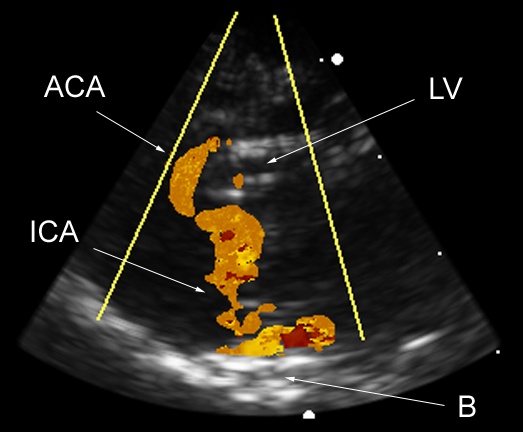
Biomedical engineers at Duke's Pratt School of Engineering have adapted a three-dimensional ultrasound scanner that might guide minimally invasive brain surgeries and provide better detection of a brain tumor’s location.

The “brain scope,” which is inserted into a dime-sized hole in the skull, may be particularly useful for the bedside evaluation of critically ill patients when computed tomography (CT) and magnetic resonance imaging (MRI) equipment is unavailable, the researchers said.

Brain surgeons now rely primarily on two-dimensional images produced by MRI or ultrasound, said Edward Light, a research and development engineer in the biomedical engineering department at Duke. "The problem is that without 3-D, you could miss something," he said.

Following up on my initial comments, my first two posts in Nature Precedings have appeared. Most people have been posting Powerpoint presentations so I started there with a recent presentation at the American Chemical Society about Open Notebook Science. Open Notebook Science Using Blogs and Wikis (doi:10.1038/npre.2007.39.1) Next, I posted an update on the CombiUgi project by basically combining two blog posts (one and

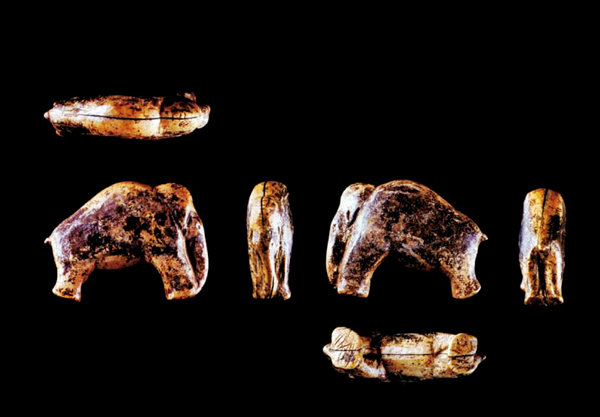
Archaeologists from Tübingen report they have found parts of five figurines from the Ice Age at Vogelherd Cave in southwestern Germany. The figurines were carved from ivory and are of woolly mammoths, date to 35,000 years ago and count among the oldest and most impressive examples of figurative artworks from the Ice Age.

A particularly spectacular find is the first entirely complete figurine from the Swabian Jura depicting a finely carved mammoth. The figurines also include well preserved remains of a lion, a fragment of an additional mammoth and two as yet unidentified representations.


CLICK IMAGE FOR LARGER SIZE.

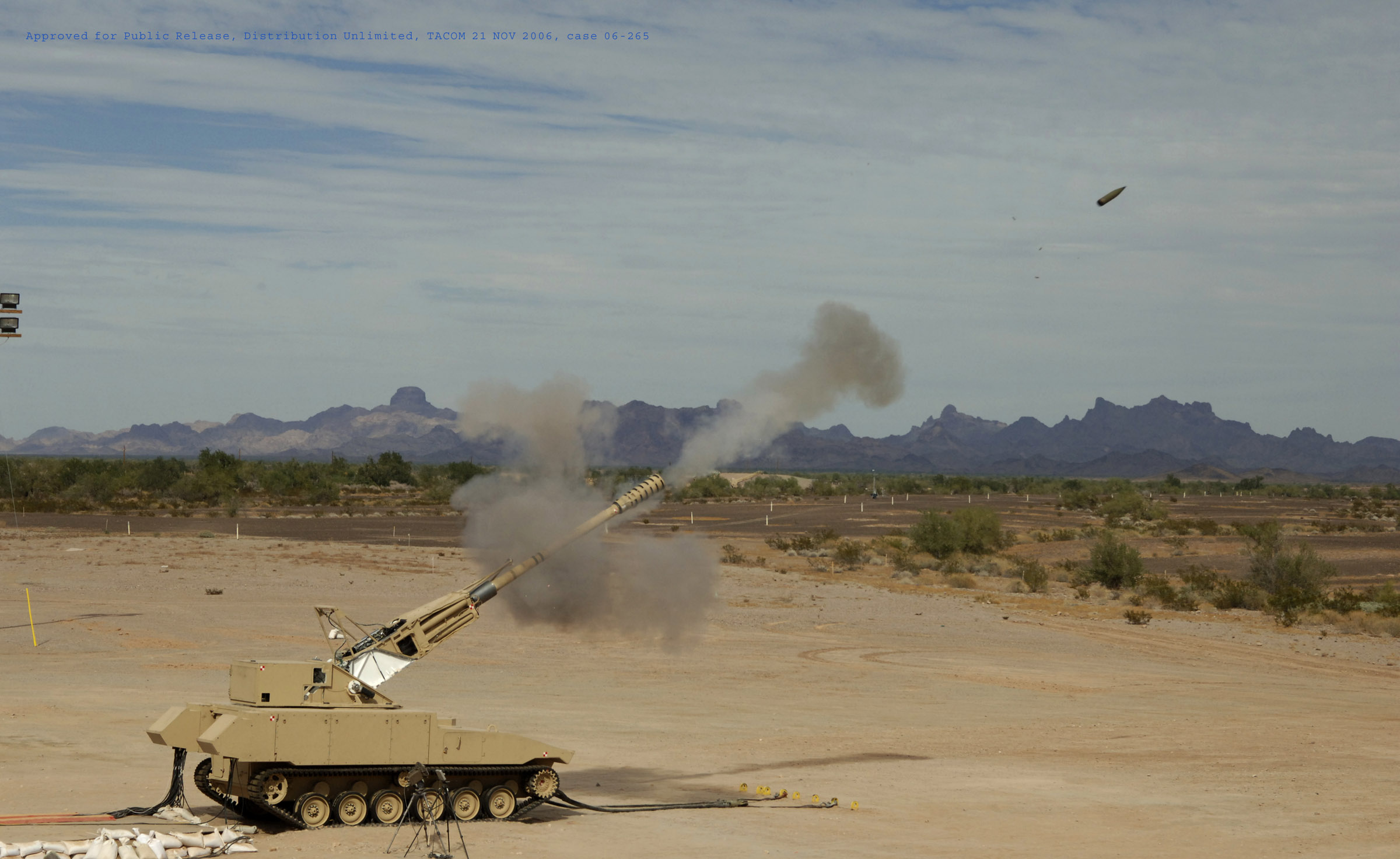
Researchers at Sandia National Laboratories in California have emerged as key players in a state-of-the-art program for the U.S. Army that focuses on the design and manufacturing of a lightweight, high-caliber, self-propelled cannon system.

The weapon system, known as the Non-Line-of-Sight Cannon (NLOS Cannon) is fully automated and can fire at a sustained rate of six rounds per minute. The vehicle, once completed, must be light and agile enough to fit three vehicles comfortably onto a C-17 cargo aircraft.

According to Sandia researcher Nipun Bhutani, who serves as project manager for the lab’s NLOS Cannon work, Sandia’s primary contribution to date has been a critical adjustment to a laser ignition system that serves as the heart of the NLOS Cannon vehicle.

