




ESA is preparing for future human exploration missions to Mars. We are currently looking for volunteers to take part in a 520-day simulated Mars mission.

To go to Mars is still a dream and one of the last gigantic challenges. But one day some of us will be on precisely that journey to the Red Planet. A journey with no way out once the spaceship is on a direct path to Mars.

These men and women will have to take care of themselves for almost two years during the roundtrip. Their survival is in their own hands, relying on the work of thousands of engineers and scientists back on Earth, who made such a mission possible.


Artist's impression - human mission to Mars. Credits: ESA

Obese and very obese patients have a lower risk of dying after they have been treated for heart attacks than do normal weight patients, according to research published in the European Heart Journal today.

Researchers in Germany and Switzerland found that amongst patients who had received initial treatment for a specific type of heart attack, those that were obese or very obese were less than half as likely to die during the following three years as patients who had a normal body mass index (BMI).

Dr Heinz Buettner, head of interventional cardiology at Herz-Zentrum, Krozingen, Germany, who led the study, said: “Although there is no doubt that people who are overweight, obese and very obese have a higher risk of developing diabetes, hypertension and coronary artery disease, the evidenc

A probe of the upper echelons of the human brain's chain-of-command has found strong evidence that there are not one but two complementary commanders in charge of the brain, according to neuroscientists at Washington University School of Medicine in St. Louis.

It's as if Captains James T. Kirk and Jean-Luc Picard were both on the bridge and in command of the same starship Enterprise.

In reality, these two captains are networks of brain regions that do not consult each other but still work toward a common purpose — control of voluntary, goal-oriented behavior. This includes a vast range of activities from reading a word to searching for a star to singing a song, but likely does not include involuntary behaviors such as control of the pulse rate or digestion.

In a "2007 Hot Article" of the journal Biochemistry, University at Buffalo chemists report the discovery of a central mechanism responsible for the action of the powerful biological catalysts known as enzymes.

The UB research provides critical insight into why catalysis is so complex and may help pave the way for improving the design of synthetic catalysts.

“The more that is known about catalysis, the better chances we have of designing active catalysts,” said John P. Richard, Ph.D., professor of chemistry in the UB College of Arts and Sciences and co-author of the paper with Tina L. Amyes, Ph.D., UB adjunct associate professor of chemistry.

Materials that change temperature in magnetic fields could lead to new refrigeration technologies that reduce the use of greenhouse gases, thanks to new research at the U.S. Department of Energy's Argonne National Laboratory and Ames National Laboratory.

Scientists carrying out X-ray experimentation at the Advanced Photon Source at Argonne — the nation's most powerful source of X-rays for research — are learning new information about magnetocaloric materials that have potential for environmentally friendly magnetic refrigeration systems.

All eyes are on where hurricanes make landfall, but the massive storms actually cause the most deaths inland, where severe flooding often surprises residents.

Now, researchers are learning how to predict where tropical storms and hurricanes will dump the most rain — even days after — and hundreds of miles away from — landfall.

Corene Matyas, an assistant professor of geography at the University of Florida, outlines new tools to predict how the storm’s intensity, distance it has moved inland and landscape topography alters its “rain shields” — the bands of heavy rain so visible in Doppler radar images.

The world is abuzz with the discovery of an extrasolar, Earthlike planet around the star Gliese 581 that is relatively close to our Earth at 20 light years away in the constellation Libra.

Bruce Fegley, Jr., Ph.D., professor of earth and planetary sciences in Arts & Sciences at Washington University in St. Louis, has worked on computer models that can provide hints to what comprises the atmosphere of such planets and better-known celestial bodies in our own solar system.

New computer models, from both Earth-based spectroscopy and space mission data, are providing space scientists compelling evidence for a better understanding of planetary atmospheric chemistry.

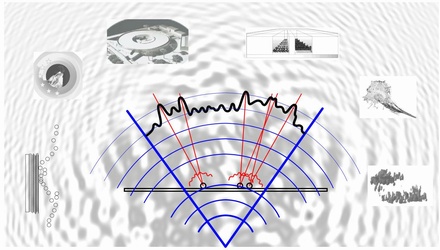
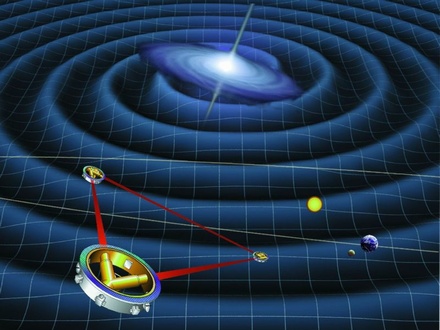
A new way of looking at a previously abandoned mathematical model might help astronomers study and accurately identify an exotic clan of gravitational waves.

The waves in question come from small black holes or neutron stars in extremely elongated orbits around vastly larger black holes, says Dr. Lior Burko, an assistant physics professor at The University of Alabama in Huntsville (UAH). "This reopens an area of research that was closed several years ago."

The exotic gravitational waves are generated (as predicted by general relativity theory) when an orbiting compact object changes speed, accelerating as it approaches the larger black hole and slowing as it moves away.

New studies show that iron, the principal constituent of the innermost parts of the earth’s core, becomes unusually ‘soft’ at the extreme pressures and temperatures that prevail there. The findings enhance our possibility of understanding the innermost parts of the earth and how earthquakes occur.

The findings were attained by a team of Swedish and Russian researchers, who used advanced simulations on Swedish supercomputers. This new knowledge explains some of the seismic data-signals from earth tremors-that stations around the world gather and that have puzzled scientists until now.

“These new discoveries about the innermost part of the earth provide an explanation for the low velocity of the seismic waves deep down in the earth.

Children who have at least one parent who smokes have 5.5 times higher levels of cotinine, a byproduct of nicotine, in their urine, according to a University of Leicester led study published online.

Having a mother that smokes was found to have the biggest independent effect on cotinine in the urine – quadrupling it. Having a smoking father doubled the amount of cotinine, one of chemicals produced when the body breaks down nicotine from inhaled smoke to get rid of it.

Sleeping with parents and lower temperature rooms were also associated with increased amounts of cotinine.

