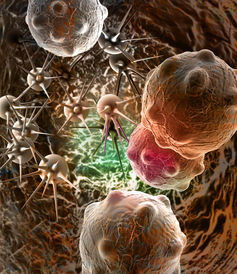



The immune system protects us from the constant onslaught of viruses, bacteria and other types of pathogens we encounter throughout life. It also remembers past infections so it can fight them off more easily the next time we encounter them.

But the immune system can sometimes misbehave. It can start attacking its own proteins, rather than the infection, causing autoimmunity. Or, it can effectively respond to one variant of a virus, but then is unable to stop another variant of the virus. This is termed the original antigenic sin (OAS).

There’s an idea circulating that humans are the only animal to experience sexual pleasure; that we approach sex in a way that is distinct from others. As with many questions about sex, this exposes some interesting facts about the way we discuss the subject.

On one level, the question of whether humans and non-humans experience sex in the same way is fairly simply dismissed: how would we know? We cannot know how a nonhuman experiences anything – they can’t be asked. Sex as an experiential phenomenon for non-humans is, quite simply, inaccessible. Science is obliged to propose questions that are answerable, and “how does a leopard slug experience sex?” is, at time of writing, about as unanswerable as they get.

The 13 TeV data from LHC collisions taken this summer is quickly going through analysis programs and being used for new physics results, and everybody is wondering whether there are surprises in store... Of course that will require some more time to be ascertained.
For the time being, I can offer a couple of very inspiring pictures. CMS recorded a spectacular event featuring two extremely high-energy jets in the first 40 inverse picobarns of data that was collected and reconstructed by the experiment with all detector component properly working.
It's naïve to pretend there are no profound genetic and epigenetic differences between the sexes. Elephant Gun Studios, CC BY-NC

Gender differences and sexual preferences are frequently a point of conversation. What produces the differences between men and women? Are they trivial or profound? Are they genetic or environmental, or both?

New research suggests concussion may not significantly impair symptoms or cognitive skills for one gender over another, however, women may still experience greater symptoms and poorer cognitive performance at preseason testing. The study released today will be presented at the Sports Concussion Conference in Denver, July 24 to 26, hosted by the American Academy of Neurology, the world's leading authority on diagnosing and managing sports concussion. The conference will feature the latest scientific advances in diagnosing and treating sports concussion from leading experts in the field.

Scientists analyzing the latest data from Comet 67P Churyumov-Gerasimenko have discovered molecules that can form sugars and amino acids, which are the building blocks of life as we know it. While this is a long, long way from finding life itself, the data shows that the organic compounds that eventually translated into organisms here on Earth existed in the early solar system.

We know that Greenpeace and other activist groups really,really care about bees. Really.

There have been many news stories saying that the EM Drive will solve almost all problems in interplanetary travel, permit low cost flying cars and who knows what else. Other stories say that it is flat out impossible and we shouldn't spend a single publicly funded research dollar on it. But I haven't seen a single article with the rather boring suggestion that perhaps in this case the research community has got it exactly right. That it's not a perpetual motion machine, doesn't deserve to be dismissed out of hand. But it's far too soon to justify huge research programs into it, even if it is a real effect. We just have to be patient and see how the experiment develops. So, here is a news story to say - that. In detail:

At the risk of missing out on a life experience, I Doubt I'll be trying this stuff anytime soon:

A new study by researchers at the University of Bari Aldo Moro, Bari, Italy, Geriatric Unit&Laboratory of Gerontology and Geriatrics, IRCCS "Casa Sollievo della Sofferenza", San Giovanni Rotondo, Foggia, Italy, and Istituto Superiore di Sanità (ISS), Roma, Italy, estimates the association between change or constant habits in coffee consumption and the incidence of mild cognitive impairment (MCI), evaluating 1,445 individuals recruited from 5,632 subjects, aged 65-84 year old, from the Italian Longitudinal Study on Aging (ILSA), a population-based sample from eight Italian municipalities with a 3.5-year median follow-up. These findings are published in the Journal of Alzheimer's Disease.