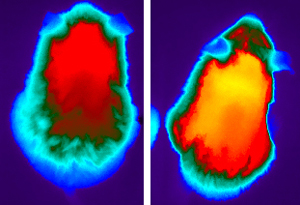
We can blame smartphone alerts, constant connectivity and a deluge of media for sleep deprivation but that is talking about the symptoms rather than the disease. The root cause is instead the thing that has led to cultural and social improvements for over 100 years - artificial light.

Salmon are severely impacted by the loss of floodplain habitats near Oregon's Tillamook Bay, where nearly 90 percent of estuaries' tidal wetlands have been lost to development -- threatening the survival of coho salmon and the safety of the local community. Now, the Federal Emergency Management Agency, NOAA Fisheries, and others have come together to reduce flood risk, increase resiliency of the ecosystem, and restore salmon habitat in Tillamook Bay under the auspices of The Southern Flow Corridor project, as the proposed collaborative effort is known. It will reconnect over 500 acres of floodplain habitat to two of the Bay's most productive salmon-bearing streams -- the Wilson and Trask Rivers.

A simple and provocative title – The Missing Memristor has Not been Found! This harsh admission of reality without sugar coating is the very title, and not of some opinion piece, but of a scientific paper published by the very same Nature Publishing Group that is criticized right away in that very paper:


Although we know influenza viruses circulate in temperate, populated parts of Australia every winter, predicting the precise timing and relative intensity of flu seasons is a fraught undertaking.

I was saddened today to hear of the death of David Cline. I do not have much to say here - I am not good with obituaries - but I do remember meeting him at a conference in Albuquerque in 2008, where we chatted on several topics, among them the history of the CDF experiment, a topic on which I had just started to write a book. 

Perhaps the best I can do here as a way to remember Cline, whose contributions to particle physics can and will certainly be better described by many others (for example,

Children are more likely to have a repeat, delayed anaphylactic reaction from the same allergic cause, depending on the severity of the initial reaction. 

Anaphylaxis is a severe, allergic reaction that is rapid in onset and can result in death. Some children are at risk of delayed ('biphasic') anaphylactic reactions. Delayed reactions occur when the initial symptoms of allergic reaction go away but then return hours or days later without exposure to the initial substance that caused the reaction.

Researchers have successfully stopped cocaine and alcohol addiction in experiments using a drug already approved by the U.S. Food and Drug Administration (FDA) to treat high blood pressure. If the treatment is proven effective in humans, it would be the first of its kind -- one that could help prevent relapses by erasing the unconscious memories that underlie addiction.

Scientists once believed that drug addiction was simply a physical craving: Drug addicts who became sober and then later relapsed merely lacked willpower. But that view has gradually shifted since the 1970s.

A new test can accurately predict within minutes if an individual has Ebola  and is the first to show that a point-of-care EVD test is faster than and as sensitive as a conventional laboratory-based molecular method used for clinical testing during the recent outbreak in Sierra Leone.

This new rapid diagnostic test could cut back on the lengthy process usually required to confirm if a patient has Ebola, help identify case contacts, and ultimately curb the spread.

Are some people unable or unwilling to quit?  A popular sociological belief has been that by making smoking uncool or difficult, it will become unpopular and people will quit, and only those unable to quit would remain. If so, products like e-cigarettes or smokeless tobacco make sense as alternatives.

When it comes to educating the public about all matters chemical, there is no one better than Dr. Joe Schwarcz, a wildly popular professor at McGill University in Montreal. "Dr. Joe," as his students call him, is one sharp dude. He has written about 20 books, given countless lectures, been on TV and radio hundreds of times, and even hosts his own weekly radio show.