








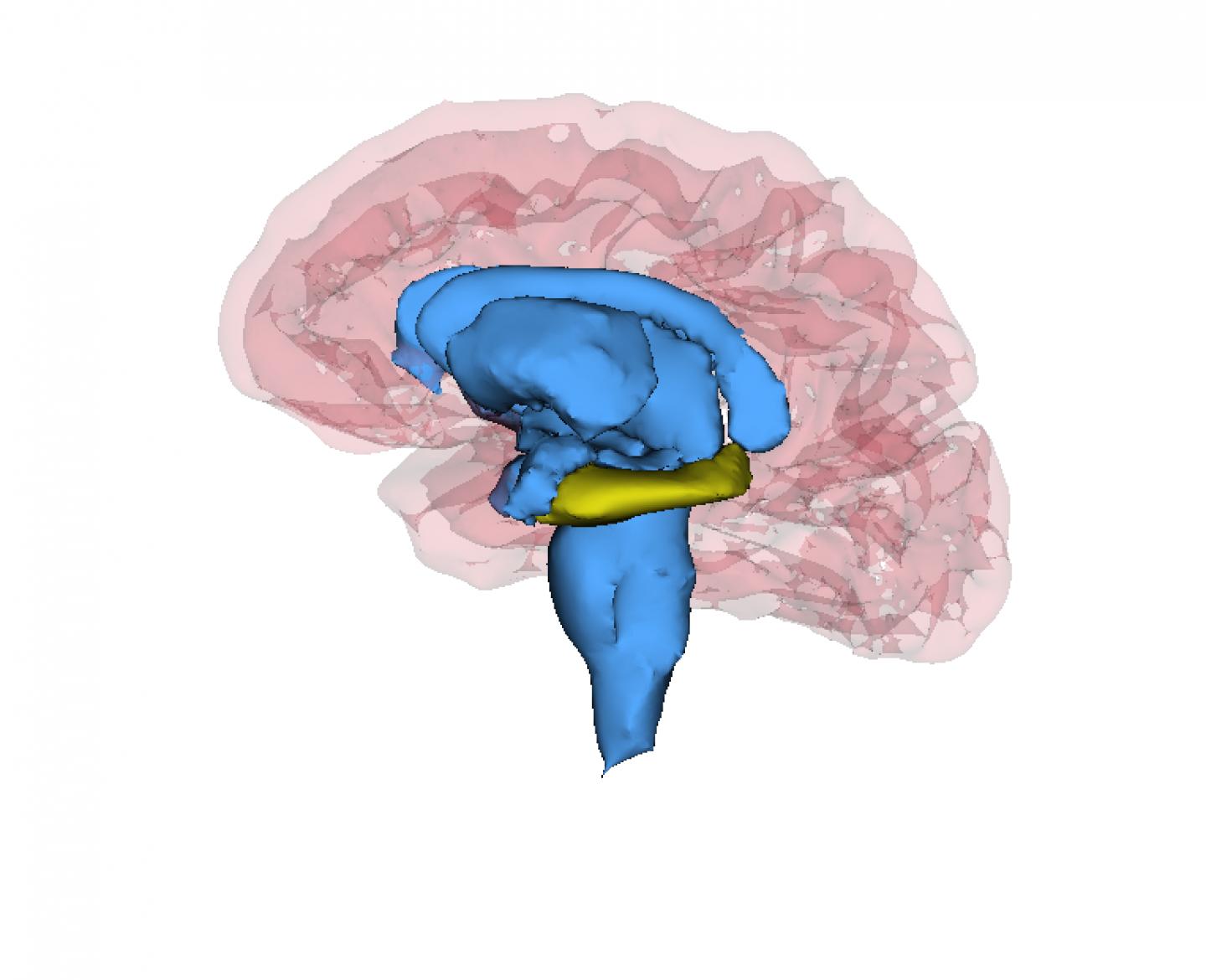

In a new study, researchers found that neurons in a specific brain region play a key role in rapidly forming memories about every day events, a finding that may result in a better understanding of memory loss and new methods to fight it in Alzheimer’s and other neurological diseases.

Specifically, the study examined neurons in the medial temporal lobe associated with episodic memory, the brain’s ability to consciously recall experienced events and situations like running into an old school friend at the opera. Episodic memory logs these unique experiences and relies on the very rapid formation of new associations in the brain.

Quantum computing is well into its second decade of hype with little progress being made. Computer chip companies have continued to optimize available physics and have left the quantum kind to the academic sandbox. It's not stable long enough to make calculations.

Perhaps what is needed is an intermediary to transmit information, say researchers at the Okinawa Institute of Science and Technology Graduate University (OIST).
Most Americans have never heard of it, but according to new federal data, sepsis is the most expensive cause of hospitalization in the US.

A Dutch feminist pro-choice activist organization, Women on Waves, has been using a drone to drop abortion pills across the Polish-German border.

The aim of the flight has been to highlight Poland’s restrictive abortion laws – a consistent topic of debate since the fall of communism in 1989.

Abortion was available virtually on demand in Poland between 1956 and 1989. Under state socialism, difficult living conditions or a difficult personal situation were grounds for termination. But in 1993, the country’s comparatively liberal abortion laws were comprehensively overturned. With post-communism came one of the most restrictive abortion laws in Europe.

Our brain recognizes objects within milliseconds, even if it only receives rudimentary visual information. Researchers believe that reliable and fast recognition works because the brain is constantly making predictions about objects in the field of view and is comparing these with incoming information.

Only if mismatches occur in this process do higher areas of the brain have to be notified of the error in order to make active corrections to the predictions. Now scientists at the Goethe University have confirmed this hypothesis. Those brain waves that are sent to higher brain areas increase their activity when a predictive error occurs. 

The Shackled Man hypothesis rightly notes that if two people are running a race, and one has leg irons on, the shackled person is going to perform poorly. 50 yards into the race, if we remove the leg irons, claiming that everyone now has an equal chance to win is silly. 

For that reason, affirmative action when it came to college admissions made perfect sense two generations ago. We know there was institutional racism and we knew it would take time to cure (racists had to retire or die off, and each generation would be less bigoted, but that doesn't happen right away) so giving a minority that likely did not have access to the same education, but had no less ability, a temporary boost, was both ethical and unnecessary.
Government-funded science spends a lot of money promoting the idea that only government-funded science is real science, even though almost 60 percent of basic research and almost 100 percent of applied research is done by the private sector.

It has worked. When people picture a hard science like physics, they picture a university-based lab. In reality, physicists often leave academia for jobs in the private sector, pursuing careers that are traditionally not tracked in workforce surveys of the physics field. Investment banking loves people who can create models that may translate to the real world, for example.

Studies have shown that men find female faces more attractive when women are ovulating, but how they might know - the visual clues that allow this - are unclear.

New research research sought to show it might be subtle changes in skin color and that women's faces do increase in redness during ovulation. The scholars found it was so, but the levels of change are just under the detectable range of the human eye. They speculate that facial redness in females was once an involuntary signal for optimal fertility, but has since been "dampened" by evolution - it's best not to look too fertile walking down those city streets and psychologists think that is how evolution works. 

A collaborative group of Japanese researchers has demonstrated that the Earth's daily rotation period (24 hours) is encoded in the KaiC protein at the atomic level, a small, 10 nm-diameter biomolecule expressed in cyanobacterial cells.

The results of this joint research will help elucidate a longstanding question in chronobiology: How is the circadian period of biological clocks determined? The results will also help understand the basic molecular mechanism of the biological clock. This knowledge might contribute to the development of therapies for disorders associated with abnormal circadian rhythms.

Mice that have a genetic version of mitochondrial disease can easily be mistaken for much older animals by the time they are nine months old: they have thinning gray hair, osteoporosis, poor hearing, infertility and heart problems.

Despite having this disease at birth, these mice have a “secret weapon” in their youth that staves off signs of aging for a time - a longevity hormone helps these mice, born with thousands of mutations in their energy-generating mitochondria, maintain metabolic homeostasis at a young age.

