






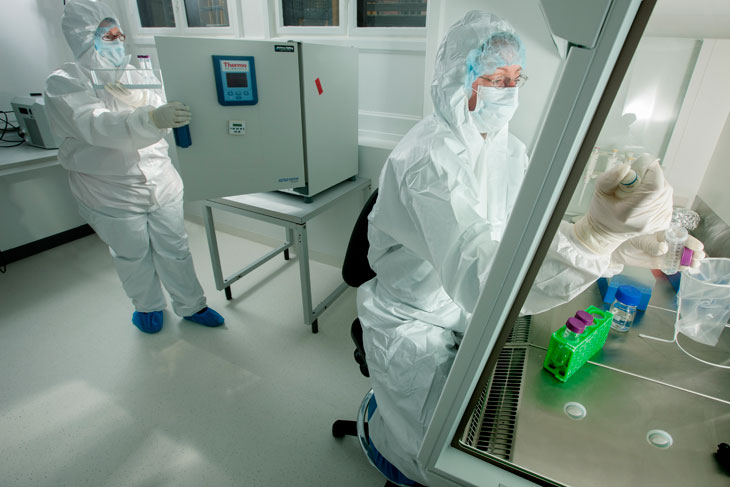

And I thought *my* job was fun. 

I regularly get to ridicule an incredible variety and quantity of nonsense that poses as science and medicine. Some of it borders on hilarious. 

On the other hand, making this stuff up is probably just as much fun, and maybe even more lucrative. There might even be an office pool: "Yo, Autumn Flower. I managed to get four old ladies to hide under the bed last week. Hand over the bitcoins."

And the competition must be fierce. In the absence of some kind of incentive, I cannot imagine any other way to get people to come up with a constant and creative (waste)stream of entertaining, yet marginally believable content. 

The words 'yes' and 'no' may seem like two of the easiest expressions to understand in any language, but their actual behavior and interpretation are surprisingly difficult to pin down. In a paper published earlier today in the journal Language, two linguists examine the workings of 'yes' and 'no' and show that understanding them leads to new insights concerning the understanding of questions and statements more generally.

Mortality from coronary heart disease declined in Sweden from 1986 to 2002. The improvement was due mainly to a reduction in risk factors among the healthy population (primary prevention) and, to a lesser extent, treatment of people who already had developed heart disease (secondary prevention). A study conducted at Sahlgrenska Academy explored the reasons for the trend.

Deaths from coronary heart disease fell by 53% among men and 52% among women in 1986-2002. The improvement was evident among all age groups.

A company in the Netherlands is building a bridge across a canal in Amsterdam using 3D-printing robots.

It seems that such attention-grabbing headlines appear regularly to declare how 3D-printing is destined to revolutionize manufacturing of all kinds. If the idea that key manufacturing products such as cars, aircraft – or indeed bridges – built by 3D printing sounds like hype, you’re mistaken.

A survey carried out earlier this year has found the first evidence of the 'superbug' bacteria Methicillin-Resistant Staphylococcus aureus (MRSA) in sausages and minced pork obtained from supermarkets in the UK. 

In February, a team of researchers bought and analyzed a total of 103 (52 pork and 51 chicken) pre-packaged fresh meat products, labeled as being of UK farm origin, from supermarkets in five different locations across England.

Have you ever seen Venus in full daylight ? It's a fun experience. Of course we are accustomed to see even a small crescent Moon in daylight -it is large and although of the same colour of clouds, it cannot be missed in a clear sky. But Venus is a small dot, and although it can be quite bright after the sunset or before dawn, during the day it is just a unconspicuous, tiny white dot which you never see, unless you look exactly in its direction.
Researchers have found chemical evidence for the presence of sulfur in the Earth's core. They determined the composition of the core, which is inaccessible to direct sampling, by analyzing isotopes - atoms of the same element that have different masses - of copper in various crust and mantle rocks and then comparing them with the chemical composition of meteorites, representative of the materials that formed the Earth. 
The sex lives of older people have received a lot of attention recently. From the Netflix sitcom Grace and Frankie, which stars Jane Fonda and Lily Tomlin (both in their 70s) and does not shy away from the issue of sex, to the Channel 4 series that focused on “love and sex when we’re over 60”, it seems there is no escaping the message that older adults have and enjoy sex.

Mapping the human brain’s network of interconnections, known as the connectome is typically done with help from computational tools because recreating interconnections between different brain regions has been challenging in the lab.

Researchers at the Okinawa Institute of Science and Technology Graduate University (OIST) have developed a method to recreate connections between neurons from two different brain areas in a dish. Their findings were published in Frontiers in Systems Neuroscience.

Decades ago, the American Council on Science and Health said that saturated fats were not as bad as was being portrayed and replacements would be worse. Natural Resources Defense Council and other scare-story-of-the-month groups had sided with yet another ban on food to get mainstream media attention and said anyone who disagreed must be a shill for Big Bacon. They wanted everything replaced with trans fats.

Now, science has been proven correct again and anti-science groups look foolish. The FDA has found partially hydrogenated oils have no value and some risk, so they are going to be banned unless companies receive an exemption.

