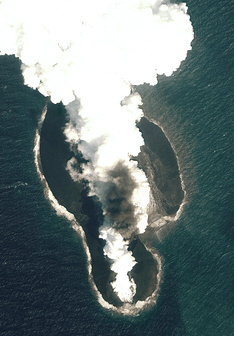
The birth of a volcanic island is a potent and beautiful reminder of our dynamic planet’s ability to make new land. Given the destruction we’ve seen following natural events like earthquakes and tsunamis in the past few years, stunning images of two islands forming in the southern Red Sea are most welcome.
A new analysis of the stability of the Antarctic ice sheet shows that ice rises (pinning points that keep the floating parts of ice sheets in place) are formed during the transition between glacial and interglacial periods, which significantly slows down the response of the ice sheet to climate change.
Have you been avoiding Taco Bell because of the Yellow No. 6 dye in its nacho cheese?
Of course not. And if removing that or carmine from its red tortilla chips means you will suddenly think their food is healthy, you are being educated by advertising.
Which is just what they are hoping.
There is nothing healthy about Taco Bell or Pizza Hut or Chipotle yet they have all delivered similar intellectual placebos to the public in order to boost sales. And it's working, or at least they think it is working, since more and more junk food chains attach this health halo to their products because supposedly consumers are demanding it. Whether that turns out to be virtual money or real money is the question.
The supplements industry has embraced claims suggesting a link between soy intake and decreased asthma severity, but a randomized, double-blind study, where half of the participants took a soy isoflavone supplement twice daily for six months, and the other half took a placebo, found that soy supplements do not improve lung function for patients with asthma.
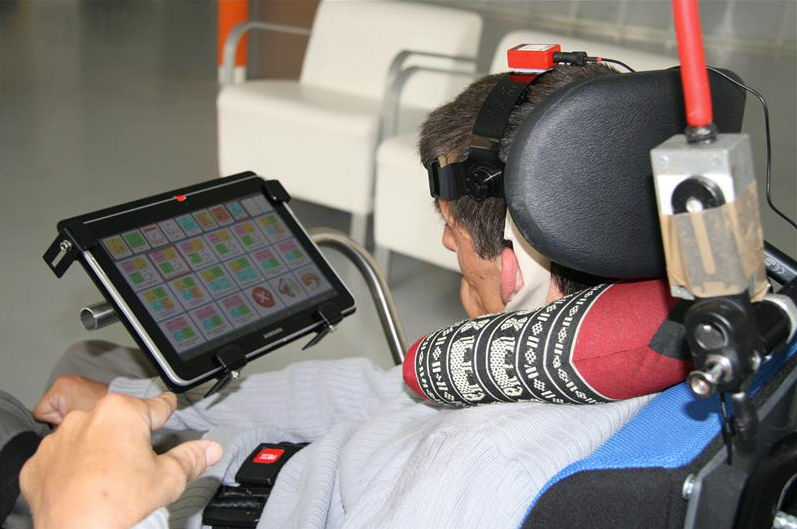
The Augmented BNCI Communication projects has developed a new brain-computer interface system to enhance communication skills of people with cerebral palsys.
Cerebral palsy is a chronic movement disability affects between 2 and 3 per 1,000 people. People with Dyskinetic Cerebral Palsy (DCP), 15% of the cases, have normal intelligence ability but cannot speak or express themselves due to lack of motor control. "Since they cannot express themselves, these children do not connect with other people and end up not developing their intelligence," says Biomechanics Institute of Valencia (IBV) researcher Juanma Belda.
According to a new global-scale projection, terrestrial vegetation emits several million tons of extremely low-volatility organic compounds (ELVOCs) per year to the atmosphere, which affect cloud seeds via formation of low-volatility vapors. These oxidation products of compounds such as monoterpenes results in an increase of condensing vapors that can further form cloud condensation nuclei over the continents and have an influence on the formation of clouds.
The results show how a number of natural compounds, which together account for around 70 percent of the biological hydrocarbon emissions, produce low-volatility products and how they can possibly effect the climate via aerosol particles.
In America, where there is a two-party system, there are numerous opportunities to compromise or cross party lines politically, so looking at where someone falls on a conservative-liberal graph lines doesn't tell us much about how they will vote. Democrats receive over 90 percent of education union donations, for example, so no left-right model predicted that the education reform known as No Child Left Behind would pass 91-8 in the Senate and 384-41 in the House.
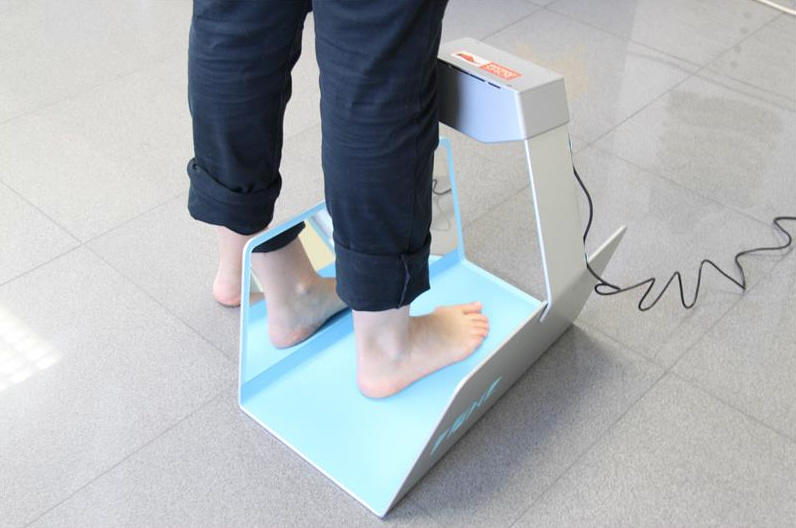
A new adjustable female shoe based on memory shape composite of leather and Nitinol material allows fitting the shoe to the foot shape after obtaining anthropometric measurements through a portable scanner and modifying it with a machine that completes the process directly in the shop. The "InstantShoe" prototype expected to be out on the market at the end of 2015.

By Lisa Marie Potter (Inside Science) -- Machines mimicking a human's sense of taste are going on a beer-tasting binge. Despite being called electronic tongues, these devices aren't party robots, pouring beer onto wagging, mechanical tongues.
"It's just a bunch of wires and buttons and computers," said María Luz Rodríguez-Méndez, a professor of inorganic chemistry at University of Valladolid in Spain. "It's an ugly thing full of cables."
A new study has found that endocrine disrupting chemicals--which can interfere with the actions of hormones in the body--are present in some plastic teethers for babies, and the chemicals can leach out of the products.
Investigators detected significant endocrine activity in 2 of 10 plastic teethers. One teether contained methyl-, ethyl- and propylparaben, while the second contained at least 6 different endocrine disrupting compounds that remain so far unidentified.