




WHOI
The biggest challenge facing climate models is similar to those facing economic ones - predicting the past is relatively easy, but predicting the future is far more of a challenge. In the United States, predicting hurricanes is less accurate than NCAA tournament pools, forecasters did not come close to predicting 15 in 2005 or 2 in 2013, but a team from the University of Arizona write in an upcoming Weather and Forecasting article that they are 23 percent less error prone - at predicting the past, anyway.

Newly published research posits an explanation for why 100 million Americans estimated to be taking prescription and over-the-counter antacid and heartburn medications may be at an increased risk of bone fractures.

A new study in mice notes that stomach acid in the gastrointestinal tract plays an important role in helping the intestines absorb and transfer calcium to the skeletal system and so while the introduction of proton pump inhibitor-based antacids reduces the level of acidity in the stomach to bring relief to patients, that reduction also interrupts and even stops the gut from absorbing much needed calcium.

Nearly half of the 36 species of felids that live in the wild in the world are at threat, according to the International Union for Conservation of Nature advocacy group, and the main threat they all share in common is the loss and fragmentation of their habitat. That also limits the establishment of effective conservation strategies, according to a review of 162 articles related to Lynx pardinus, the Iberian lynx.

What are the harms and benefits of long-term use of cognitive-enhancing drugs by healthy individuals?

No one can say, but they are popular. There is growing ‘lifestyle use’ of cognitive-enhancing drugs – such as methylphenidate (Ritalin) and modafinil (Provigil) – by healthy individuals to improve concentration, memory, and other aspects of cognitive performance. But very little is known about the long-term effects of this non-medical use, say the authors.

In a recent survey 76% of young respondents listened to music from YouTube every day with Spotify coming in second. But YouTube is so popular for music listening and new music discovery that even active Spotify users still visited YouTube often to complement Spotify’s incomplete music selection. 

YouTube was also perceived as the most shareable music source by the students in their early 20s who participated in a recent Internet-based study.

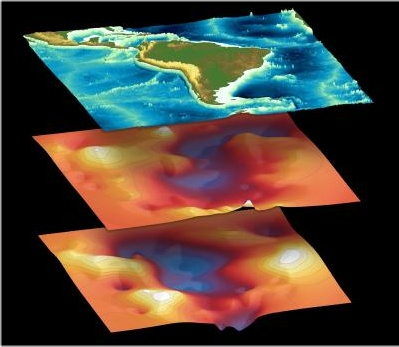
The same processes that determined how continents were generated on Earth more than 2.5 billion years ago have continued within the last 70 million years - and they profoundly affect the planet's current life and climate.

A new study details how relatively recent geologic events , namely volcanic activity 10 million years ago in what is now Panama and Costa Rica, hold the secrets of the extreme continent-building that took place billions of years earlier. This provides new understanding about the formation of the Earth's continental crust, the masses of buoyant rock rich with silica, a compound that combines silicon and oxygen. 


There has been much press lately about President Obama’s plan to address the growing crisis of antibiotic-resistant bacterial pathogens. And I agree with many that there is much to like in the plan.  But I also find a number of key deficiencies that will lead us nowhere.


The goals of the plan are all laudable –

Government subsidies for renewable energy rebounded strongly last year, registering a solid 17% increase after two years of declines. Major expansion of solar installations in China and Japan and government=backed investments in offshore wind projects in Europe helped propel green energy spending to $270 billion.

The 2010 eruption of the Icelandic volcano Eyjafjallajökull grounded thousands of air flights and spread ash over much of western Europe, yet it was puny compared to the eruption 200 years ago of Tambora, a volcano that probably killed more than 60,000 people in what is now Indonesia and turned summer into winter over much of the Northern Hemisphere.

Saurichthys is a predatory fish characterized by a long thin body and a sharply pointed snout with numerous teeth. This distinctive ray-finned fish lived in marine and freshwater environments all over the world 252-201 million years ago during the Triassic period.

