Banner
I Made An AI Clone Of Myself And Now I Am Going To Live Forever

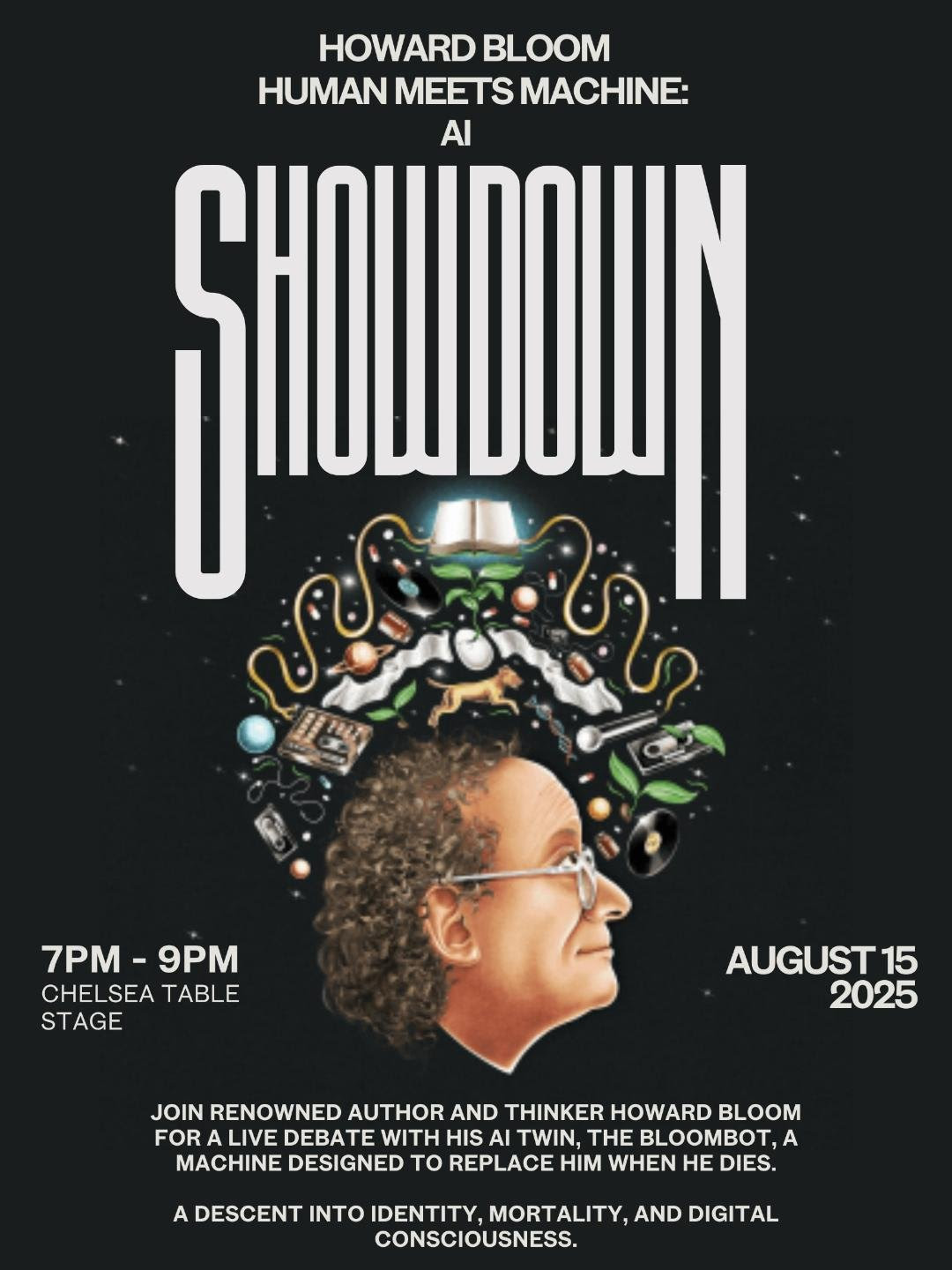
"I made an AI clone of myself and now I am going to live forever" is not a joke. My AI twin, Bloombot...

In Praise Of Consumerism - It Was Good Enough For Marco Polo So It's Good Enough For You

We started off discussing the value of consumerism to even the most devout naturalists with In...

In Praise Of Consumerism - Bees, Bacteria And The Value Of Wasted Time

As you read In Praise Of Consumerism - It Appeals To The Thoreau In You you may have wondered if...

User picture.
Howard BloomRSS Feed of this column.

A recent visiting scholar in the Graduate Psychology Department at New York University and a former Core Faculty Member at The Graduate Institute

... Read More »

Blogroll

Evolution is shouting a message at us. Yes, evolution herself. That imperative? Get your ass and the asses, burros, donkeys and cells of your fellow species—from bacteria and plants to fish, reptiles, and mammals—off this dangerous scrap of a planet and find new niches for life.

Take The Grand Experiment Of Cells And DNA, the 3.85-billion-year Project Of Biomass, to other planets, moons, orbiting habitats, and galaxies. Give life an opportunity to thrive, to reinvent itself, to turn every old disaster, every pinwheeling galaxy, into new opportunity.

Do this as the only species Nature has generated that’s capable of deliberate travel beyond the atmosphere of Earth. Do it as the only species able to take on the mission of making life multi-planetary. Accept that mission or you may well eliminate yourself and all the species that depend on you—from the microorganisms making folic acid and vitamin K in your gut to wheat, corn, cucumbers, chickens, cows, the yeast you cultivate to make beer, and even the bacteria you use to make cheese. What’s worse, if you fail to take life beyond the skies, the whole experiment of life—including rainforests, whales, and endangered species —may die in some perfectly normal cosmic catastrophe.

In our first exciting episode of Who’s Smarter: Chimps, Baboons or Bacteria? The Power of Group IQ ( Part I ) we showed how small-brained baboons can outsmart big-brained chimpanzees and how bacteria can out-innovate chimps, baboons, and you and me. We also visited an evolutionary mystery in the world of a bacterial buddy that's with you every day, the E. coli found in your gut.

In Part II we discussed how E.

In our first exciting episode of 'Who’s Smarter: Chimps, Baboons or Bacteria? The Power of Group IQ' ( Part I ) we showed how small-brained baboons can outsmart big-brained chimpanzees and how bacteria can out-innovate chimps, baboons, and you and me. We also visited an evolutionary mystery in the world of a bacterial buddy that's with you every day, the E. coli found in your gut.

In a lab dish, E. coli can do something neo-Darwinian theory says just can not be.

Which have bigger brains, chimpanzees or baboons? If you guessed chimps, you’re right. Chimpanzees are our closest relatives on the planet. They share between 98.6% and 99% of our genes, depending on who’s counting. They are way up there in animal brainpower. An average chimp’s brain is more than twice as large as the brain of a baboon.

Now for question number two. Which are smarter, chimpanzees or baboons? The answer is … baboons. But how could that be? Chimps are brainier. Shouldn’t they also be, well, umm, brainier? Brighter by far? If baboons are winners on IQ measures, doesn’t that mean that intelligence is not just a matter of brain matter?

The answer is yes, there’s more to intellect than the number of neurons in your skull.