Banner
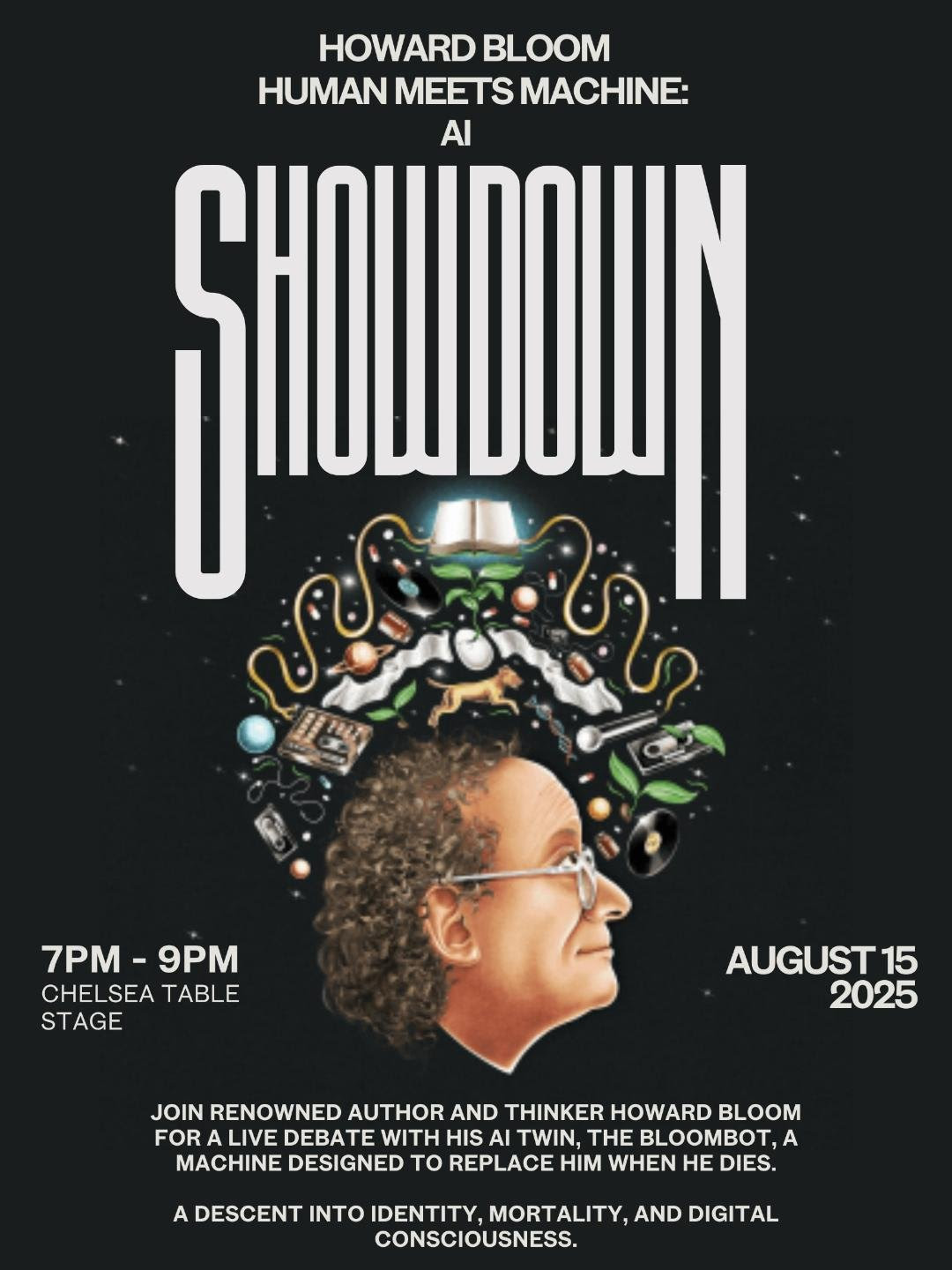
I Made An AI Clone Of Myself And Now I Am Going To Live Forever

"I made an AI clone of myself and now I am going to live forever" is not a joke. My AI twin, Bloombot...

In Praise Of Consumerism - It Was Good Enough For Marco Polo So It's Good Enough For You

We started off discussing the value of consumerism to even the most devout naturalists with In...

In Praise Of Consumerism - Bees, Bacteria And The Value Of Wasted Time

As you read In Praise Of Consumerism - It Appeals To The Thoreau In You you may have wondered if...

User picture.
Howard BloomRSS Feed of this column.

A recent visiting scholar in the Graduate Psychology Department at New York University and a former Core Faculty Member at The Graduate Institute

... Read More »

Blogroll

There's a rule of science we normally overlook. That rule? Challenge your assumptions. See what you can derive from a new point of view. Buck the normal. Today, it is normal to hate consumerism. It's normal to loathe what consumerism has done to us...and what it has done to the planet. So as good scientists, let's go anti-conventional. Let's sing an ode in praise of consumerism. Let's see if reversing the normal point of view will produce any surprises.

In praise of consumerism? I know what you're thinking; this is a great subject for the brain-dead or folks who utterly lack a moral compass, like Donald Trump and Paris Hilton. But it’s certainly not a good subject for you and me.

In Screw 'Sustainability' - And I Am Here To Tell You Why we discussed the fact that Mother Nature is a bloody bitch. She is the mother of catastrophe. She has nurtured brilliant innovations like cells and DNA but she has also given us 142 mass extinctions, 80 glaciations in the last two million years, a planet that may have once been a frozen iceball, and a klatch of global warmings in which the temperature has soared by 18 degrees in ten years or less.

Mother Nature has sunken the pleasant habitat of land creatures to the bottom of swamps and has lifted the havens of sea creatures --ocean bottoms -- to the mountain tops. She has very seldom given us a Garden of Eden, a green and sunny utopia in which she and we live together in harmony and peace.

Nature tosses us challenges and dares us to survive. More properly, she challenges us to thrive.

What’s more, evolution is all about breaking Mother Nature’s rules — defying gravity when a lizard stands, denying buoyancy when a fish controls its depth in the sea, and saying “no” to gravity when a bird has the audacity to fly. That audacity is Mother Nature’s way of feeling out new paths of growth and radical new possibilities. How do we know? Birds have been paid off big time for their insolence. There are four times as many species of birds as there are of us land-lubbing mammals. Each species represents another victory over nature, another corner of nature’s maze turned into a new niche. Each triumph is another of nature’s own victories in the breakthrough biz.

That's why talk about 'sustainability' today is riddled with problems — and with the seeds of self-defeat. The lowest periods in recorded human history have come when society tried to maintain a status quo.

It's taken weeks to get here but we've covered 13.7 billion years of cosmic quirks. We've gone from The Big Bang and the Birth of Culture through Supersynchrony And The Evolution Of Mass Culture to The Big Burp And The Evolution of Elements.

We've seen the beginning of mass behavior among quarks, the proto-memory of atoms, and a strange preview of culture long before life arose.

In The Big Bang and the Birth of Culture, we talked about the beginning of culture long before what anthropologists had previously assumed.

In The Big Bang and the Birth of Culture, we talked about the beginning of culture long before what anthropologists had previously assumed.

In Supersynchrony And The Evolution Of Mass Culture, we talked about how even the most primitive components of the universe had a sort of retained memory; the culture of quarks, if you will.

In The Big Bang and the Birth of Culture, we talked about the beginning of culture long before what anthropologists had previously assumed and discussed why space travel is not only becoming important for ecological reasons, it's part of a universal mandate.

Now we're going to talk about some aspects of galactic order. Infinite monkeys in a random universe? No, more like a railroad train with a lot of ways to get from point A to point B - but it has rails and the universe can never leave them.

***

In the aftermath of the Big Bang, particles collided and shifted with terrific force - yet protons came out of these crashes intact. This identity retention was a primitive form of memory and it was the foundation of culture.