Banner
Here's Where Your Backyard Was 300 Million Years Ago

We may use terms like "grounded" and terra firma to mean stability and consistency but geology...

Convergent Evolution Cheat Sheet Now 120 Million Years Old

One tenet of natural selection is a random walk of genes but nature may be more predictable than...

Synchrotron Could Shed Light On Exotic Dark Photons

There are many hypothetical particles proposed to explain dark matter and one idea to explore how...

The Pain Scale Is Broken But This May Fix It

Chronic pain is reported by over 20 percent of the global population but there is no scientific...

User picture.
News StaffRSS Feed of this column.

News Releases From All Over The World, Right To You... Read More »

Blogroll

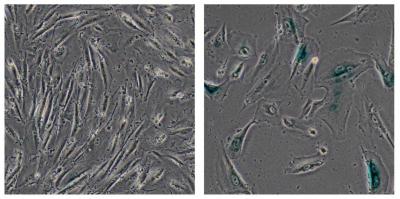
A study in Science has tied the aging process to the deterioration of tightly packaged bundles of cellular DNA known as heterochromatinand say that the genetic mutations underlying Werner syndrome, a disorder that leads to premature aging and death, results in the deterioration of these bundles.

The discovery used stem cell and gene-editing technologies and could lead to ways of countering age-related physiological declines by preventing or reversing damage to heterochromatin.

Researchers have shown that, like humans, mustached bats use the left and right sides of their brains to process different aspects of sounds.

No other animal, not even monkeys or apes, has proved to use such hemispheric specialization for sound processing - meaning that the left brain is better at processing fast sounds, and the right processing slow ones. 

"These findings upset the notion that only humans use different sides of their brains to distinguish different aspects of sound," says the study's senior author, Stuart Washington, PhD, a neuroscientist at Georgetown.

Washington says the findings of asymmetrical sound processing in both human and bat brains make evolutionary sense.

Individuals with Type 2 Diabetes have difficulty regulating their glucose - blood sugar - levels, particularly after meals but a new study has found that Type 2 diabetics can eat more protein at breakfast to help reduce glucose spikes at both breakfast and lunch.

Researchers monitored Type 2 diabetics' levels of glucose, insulin and several gut hormones -- which help regulate the insulin response -- after breakfast and lunch. The participants ate either high-protein or high-carbohydrate breakfasts, and the lunch included a standard amount of protein and carbohydrates.

A new study forecasting how life expectancy will change in England and Wales has predicted people will live longer than current estimates - and that means they could have an oncoming economic train wreck because of the need for additional investments in health and social services and pensions for the elderly.

Antarctica's Dry Valleys may not be so dry. A helicopter-borne sensor that penetrates below the surface of large swathes of terrain has found compelling evidence that ice-free McMurdo Dry Valleys may be hiding a salty aquifer.

Brines, or salty water, form extensive aquifers below glaciers, lakes and within permanently frozen soils. If they are present, it might provide answers about the biological adaptations of previously unknown ecosystems that persist in the extreme cold and dark of the Antarctic winter.

Researchers have discovered areas in the tropical North Atlantic, several hundred kilometers off the coast of West Africa, with extremely low levels of oxygen, making them uninhabitable for most marine animals.

The levels measured in these 'dead zones' are the lowest ever recorded in Atlantic open waters.