Banner
Here's Where Your Backyard Was 300 Million Years Ago

We may use terms like "grounded" and terra firma to mean stability and consistency but geology...

Convergent Evolution Cheat Sheet Now 120 Million Years Old

One tenet of natural selection is a random walk of genes but nature may be more predictable than...

Synchrotron Could Shed Light On Exotic Dark Photons

There are many hypothetical particles proposed to explain dark matter and one idea to explore how...

The Pain Scale Is Broken But This May Fix It

Chronic pain is reported by over 20 percent of the global population but there is no scientific...

User picture.
News StaffRSS Feed of this column.

News Releases From All Over The World, Right To You... Read More »

Blogroll

A study has shown a new way that brown fat, a potential obesity-fighting target, is regulated in the body. 

In an upcoming Cell Metabolism article,  researchers examined long non-coding RNA (Ribonucleic acid) in adipose (fat) tissue in mice. Long non-coding RNAs have recently become appreciated as important control elements for different biological functions in the body.

The team created a catalog of 1,500 long non-coding RNA in mouse adipose tissues - which is the most comprehensive catalog ever created of its type. Using the catalog they were then able to identify a specific long non-coding RNA without which the brown fat cell cannot develop properly.

Agriculture is a breathtaking achievement of modern science. We are on the path to being able to feed the world for the first time in history and the upward trend in obesity is due to the fact that more food has been produced at lower cost with less environmental strain than ever believed realistic.

But it still has a price. There are claims that approximately 35% of global greenhouse gases come from agriculture.

A new paper argues that regenerative, organic farming, ranching and land use could lead to sequestering several hundred billion tons of excess CO2. Increasing the soil's organic content will not only fix carbon and reduce emissions, it will also improve the soil's ability to retain water and nutrients and resist pests and droughts. 

It's a First World Idyll that ancient indigenous people sustained themselves using nature's bounty, in harmony with the land.

Science knows otherwise. Instead, from Alaska to Washington, indigenous people created productive clam gardens to ensure abundant and sustainable clam harvests. There was nothing natural about it.

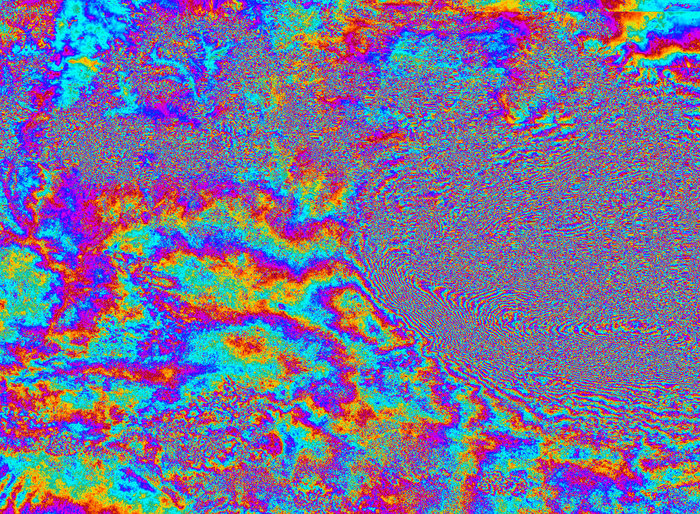
On April 25th, a 7.8-magnitude earthquake struck Nepal, claiming over 5,000 lives and affecting millions more. Relief efforts are under way and satellite imagery is helping to visualize the damage but radar images from the ESA Sentinel-1A satellite showed why Nepal’s capital, Kathmandu, experienced so much damage

The maximum land deformation, shown in before and after pictures, is 8 miles away. The two acquisition dates lead to rainbow-colored interference patterns in the combined image, known as an ‘interferogram’, enabling scientists to quantify the ground movement.
The world's population is getting healthier and part of that reason for that is sanitation - but a larger population and a still limited infrastructure means a complex and multi-dimensional approach is needed to manage a rising tide of solid waste

There is no magic bullet solution like importing modern trucks or technologies or to improve roads. The challenges are daunting - the World Bank’s Urban Development department estimates that the amount of municipal solid waste will reach 2.2 billion tons per year over the next decade. 
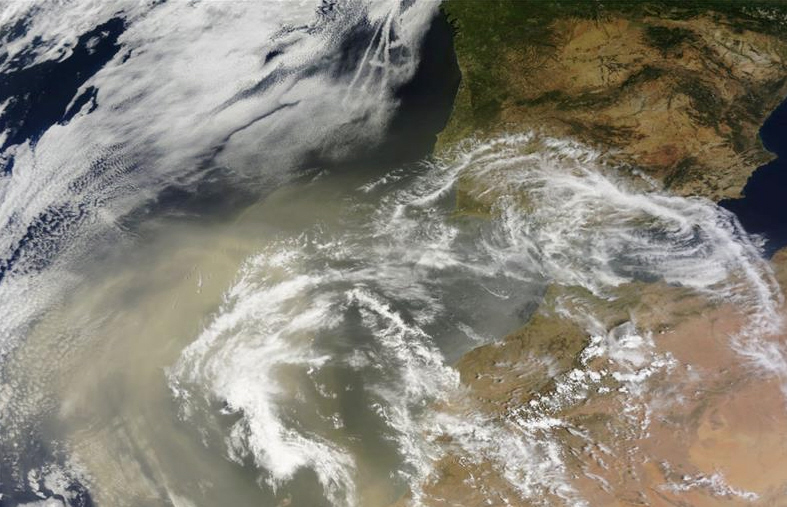
British people may not like blood rain but Sahara Desert dust is not traveling 2,000 miles over an ocean just to make their cars dirty - it also helps cool things down. 

Researchers have analyzed the composition and radiative effect of desert aerosols during two episodes which simultaneously affected Badajoz (Spain) and Évora (Portugal) in August 2012 and found that it caused radiative cooling of the Earth's surface. Atmospheric aerosols (solid or liquid particles suspended in the atmosphere) are difficult to examine for various reasons - they remain in the atmosphere for only a short time and their cause may be natural or anthropogenic.