Banner
Here's Where Your Backyard Was 300 Million Years Ago

We may use terms like "grounded" and terra firma to mean stability and consistency but geology...

Convergent Evolution Cheat Sheet Now 120 Million Years Old

One tenet of natural selection is a random walk of genes but nature may be more predictable than...

Synchrotron Could Shed Light On Exotic Dark Photons

There are many hypothetical particles proposed to explain dark matter and one idea to explore how...

The Pain Scale Is Broken But This May Fix It

Chronic pain is reported by over 20 percent of the global population but there is no scientific...

User picture.
News StaffRSS Feed of this column.

News Releases From All Over The World, Right To You... Read More »

Blogroll

 By identifying and comparing the sequences of more than 400 receptors in the genomes of two fruit flies and three mosquito species, entomologists have unlocked one of the hormonal mechanisms that allow mosquitoes to produce eggs. They identified a single gene for a receptor with an unknown function within the species distribution.  

The one common element in recent American weather has been its diversity. The West Coast has been drier than usual while the East Coast has had more snow. Fish are swimming into new waters and so hungry seals that don't follow them aare washing up on California beaches. 

A long-lived patch of warm water off the West Coast, about 1 to 4 degrees Celsius (2 to 7 degrees Fahrenheit) above normal, is part of what's wreaking much of this mayhem, according to two papers Geophysical Research Letters. No, that warm blob was not caused by climate change, though it has many of the same effects for West Coast weather. 

On one side of the political spectrum in America and across a broader swath of Europe, science is controversial - especially genetic engineering. But genetic engineering has been done since humans first deduced they could shape the natural world, if anything it has gotten precise in a way that was never possible before.

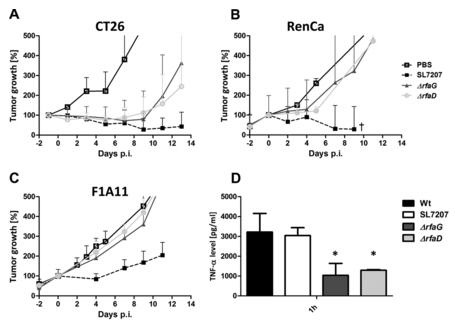
Now it mean even help fight against cancer - and it may do so using Salmonella, more famous as a bacteria that lives in intestines.

Titan, Saturn's largest moon, is one of the most Earthlike places in the solar system. 

It has a thick, hazy atmosphere and surface rivers, mountains, lakes and dunes, which is why the Cassini-Huygens is studying it. But sometimes new data bring new mysteries, such as the seemingly wind-created sand dunes spotted by Cassini near the moon's equator, and the contrary winds just above.

It's become a popular idea among endurance athletes that salt consumption during competition will help, but a new study finds no evidence that is true.

A small kernel of truth is involved in the belief, the authors write in the the Journal of Sports Science and Medicine - that there are sodium losses due to sweat during exercise and our bodies function on a principle of thermoregulation - but then some endurance athletes have taken that to believe they should consume large quantities of salt or other electrolyte supplements containing sodium during training and competition to improve performance. 
When you look at a primate or neanderthal skull and compare it to modern humans, it is immediately noticeable that we have a feature they are missing.

In fact, it's missing from all other species: A chin.

Why do we? A new study finds that our chins didn't come from mechanical forces such as chewing, but instead results from an evolutionary adaptation involving face size and shape, possibly linked to changes in hormone levels as we became more societally domesticated. If true, it would settle a debate that's gone on for more than a century, and anthropology would have solved it rather than biology.