Banner
Here's Where Your Backyard Was 300 Million Years Ago

We may use terms like "grounded" and terra firma to mean stability and consistency but geology...

Convergent Evolution Cheat Sheet Now 120 Million Years Old

One tenet of natural selection is a random walk of genes but nature may be more predictable than...

Synchrotron Could Shed Light On Exotic Dark Photons

There are many hypothetical particles proposed to explain dark matter and one idea to explore how...

The Pain Scale Is Broken But This May Fix It

Chronic pain is reported by over 20 percent of the global population but there is no scientific...

User picture.
News StaffRSS Feed of this column.

News Releases From All Over The World, Right To You... Read More »

Blogroll

Genetic studies in humans, zebrafish and mice have revealed that two different types of genetic variations team up to cause a rare condition called Hirschsprung's disease, flaws in early nerve development that lead to poor colon function which must often be surgically corrected.

About one in every 5,000 babies is born with Hirschsprung's disease, which causes bowel obstruction and can be fatal if not treated. The disease arises early in development when nerves that should control the colon fail to grow properly. Those nerves are part of the enteric nervous system, which is separate from the central nervous system that enables our brains to sense the world.

Testosterone replacement therapies are controversial in males so extending it to females will likely be even more so. But research involving mice suggests an association between low levels of androgens (which includes testosterone) and atherosclerosis and obesity in females. 

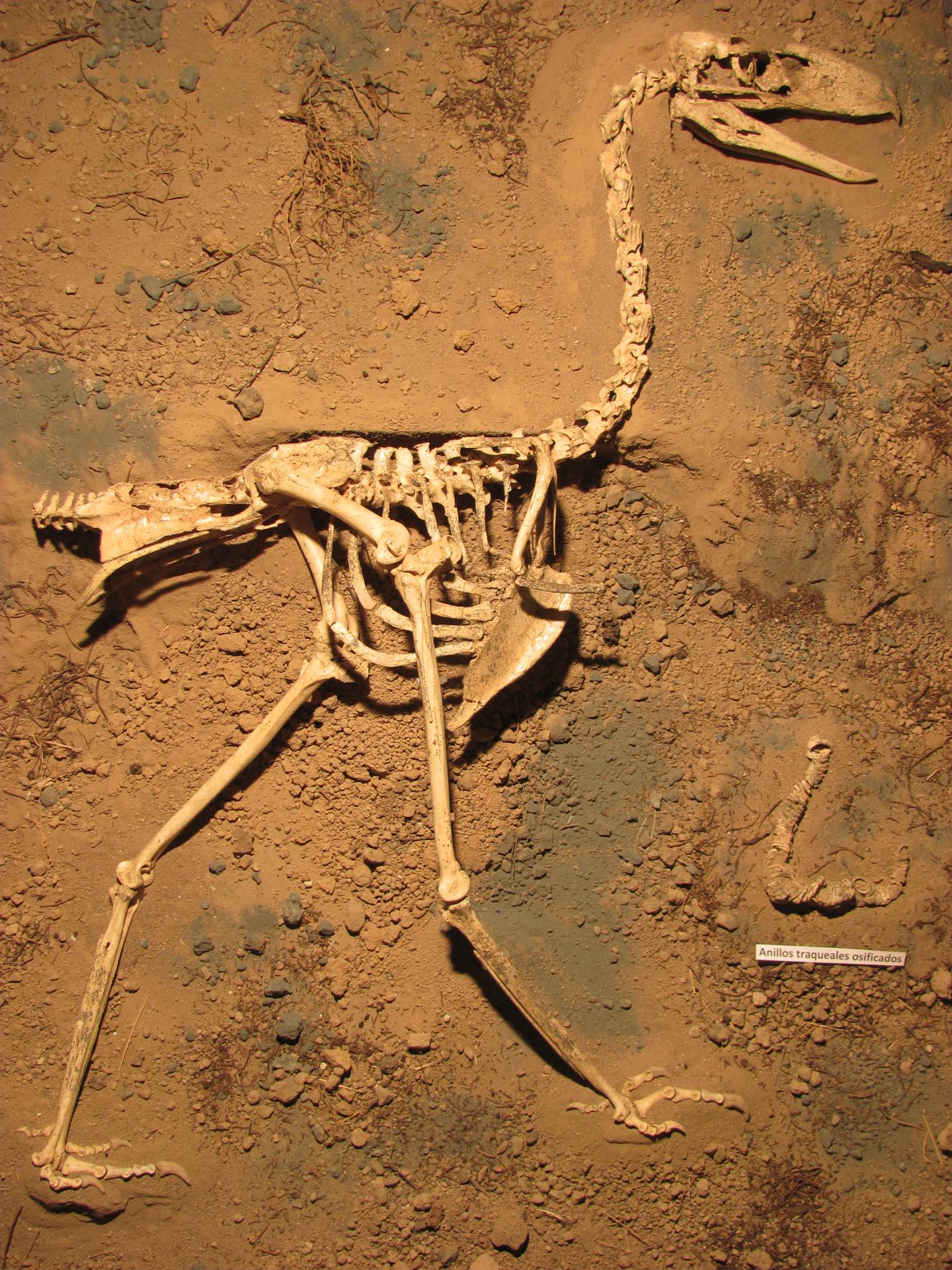
A new species of bird called Llallawavis scagliai (Scaglia's Magnificent Bird) is shedding light on the diversity of the group and how these giant extinct predators interacted with their environment.

The new species found in South America is the most complete terror bird ever discovered, with more than 90% of the skeleton exquisitely preserved and also reveals details of anatomy that rarely preserve in the fossil record, including the auditory region of the skull, voice box, complete trachea, bones for focusing the eye, and the complete palate, allowing an unprecedented understanding of the sensory capabilities of these extinct predatory birds.
A new paper provides evidence of a new mastrevirus, tentatively named switchgrass mosaic-associated virus 1 (SgMaV-1). Other members of the mastrevirus genus, a group of DNA viruses, are known to be responsible for decimating yields in staple food crops (including corn, wheat and sugarcane) throughout Africa, Europe, Asia and Australia.

It has never been reported in North America.

The switchgrass exhibited mosaic symptoms--splotchy, discolored leaves--characteristic of a viral infection, yet tested negative for known infections. Deep sequencing, a new technology, revealed the plants were infected with a new virus in the genus mastrevirus, the first of its kind found in North America.

A lower percentage of children are eating "fast food" on any given day, and calories consumed by children from those types of burger, pizza and chicken restaurants also dropped, according to a new study.



Getting a good education may not improve your life chances of happiness, according to new mental health research.