Banner
Here's Where Your Backyard Was 300 Million Years Ago

We may use terms like "grounded" and terra firma to mean stability and consistency but geology...

Convergent Evolution Cheat Sheet Now 120 Million Years Old

One tenet of natural selection is a random walk of genes but nature may be more predictable than...

Synchrotron Could Shed Light On Exotic Dark Photons

There are many hypothetical particles proposed to explain dark matter and one idea to explore how...

The Pain Scale Is Broken But This May Fix It

Chronic pain is reported by over 20 percent of the global population but there is no scientific...

User picture.
News StaffRSS Feed of this column.

News Releases From All Over The World, Right To You... Read More »

Blogroll

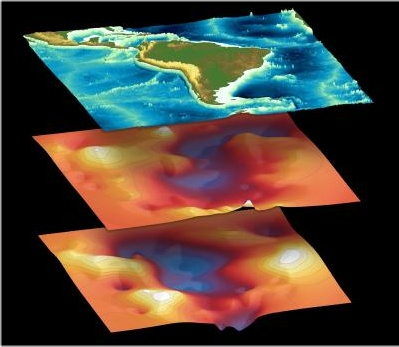
The same processes that determined how continents were generated on Earth more than 2.5 billion years ago have continued within the last 70 million years - and they profoundly affect the planet's current life and climate.

A new study details how relatively recent geologic events , namely volcanic activity 10 million years ago in what is now Panama and Costa Rica, hold the secrets of the extreme continent-building that took place billions of years earlier. This provides new understanding about the formation of the Earth's continental crust, the masses of buoyant rock rich with silica, a compound that combines silicon and oxygen. 

Government subsidies for renewable energy rebounded strongly last year, registering a solid 17% increase after two years of declines. Major expansion of solar installations in China and Japan and government=backed investments in offshore wind projects in Europe helped propel green energy spending to $270 billion.

The 2010 eruption of the Icelandic volcano Eyjafjallajökull grounded thousands of air flights and spread ash over much of western Europe, yet it was puny compared to the eruption 200 years ago of Tambora, a volcano that probably killed more than 60,000 people in what is now Indonesia and turned summer into winter over much of the Northern Hemisphere.

Saurichthys is a predatory fish characterized by a long thin body and a sharply pointed snout with numerous teeth. This distinctive ray-finned fish lived in marine and freshwater environments all over the world 252-201 million years ago during the Triassic period.

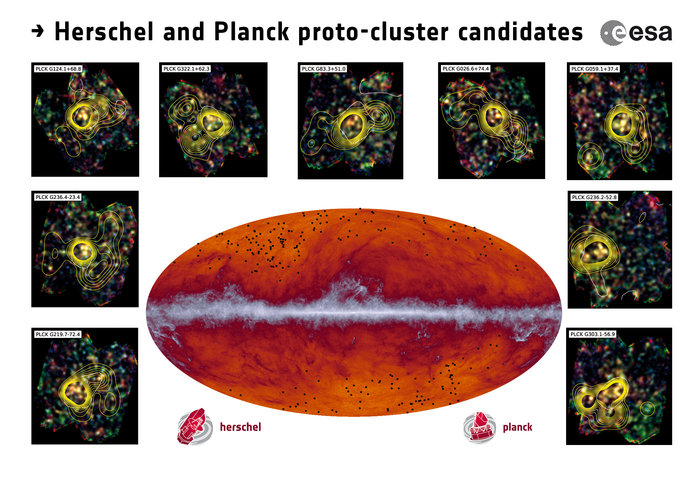
Cosmologists may have discovered what could be the precursors of the vast clusters of galaxies that we see today. Galaxies like our Milky Way, with its 100 billion stars, are usually not found in isolation. 13.8 billion years after the Big Bang, many are in dense clusters of tens, hundreds or even thousands of galaxies. 

Triple-negative breast cancers are around 15% of all breast cancers and they lack any of the three receptors (oestrogen, progesterone or HER2) that would make them responsive to targeted drugs.

Triple-negative breast cancer patients have a higher risk of disease recurrence and shorter survival than those with other breast cancers and tend to fall into two categories: those that succumb to their disease within 3-5 years, regardless of treatment; and those that remain disease free for longer than the average non-triple-negative breast cancer patient (at least 8 years post-diagnosis).  Survival prospects tend to be either very good or very bad because triple-negative breast cancers are two distinct diseases that likely originate from different cell types.