Banner
Here's Where Your Backyard Was 300 Million Years Ago

We may use terms like "grounded" and terra firma to mean stability and consistency but geology...

Convergent Evolution Cheat Sheet Now 120 Million Years Old

One tenet of natural selection is a random walk of genes but nature may be more predictable than...

Synchrotron Could Shed Light On Exotic Dark Photons

There are many hypothetical particles proposed to explain dark matter and one idea to explore how...

The Pain Scale Is Broken But This May Fix It

Chronic pain is reported by over 20 percent of the global population but there is no scientific...

User picture.
News StaffRSS Feed of this column.

News Releases From All Over The World, Right To You... Read More »

Blogroll
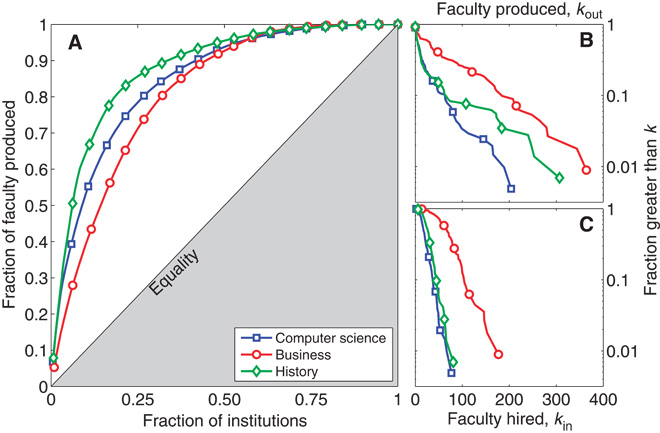
In a perfect world, job success would be a meritocracy, but academia does not really work that way, it has lots of social justice parameters and guidelines and quotas, both stated and implicit, and so once all that has been factored in, all things being equal, it's better to just play it safe and go with someone from a big-name school.

And so, we are left with kind of an 80/20 rule, the Pareto principle which posits that 20 percent of the causes for a given event are responsible for 80 percent of the outcomes.

Nova Southeastern University (NSU) researchers recently discovered that, contrary to prior belief, tissues of different mammalian organs have very different abilities to repair damage to their DNA.

These new findings indicate that the heart has the greatest capacity to repair its DNA, followed by the intestines, kidneys, spleen, testes, and lungs. The brain, however, exhibited no ability to repair damage to its DNA.

These studies were performed in murine cell tissue culture, but, based on previous human studies performed by the same investigators, such "tissue specificity" is true of humans, as well.

Massive elimination of neurons is a critical aspect of normal nervous system development but also represents a defining feature of neurodegenerative pathologies, such as Alzheimer's disease, Parkinson's disease, Huntington's disease and amyotrophic lateral sclerosis.

The order in which genetic mutations are acquired determines how an individual cancer behaves, according to research from the University of Cambridge, published today in the New England Journal of Medicine.

Most of the genetic mutations that cause cancer result from environmental 'damage' (for example, through smoking or as a result of over-exposure to sunlight) or from spontaneous errors as cells divide. In a study published today, researchers at the Department of Haematology, the Cambridge Institute for Medical Research and the Wellcome Trust/Medical Research Council Stem Cell Institute show for the first time that the order in which such mutations occur can have an impact on disease severity and response to therapy.

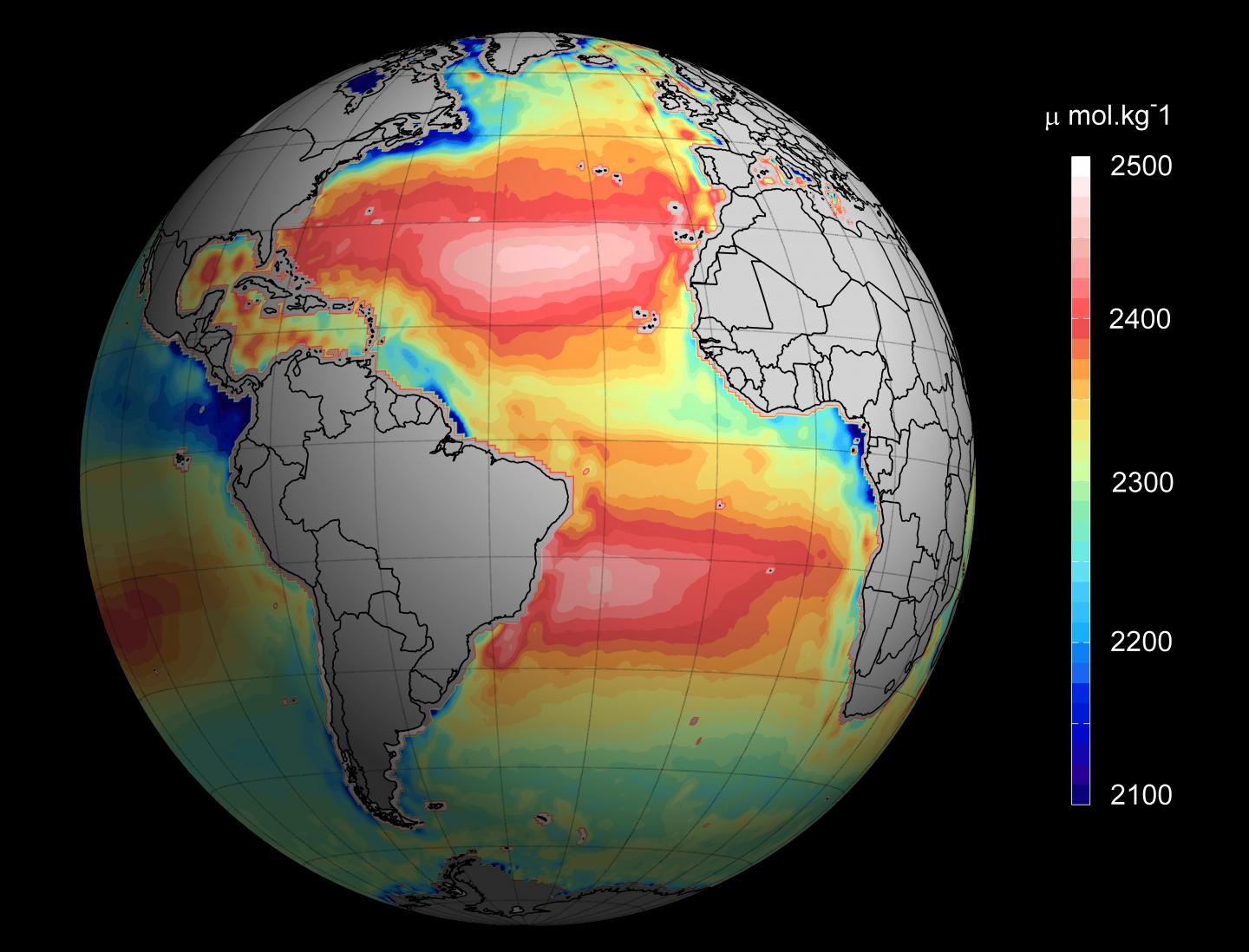
Remote monitoring of large swathes of otherwise inaccessible ocean using satellites reveals an alarming picture: ocean acidity.

The Earth's oceans take up about a quarter of global CO2 emissions, which can turn the seawater more acidic, making it more difficult for some marine life to live.

Rising CO2 emissions, and the increasing acidity of seawater projected over the next century, has the potential to devastate some marine ecosystems, a food resource on which we rely, and so careful monitoring of changes in ocean acidity is crucial.


Total ocean alkalinity as viewed from space. Credit: Ifremer/ESA/CNES
The agricultural development of the Lower Yangtze River Basin around Nanjing and Shanghai is ecologically unsustainable and actions are needed soon to reverse its decline, according to a new study.

The region has been in environmental decline since it passed a tipping point in the late 1970s, which further found that:

* the relatively stable pre-1970s 'agriculture-ecology' system in the region reached a tipping point at the end of the 1970s, as reforms in China allowed farmers to grow surplus crops with more fertilizers and pesticides.

* economic development has created a 'trade-off' between gains in agricultural productivity and increasing environmental degradation, with losses of ecosystem services, such as good water quality and stable soils.