Banner
Here's Where Your Backyard Was 300 Million Years Ago

We may use terms like "grounded" and terra firma to mean stability and consistency but geology...

Convergent Evolution Cheat Sheet Now 120 Million Years Old

One tenet of natural selection is a random walk of genes but nature may be more predictable than...

Synchrotron Could Shed Light On Exotic Dark Photons

There are many hypothetical particles proposed to explain dark matter and one idea to explore how...

The Pain Scale Is Broken But This May Fix It

Chronic pain is reported by over 20 percent of the global population but there is no scientific...

User picture.
News StaffRSS Feed of this column.

News Releases From All Over The World, Right To You... Read More »

Blogroll

Positional cloning is a genetic mapping technique used to pinpoint the location of specific traits of interest, such as disease-causing genes or mutations, within the genome. Very simply, this map-based technique involves crossing mutant individuals with wild-type individuals and examining the offspring in order to localize a candidate region in the genome for the mutation. By identifying genetic markers that are linked to the trait, progressively more precise areas on a chromosome are defined until the gene is identified.

This approach has contributed to the successful mapping of genes involved in numerous human diseases such as Huntington's disease and cystic fibrosis, an important first step in understanding these conditions.

A research team has discovered a molecular "rheostat" in the brain's appetite control center that may provide new insights into obesity, which is at epidemic levels in this country.

The discovery of this novel cell signaling pathway, reported today in the journal Nature, revises the previous "on-off" switch model of appetite control, said Roger Cone, Ph.D., who led the research team with Masoud Ghamari-Langroudi, M.D., Ph.D.

The discovery centers on a receptor in the brain's appetite control center, the melanocortin-4 receptor, or MC4R, a G-protein coupled receptor (GPCR) embedded in the membranes of nerve cells.

Acute kidney injury often arises after major surgery because the kidneys can be deprived of normal blood flow during the procedure. The use of contrast media, or dyes, can contribute to this problem.

In patients undergoing coronary angiography or percutaneous coronary intervention, which are heart procedures that use dyes to help surgeons visualize the arteries, a high dose of the statin atorvastatin was linked with a reduction in blood levels of creatinine, a marker of kidney injury, as well as a lower incidence of acute kidney injury compared with a low dose of the statin.

Sometimes the whole is greater than the sum of its parts, said Aristotle. That certainly applies to biology, where molecular motions in living systems have a macroscale effect - such as large muscles that contract due to protein motors.

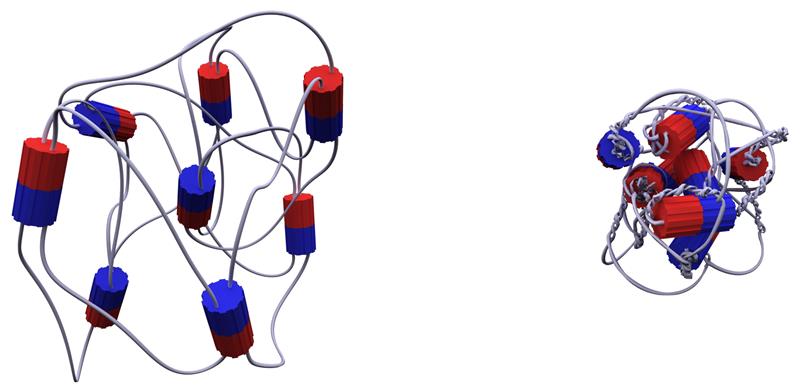
A team at CNRS's Institut Charles Sadron led by Nicolas Giuseppone, professor at the Université de Strasbourg has  used this concero to make a polymer gel that is able to contract through the action of artificial molecular motors. When activated by light, these nanoscale motors twist the polymer chains in the gel, which as a result contracts by several centimeters. Another advantage is that the new material is able to store the light energy absorbed. 
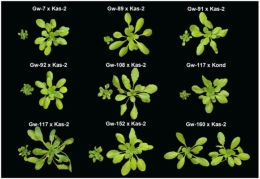
A recently published study offers new clues about the evolution of the immune system in European populations of the plant Arabidopsis thaliana and the underlying genetic mechanisms associated with immunity. 
The species Arabidopsis thaliana, which is naturally distributed across the northern hemisphere, belongs to the same family than mustard. The species is used as model in plant biology studies because its genome is relatively small and appropriate for genetic studies.
There is a lot of talk about increasing longevity but 50 years of increasing frailty, doctor visits and overall decline is not really an improvement over 30 years of it.

A new study shows that by focusing on the genetics involved in increasing longevity, we won't be helping people much at all; genes that increase longevity may not significantly increase healthy lifespan.

A study of long-lived mutant C. elegans by scientists at the University of Massachusetts Medical School shows that the genetically altered worms spend a greater portion of their life in a frail state and exhibit less activity as they age then typical nematodes.