Banner
Here's Where Your Backyard Was 300 Million Years Ago

We may use terms like "grounded" and terra firma to mean stability and consistency but geology...

Convergent Evolution Cheat Sheet Now 120 Million Years Old

One tenet of natural selection is a random walk of genes but nature may be more predictable than...

Synchrotron Could Shed Light On Exotic Dark Photons

There are many hypothetical particles proposed to explain dark matter and one idea to explore how...

The Pain Scale Is Broken But This May Fix It

Chronic pain is reported by over 20 percent of the global population but there is no scientific...

User picture.
News StaffRSS Feed of this column.

News Releases From All Over The World, Right To You... Read More »

Blogroll

Sex or no sex?  If you want to be healthier as a species over time, sexual reproduction is the way to go, according to a new study. 

It's a long-debated topic among biologists - some argue that sexual reproduction is superior because species don't accumulate harmful mutations as easily as in asexual reproduction.

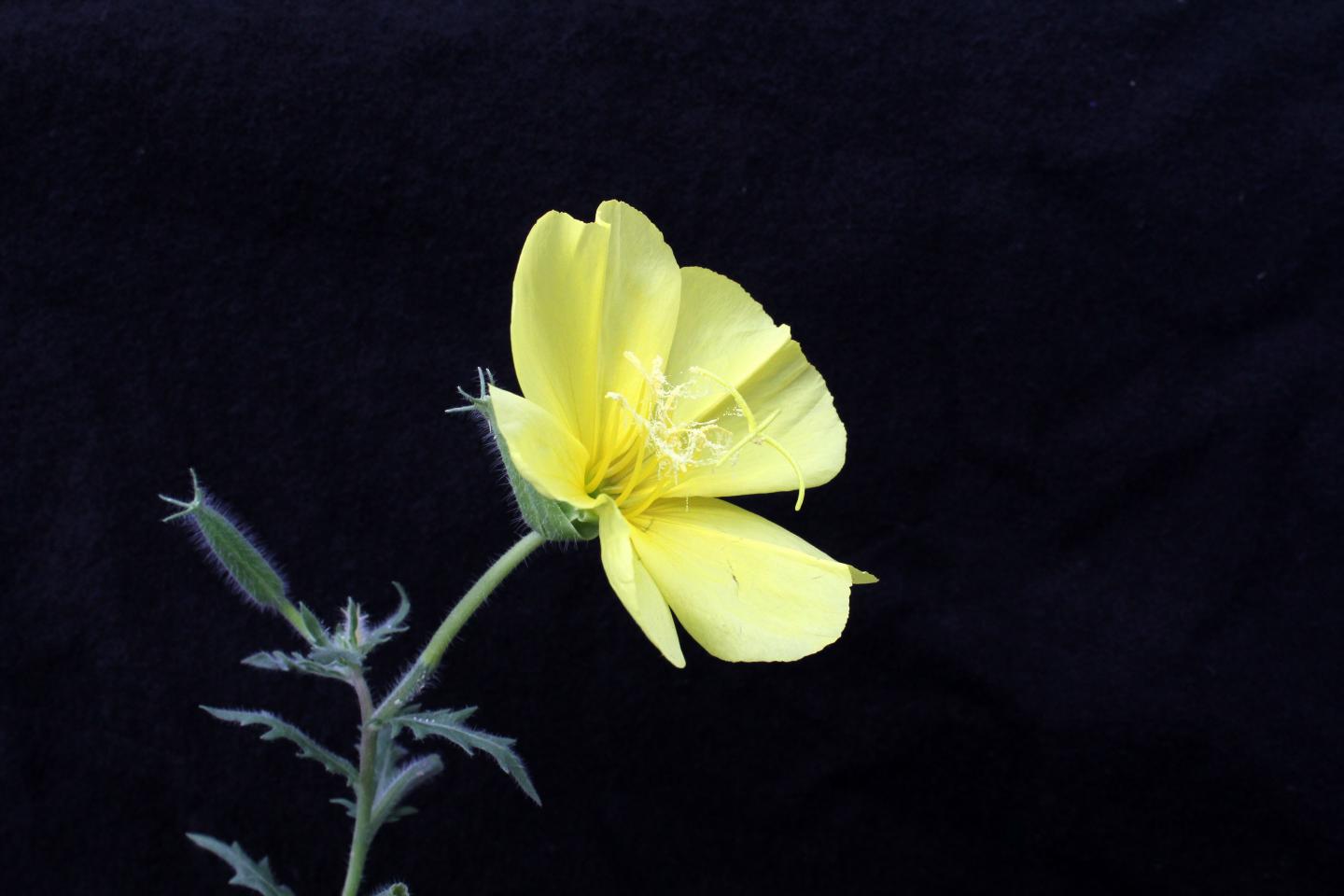
Using various species of the evening primrose (Oenothera) as his model, Dr. Jesse Hollister, assistant professor at Stony Brook University in New York, and colleagues demonstrated strong support for reproducing sexually. "These findings allow us to understand why an enormous diversity of species around the world go through the laborious process of sexual reproduction," says Hollister.

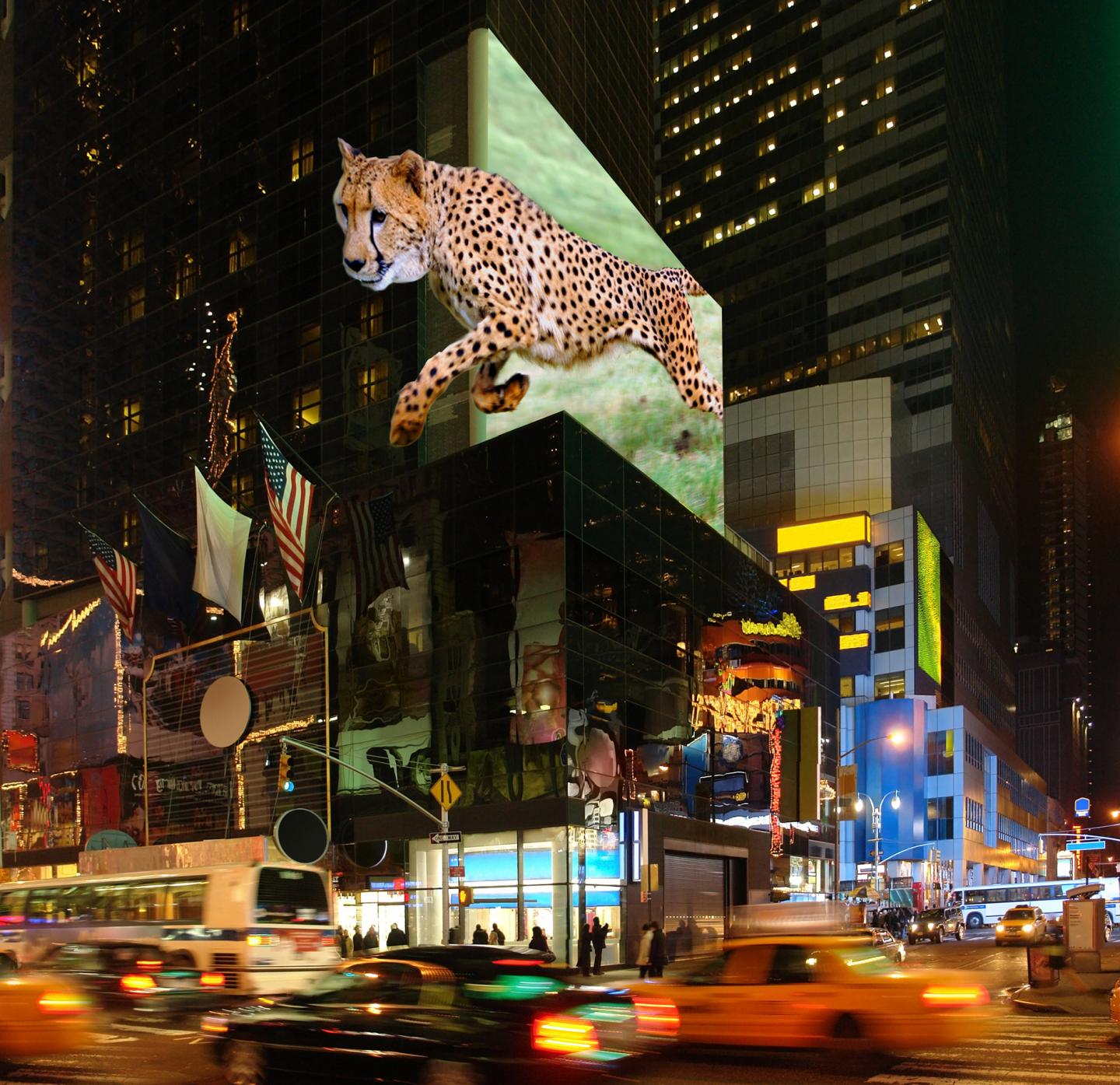
Engineers in Austria have given us a blessing and a curse - they have created a giant laser system that sends beams in different directions, which makes them visible from many different angles. 

The angular resolution is so fine that the left eye is presented a different picture than the right one, creating a 3D effect.

 On November 23rd, 2014, a new volcano eruption commenced on Fogo, one of the Cape Verde Islands, and it continues even now, making it the largest and most damaging eruption - and the biggest natural disaster no one in the western world was reading about it - on the archipelago for over 60 years. 

Most of the damage was caused by lava flows advancing into populated regions and numerous buildings, homes and roads were destroyed. In total, three villages have been abandoned and thousands of residents were evacuated.

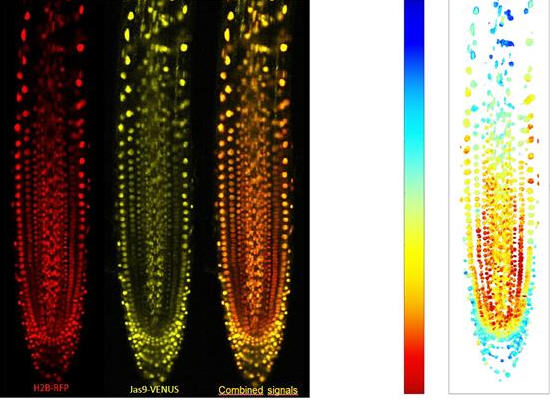
Scientists have developed a new biosensor that allows them to see, in real time, what happens when a plant’s defenxe system swings into action.

When plants come under attack internal alarms signal and their defense mechanisms swing into action. For the first time, plant scientists have imaged, in real time, what happens when plants beat off the bugs and respond to disease and damage.

Malcolm Bennett, Professor in Plant Science at The University of Nottingham and Director of the Centre for Plant Integrative Biology, said, “Understanding how plants respond to mechanical damage, such as insect attack, is important for developing crops which cope better under stress.”

Land-based plants respond to hormones in order to survive and it was once assumed that such hormone signaling machinery only existed in these relatively complex plants but new research shows that some types of freshwater algae can also detect ethylene gas - the same stress hormone found in land plants - and might use these signals to adapt to changing environmental conditions.

Interbreeding of two malaria mosquito species in the West African country of Mali has resulted in a "super mosquito" hybrid that's resistant to insecticide-treated bed nets.

Anopheles gambiae, a major malaria vector, is interbreeding with isolated pockets of another malaria mosquito, A. coluzzii. Entomologists initially considered them as the "M and S forms" of Anopheles gambiae. They are now recognized as separate species. Interbreeding of two malaria mosquito species in the West African country of Mali has resulted in a "super mosquito" hybrid that's resistant to insecticide-treated bed nets.