Banner
Here's Where Your Backyard Was 300 Million Years Ago

We may use terms like "grounded" and terra firma to mean stability and consistency but geology...

Convergent Evolution Cheat Sheet Now 120 Million Years Old

One tenet of natural selection is a random walk of genes but nature may be more predictable than...

Synchrotron Could Shed Light On Exotic Dark Photons

There are many hypothetical particles proposed to explain dark matter and one idea to explore how...

The Pain Scale Is Broken But This May Fix It

Chronic pain is reported by over 20 percent of the global population but there is no scientific...

User picture.
News StaffRSS Feed of this column.

News Releases From All Over The World, Right To You... Read More »

Blogroll

Home dialysis therapies may help prolong the lives of patients with kidney failure compared with hemodialysis treatments administered in medical centers, according to an upcoming study at ASN Kidney Week 2014 at the Pennsylvania Convention Center in Philadelphia, PA.

Home dialysis therapies are more convenient and less expensive than in-center treatment, but it's unclear whether all home therapies - which include peritoneal dialysis and home hemodialysis - can prolong patients' survival. Researchers led by Austin Stack, MD, MBBCh, FASN (Graduate Entry Medical School, University of Limerick, in Ireland) analyzed national data to compare dialysis survival among 585,911 patients who started dialysis in the United States between 2005 and 2010. 

Air pollution may play a role in the development of kidney disease, according to a study upcoming at ASN Kidney Week 2014 November 11-16 at the Pennsylvania Convention Center in Philadelphia, Pennsylvania.

There are wide variances in the prevalence of chronic kidney disease (CKD) across the United States, only part of which is explained by differences in individuals' risk factors. To see if air quality may also play a role, Jennifer Bragg-Gresham, PhD (University of Michigan) and her colleagues looked at 2010 Medicare information on 1.1 million persons as well as air-quality data for all US counties provide by the Environmental Protection Agency.

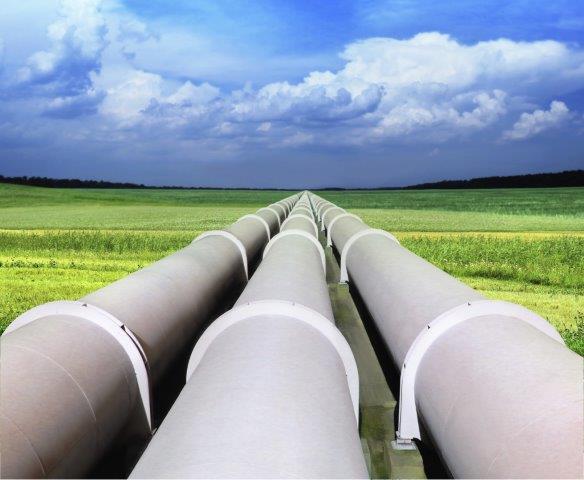
Major leaks from oil and gas pipelines can lead to home evacuations and even explosions. The line of lawyers waiting to sue for millions of dollars even if nothing happens can be seen from space.

And though most pipeline leaks are small, America leads the world in safe pipeline construction and oversight, it's better for everyone if leaks are stopped as quickly as possible. A report in Industrial&Engineering Chemistry Research outlines development of a new software-based method that finds leaks even when they're small, which could help prevent serious incidents and save money for customers and industry.

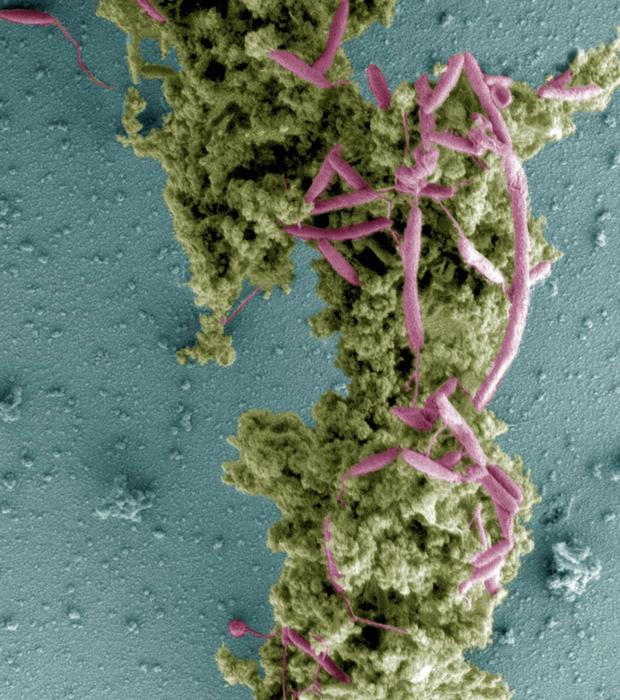
Campylobacter's persistence in the kitchen is boosted by organic matter from chicken carcasses - "chicken juice" - and that means better cleaning of surfaces used for food preparation is an easy way to keep illness from happening.

Campylobacter aren't particularly hardy bacteria, so one area of research has been to understand exactly how they manage to survive outside of their usual habitat, the intestinal tract of poultry. They are sensitive to oxygen, but during biofilm formation the bacteria protect themselves with a layer of slime. This also makes them more resistant to antimicrobials and disinfection treatments. 

Is there such a thing as a Facebook murder? Is it different than any other murder? Legally, it can be. From a common sense point of view, there is no 'hate crime' status that should make a murder worse if a white person kills a latino person or a Catholic instead of a white person or a Protestant, but legally such crimes can be considered more heinous and get a special label of hate crime.

But social media is ubiquitous and criminal justice academics are always on the prowl for new categories to create and write about so a 'Facebook Murder', representing crimes that may somehow involve social networking sites and thus be a distinct category for sentencing, has been postulated. 

In the 1980s, a press release writer for an environmental group pulled a metric for meat and fossil fuel usage out of the air. It made its way into a book written by an activist and ever since then the concept of 'embedded' emissions has been used by anti-meat proponents.

"It takes a gallon of gas to make a pound of beef" is easy to remember. It is elegant. It is also completely wrong. Regardless, the virtual environmental cost of meat became a craze and it was soon followed by virtual water. The virtual water in the grain in just one part of Egypt is more than all of the water in the Nile so the concept falls apart rather quickly when it comes to the real world but scholars are still broadening the concept out to new areas.