Banner
Here's Where Your Backyard Was 300 Million Years Ago

We may use terms like "grounded" and terra firma to mean stability and consistency but geology...

Convergent Evolution Cheat Sheet Now 120 Million Years Old

One tenet of natural selection is a random walk of genes but nature may be more predictable than...

Synchrotron Could Shed Light On Exotic Dark Photons

There are many hypothetical particles proposed to explain dark matter and one idea to explore how...

The Pain Scale Is Broken But This May Fix It

Chronic pain is reported by over 20 percent of the global population but there is no scientific...

User picture.
News StaffRSS Feed of this column.

News Releases From All Over The World, Right To You... Read More »

Blogroll

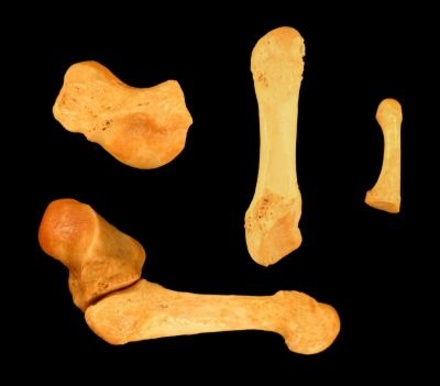
Sauropods,  large, long-necked plant-eating dinosaurs such as Diplodocus and Brachiosaurus, are the largest animals to have ever walked the Earth, with the biggest weighing 80 tons.

Clearly, a single creature the size of 11 elephants would have needed vast amounts of food. How did multiple sauropod species live alongside one another in prehistoric ecosystems between 210 and 65 million years ago?

New research from the University of Bristol and the Natural History Museum, London details the community of the Late Jurassic Morrison Formation, a distinctive sequence of sedimentary rock in the western United States from which over 10 species of sauropod are known.

Researchers have created a molecule known as a peptide mimic that displays a functionally critical region of the virus that is universally conserved in all known species of Ebola. This new tool can be used as a drug target in the discovery of anti-Ebola agents that are effective against all known strains and likely future strains. 

Ebola is a lethal virus that causes severe hemorrhagic fever with a 50 percent to 90 percent mortality rate. There are five known species of the virus. Outbreaks have been occurring with increasing frequency in recent years, and an unprecedented and rapidly expanding Ebola outbreak is currently spreading through several countries in West Africa with devastating consequences.

Using rats as model subjects, scientists have found that adolescents were at an increased risk of suffering negative health effects from sugar-sweetened beverage consumption.

Adolescent rats that freely consumed large quantities of liquid solutions containing sugar or high-fructose corn syrup (HFCS) in concentrations comparable to popular sugar-sweetened beverages experienced memory problems and brain inflammation, according to a new study. Neither adult rats fed the sugary drinks nor adolescent rats who did not consume sugar had the same issues.

Emphasizing weight in health definitions could be harmful to patients, finds an article in the Journal of Obesity

Dr. Rachel Calogero of the School of Psychology at the University of Kent and colleagues recommend that this approach, known as 'weight-normative', is replaced by health care professionals, public health officials and policy-makers with a 'weight-inclusive' approach. 

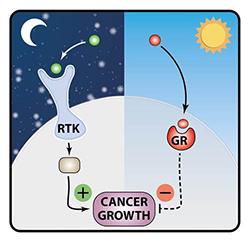
It's not a movie about zombies, but it's a Halloween nightmare - at night while we sleep unaware, something deadly grows and spreads quickly.

In a surprise finding, Weizmann Institute of Science researchers have found that nighttime is the right time for cancer to grow and spread in the body. Their findings suggest that administering certain treatments in time with the body’s day-night cycle could boost their efficiency.

A microRNA molecule has been tagged as a surprisingly crucial player in managing cell survival and growth. The findings underscore the emerging recognition that non-coding RNAs – small molecules that are not translated into working proteins – help regulate basic cellular processes and may be key to developing new drugs and therapies.

Principal investigator Albert R. La Spada, MD, PhD, professor of cellular and molecular medicine at UC San Diego, and colleagues found that a microRNA known as let-7 controls autophagy through the amino acid sensing pathway, which has emerged as the most potent activator of mTORC1 complex activity.