Banner
Here's Where Your Backyard Was 300 Million Years Ago

We may use terms like "grounded" and terra firma to mean stability and consistency but geology...

Convergent Evolution Cheat Sheet Now 120 Million Years Old

One tenet of natural selection is a random walk of genes but nature may be more predictable than...

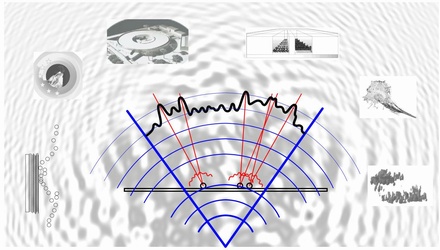
Synchrotron Could Shed Light On Exotic Dark Photons

There are many hypothetical particles proposed to explain dark matter and one idea to explore how...

The Pain Scale Is Broken But This May Fix It

Chronic pain is reported by over 20 percent of the global population but there is no scientific...

User picture.
News StaffRSS Feed of this column.

News Releases From All Over The World, Right To You... Read More »

Blogroll

There's a common trope in Hollywood celebrities who gain weight and receive attention for it. They talk about how much healthier and better they feel about themselves at higher weight - and then they immediately lose weight and talk about how much healthier and better they feel about themselves.

Severely obese people who aren't famous also experience much better spirits once they shed weight through diet, lifestyle changes or medical intervention but Valentina Ivezaj and Carlos Grilo of the Yale University School of Medicine write in Obesity Surgery that it is not a psychological magic bullet.

Antidepressants are the most commonly used treatment for social anxiety disorder but we know they don't work for many people and their efficacy goes down over time.

New research finds they are not even needed in many instances. 

Social anxiety disorder is a condition characterized by fear and avoidance of social situations. It affects as many as 13 percent of the Western world. For most people, it is not severe, and they never receive treatment for the disorder but those who do get treatment are usually assigned medication.

The appeal of artificial photosynthesis, in which the electrochemical reduction of carbon dioxide is used to produce clean, green and sustainable fuels, is that we can turn an atmospheric byproduct into a renewable energy technology.

However, finding a catalyst for reducing carbon dioxide that is highly selective and efficient has proven to be a huge scientific challenge.

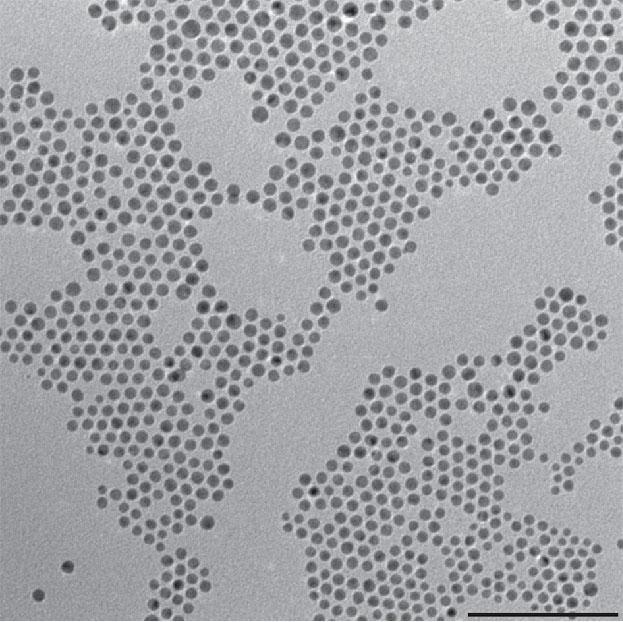
Peidong Yang, a chemist with Berkeley Lab's Materials Sciences Division, led a study in which bimetallic nanoparticles of gold and copper were used as the catalyst for the carbon dioxide reduction. The results experimentally revealed for the first time the critical influence of the electronic and geometric effects in the reduction reaction.

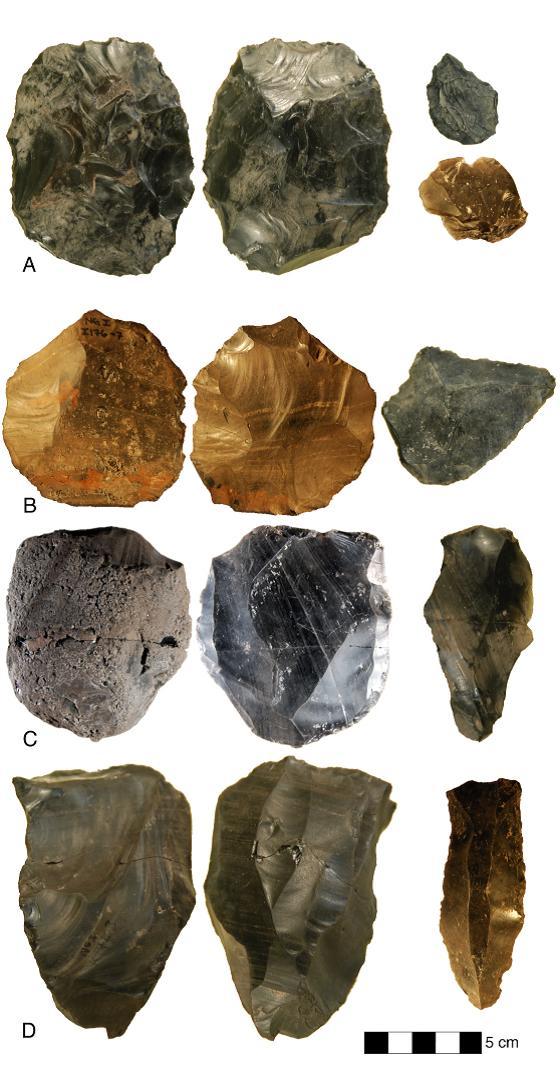
A new discovery of thousands of Stone Age tools has provided a major rethink about human innovation 325,000 years ago - and how early technological developments spread across the world. 

The researchers found evidence which challenges the belief that a type of technology known as Levallois – where the flakes and blades of stones were used to make useful products such as hunting weapons – was invented in Africa and then spread to other continents as the human population expanded.

They discovered at an archaeological site in Armenia that these types of tools already existed there between 325,000 and 335,000 years ago, suggesting that local populations developed them out of a more basic type of technology, known as biface, which was also found at the site.

Many of the choices we make are informed by experiences we've had in the past but we know that sometimes it is better to throw all that out and take a risk on something new.

Scientists at the Howard Hughes Medical Institute's Janelia Research Campus have shown that the brain can temporarily disconnect information about past experience from decision-making circuits, thereby triggering random behavior. 

Concrete is the world’s most-used construction material and thus a leading contributor to global warming, producing perhaps 10 percent of industry-generated greenhouse-gas emissions.

Industry is already reducing greenhouse emissions, such as by using more natural gas and less coal to generate cost-effective electricity, and a new suggests another low-impact way go green - reducing concrete emissions by more than half and getting a stronger, more durable material using science rather than rationing.