Banner
Here's Where Your Backyard Was 300 Million Years Ago

We may use terms like "grounded" and terra firma to mean stability and consistency but geology...

Convergent Evolution Cheat Sheet Now 120 Million Years Old

One tenet of natural selection is a random walk of genes but nature may be more predictable than...

Synchrotron Could Shed Light On Exotic Dark Photons

There are many hypothetical particles proposed to explain dark matter and one idea to explore how...

The Pain Scale Is Broken But This May Fix It

Chronic pain is reported by over 20 percent of the global population but there is no scientific...

User picture.
News StaffRSS Feed of this column.

News Releases From All Over The World, Right To You... Read More »

Blogroll

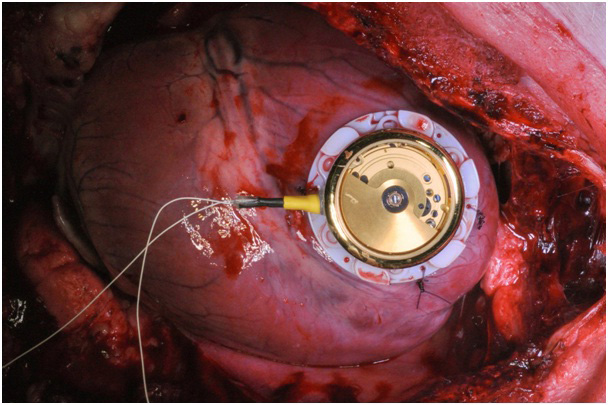
A new battery-less cardiac pacemaker is based on the automatic wristwatch concept - it is powered by heart motion.

The prototype device  presented at ESC Congress 2014 by Adrian Zurbuchen from Switzerland does not require battery replacement.

Zurbuchen is a PhD candidate in the Cardiovascular Engineering Group at ARTORG, University of Bern and said, "Batteries are a limiting factor in today's medical implants. Once they reach a critically low energy level, physicians see themselves forced to replace a correctly functioning medical device in a surgical intervention. This is an unpleasant scenario which increases costs and the risk of complications for patients.

Wockhardt Limited announced that two of its drugs, WCK 771 and WCK 2349, received the coveted Qualified Infectious Disease Product (QIDP) status from U.S. Food&Drug Administration (FDA).

QIDP status is granted to drugs which act against pathogens which have a high degree of unmet need in their treatment and are identified by the Centers for Disease Control. QIDP status allows for fast track review of the drug application by U.S. FDA, paving way for an early launch. This is the first instance of an Indian Pharmaceutical company receiving a QIDP status.


In patients who experienced an acute coronary syndrome (ACS) event (such as heart attack or unstable angina), use of the drug darapladib to inhibit the enzyme lipoprotein-associated phospholipase A2 (believed to play a role in the development of atherosclerosis) did not reduce the risk of recurrent major coronary events, according to a study published by JAMA. The study is being released early online to coincide with its presentation at the European Society of Cardiology Congress.

A new analysis of satellite data from the last 19 years reveals that fresh water from melting glaciers has caused the sea level around the coast of Antarctica to rise by 2 centimeters more than the global average of 6 centimeters.

Researchers at the University of Southampton detected the rapid rise in sea-level by studying satellite scans of a region that spans more than a million square kilometers. 

Visible blood in urine is the best known indicator of bladder cancer but new research  finds that invisible blood in urine may be an early warning sign of bladder cancer. 

Scientists at the University of Exeter Medical School found that 1 in 60 people over the age of 60 who had invisible blood in their urine transpired to have bladder cancer. Thay's about half those who had visible blood in their urine but higher than figures for other potential symptoms of bladder cancer that warrant further investigation.