Banner
Here's Where Your Backyard Was 300 Million Years Ago

We may use terms like "grounded" and terra firma to mean stability and consistency but geology...

Convergent Evolution Cheat Sheet Now 120 Million Years Old

One tenet of natural selection is a random walk of genes but nature may be more predictable than...

Synchrotron Could Shed Light On Exotic Dark Photons

There are many hypothetical particles proposed to explain dark matter and one idea to explore how...

The Pain Scale Is Broken But This May Fix It

Chronic pain is reported by over 20 percent of the global population but there is no scientific...

User picture.
News StaffRSS Feed of this column.

News Releases From All Over The World, Right To You... Read More »

Blogroll

Hydraulic fracturing is emerging as one of the primary methods of drilling for natural gas, yet is equally controversial in its potential to induce harm to humans and the environment.

The uncertainties of the health risks associated with horizontal drilling using fluid pressure to break down shale formations for natural gas extraction has pushed countries worldwide to proactively regulate the use of this technology, such as a temporary ban in Germany in 2012 and a ban in France in 2011.

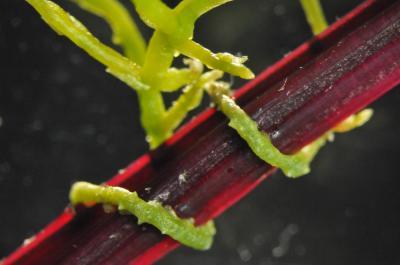
A scientist has discovered a potentially new form of plant communication, one that allows them to share an extraordinary amount of genetic information with one another.

Professor Jim Westwood examined the relationship between a parasitic plant, dodder, and two host plants, Arabidopsis and tomatoes. In order to suck the moisture and nutrients out the host plants, dodder uses an appendage called a haustorium to penetrate the plant. Westwood previously broke new ground when he found that during this parasitic interaction, there is a transport of RNA between the two species. RNA translates information passed down from DNA, which is an organism’s blueprint.

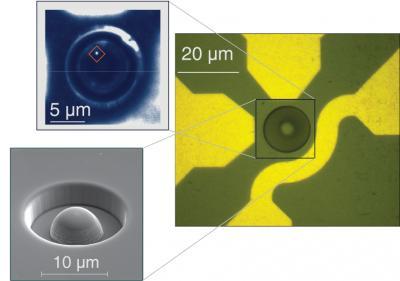
A team of researchers has developed a technique to record the quantum mechanical behavior of an individual electron - contained within a nanoscale defect in diamond.

Their technique uses ultrafast pulses of laser light both to control the defect's entire quantum state and observe how that single electron state changes over time.   

This research contributes to the emerging science of quantum information processing, which demands that science leave behind the unambiguous universe of traditional binary logic—0 or 1—and embrace the counterintuitive quantum world, where behavior is radically different from what humans experience every day. While people are generally content being in one place at a time, electrons can be in many states at once.

Women with a vitamin D deficiency were nearly half as likely to conceive through in vitro fertilization (IVF) as women who had sufficient levels of the vitamin, according to a new study in the Journal of Clinical Endocrinology&Metabolism.

Long known for its role in bone health, vitamin D is a steroid hormone that is emerging as a factor in fertility. Animal studies have shown that the hormone, which is produced in the skin as a result of sun exposure as well as absorbed from some fortified foods, affects fertility in many mammals.

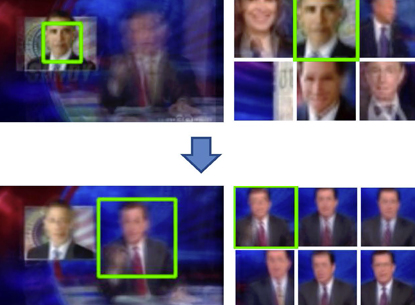
A picture is worth a thousand words, the saying goes, meaning that a picture can tell a big story quickly, but what if it could also represent a hundred thousand other images? 

New software seeks to tame the vast amount of visual data in the world by generating a single photo that can represent massive clusters of images. This tool can give users the photographic gist of a kid on Santa's lap, housecats, or brides and grooms at their weddings. It works by generating an image that literally averages the key features of the other photos. 

Kidney failure is a devastating condition and there are never enough donors for recipients - so it seems strange that anyone would be hesitant about getting one, but a new paper in the Clinical Journal of the American Society of Nephrology suggest that interventions are needed to increase women's acceptance of living donor kidney transplantation.