Banner
Here's Where Your Backyard Was 300 Million Years Ago

We may use terms like "grounded" and terra firma to mean stability and consistency but geology...

Convergent Evolution Cheat Sheet Now 120 Million Years Old

One tenet of natural selection is a random walk of genes but nature may be more predictable than...

Synchrotron Could Shed Light On Exotic Dark Photons

There are many hypothetical particles proposed to explain dark matter and one idea to explore how...

The Pain Scale Is Broken But This May Fix It

Chronic pain is reported by over 20 percent of the global population but there is no scientific...

User picture.
News StaffRSS Feed of this column.

News Releases From All Over The World, Right To You... Read More »

Blogroll

One of the greatest and most dangerous naturalistic fallacies is that if our ancestors used something, it must be as good or even better than modern science.

In An Account of the Foxglove and Some of its Medical Uses, published in 1785, Sir William Withering cautioned readers that extracts from the plant foxglove, also called digitalis, was not a perfect drug. "Time will fix the real value upon this discovery," he wrote.  

Weather extremes have been linked to a recently discovered mechanism: the trapping of giant waves in the atmosphere.

A new data analysis now shows that such wave-trapping events are indeed on the rise.  One reason could be changes in circulation patterns in the atmosphere. By analyzing large sets of global weather data, the researchers found an intriguing connection.  


Rossby Waves: meandering airstreams

Researchers have discovered a highly virulent, multi-drug resistant form of the pathogen Pseudomonas aeruginosa, in patient samples in Ohio. Their investigation suggests that the particular genetic element involved, still rare in the United States, has been spreading unnoticed and that surveillance is urgently needed.  

The P. aeruginosa contained a gene for a drug resistant enzyme called a metallo beta-lactamase. Beta-lactamases enable broad-spectrum resistance to beta-lactam antibiotics, including carbapenems, cephalosporins, and penicillins, because they can break the four atom beta-lactam ring, a critical component of these antibiotics' structure.

It's a trick almost everyone knows: to open a locked door, slide a credit card over the latch.

Scientists at The Scripps Research Institute (TSRI) used a similar strategy when they attempted to disrupt the function of MYC, a cancer regulator thought to be "undruggable." The researchers found that a credit card-like molecule they developed somehow moves in and disrupts the critical interactions between MYC and its binding partner.

MYC is a transcriptional factor, meaning it controls gene expression. When MYC is overexpressed or amplified, the unregulated expression of genes involved in cell proliferation, a key step in cancer growth, follows. MYC is involved in a majority of cancers, including Burkitt's lymphoma, a fast-growing cancer that tends to strike children.

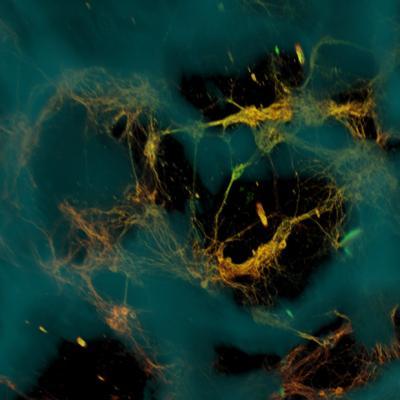
Bioengineers have created three-dimensional brain-like tissue that functions like and has structural features similar to tissue in the rat brain and that can be kept alive in the lab for more than two months.