Banner
Here's Where Your Backyard Was 300 Million Years Ago

We may use terms like "grounded" and terra firma to mean stability and consistency but geology...

Convergent Evolution Cheat Sheet Now 120 Million Years Old

One tenet of natural selection is a random walk of genes but nature may be more predictable than...

Synchrotron Could Shed Light On Exotic Dark Photons

There are many hypothetical particles proposed to explain dark matter and one idea to explore how...

The Pain Scale Is Broken But This May Fix It

Chronic pain is reported by over 20 percent of the global population but there is no scientific...

User picture.
News StaffRSS Feed of this column.

News Releases From All Over The World, Right To You... Read More »

Blogroll

There are numerous ways to address carbon emissions but are we choosing the right approaches? America and Europe have invested heavily in subsidizing solar and wind generation and solar panels - but critics contend that the same money spent modernizing older buildings would have done far more than funding Chinese corporations or wealthy homeowners has.

Low-carbon energy won't cost  more than what is currently spent on today's fossil-dominated energy system, according to new research from the International Institute for Applied Systems Analysis (IIASA) and partners.

Evolutionary adaptations have allowed Tibetans to have no trouble living at 13,000 feet, but how they became able to conquer the harsh environment of hypoxia has long been a mystery.

Medicine is advancing rapidly and it always has risks, but in early going the risks are going to be greater. A paper found that the risk of patient harm increased two-fold in 2006, the year when teaching hospitals nationwide embraced the pursuit of minimally invasive robotic surgery for prostate cancer.

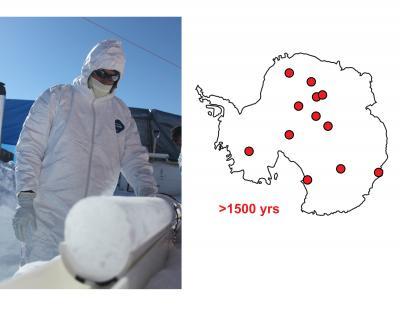
What is the impact of volcanic sulfate emissions on climate? Researchers have completed the most accurate and precise reconstruction to date of historic volcanic sulfate emissions in the Southern Hemisphere, derived from a large number of individual ice cores collected at various locations across Antarctica and is the first annually resolved record extending through the Common Era - the last 2,000 years of human history.

Reconstructions of the past are critical to creating accurate model simulations used to assess natural versus anthropogenic climate forcing. Such model simulations underpin environmental policy decisions including those aimed at regulating greenhouse gas and aerosol emissions to mitigate projected global warming. 

The small intestine is not easy to examine. X-rays, MRIs and ultrasound images provide snapshots but each suffers limitations.
 

The average human small intestine is roughly 23 feet long and 1 inch thick. Sandwiched between the stomach and large intestine, it is where much of the digestion and absorption of food takes place. It is also where symptoms of irritable bowel syndrome, celiac disease, Crohn's disease and other gastrointestinal illnesses occur. To assess the organ, doctors typically require patients to drink a thick, chalky liquid called barium. Doctors then use X-rays, magnetic resonance imaging and ultrasounds to assess the organ, but these techniques are limited with respect to safety, accessibility and lack of adequate contrast, respectively.

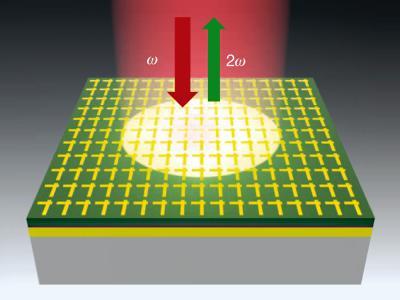
Lasers are ubiquitous but there are still wavelengths for which only large and expensive ones exist, or none at all. Remote sensing and medical applications call for compact laser systems, for example with wavelengths from the near infrared to the Terahertz region and now researchers at the Technische Universitaet Muenchen and the University of Texas Austin have developed a 400 nanometer thick nonlinear mirror that reflects frequency-doubled output using input light intensity as small as that of a laser pointer.