Banner
Here's Where Your Backyard Was 300 Million Years Ago

We may use terms like "grounded" and terra firma to mean stability and consistency but geology...

Convergent Evolution Cheat Sheet Now 120 Million Years Old

One tenet of natural selection is a random walk of genes but nature may be more predictable than...

Synchrotron Could Shed Light On Exotic Dark Photons

There are many hypothetical particles proposed to explain dark matter and one idea to explore how...

The Pain Scale Is Broken But This May Fix It

Chronic pain is reported by over 20 percent of the global population but there is no scientific...

User picture.
News StaffRSS Feed of this column.

News Releases From All Over The World, Right To You... Read More »

Blogroll

Sorry Malcolm Gladwell, and you positive thinking book buyers at Whole Foods, you are not going to be a world-class sprinter no matter how much you practice unless you were born with exceptional speed.

A new paper by Michael Lombardo, professor of biology at Grand Valley State University, and Robert Deaner, associate professor of psychology, shows that the developmental histories of elite sprinters contradict the popular deliberate practice model of expertise. According to this deliberate model, there is no such thing as innate talent. Instead, 10 years of deliberate practice (roughly 10,000 hours) are necessary and sufficient for anyone to become an expert in any field, including sports.

A new study has affirmed what most of us knew - practice makes perfect, but only if you have some ability. In the nature versus nurture debate, Usain Bolt is still going to run faster than most people no matter how much they practice.

And that goes for musicians too. An analysis of 850 sets of twins leads Zach Hambrick, a Michigan State University professor of psychology, to say both genes and environment matter, "Not only in the sense that both nature and nurture contribute, but that they interact with each other.

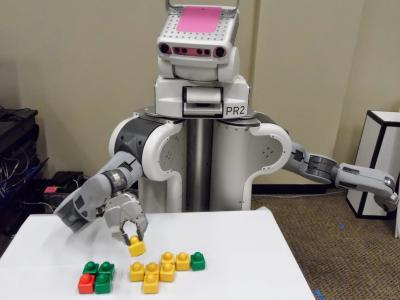
Want to teach a robot to tend the garden? It will go faster if you let the crowd help. University of Washington computer scientists at the 2014 Institute of Electrical and Electronics Engineers International Conference on Robotics and Automation in Hong Kong showed that crowdsourcing can be a quick and effective way to teach a robot how to complete tasks

Learning by imitating a human is a proven approach to teach a robot to perform tasks, but it can take a lot of time. Imagine having to teach a robot how to load the dishwasher – it might take many repetitious lessons for the robot to learn how to hold different types of cookware and cutlery and how to most efficiently fill the machine.

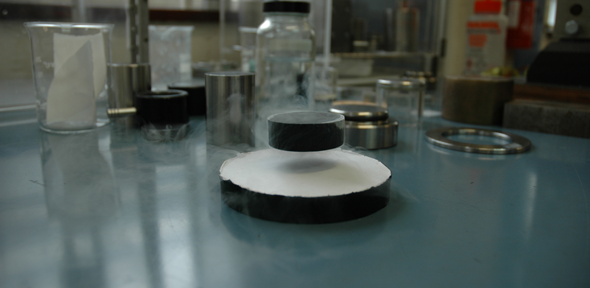
By trapping a magnetic field with a strength of 17.6 Tesla, roughly 100 times stronger than the field generated by a typical fridge magnet, in a high temperature gadolinium barium copper oxide (GdBaCuO) superconductor, researchers not only beat the previous record by 0.4 Tesla, they harnessed  the equivalent of three tons of force inside a golf ball-sized sample of material that is normally as brittle as fine china. 

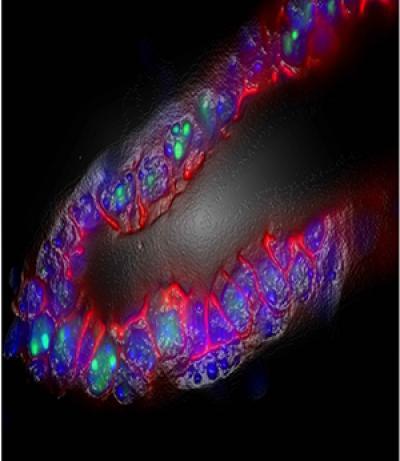
A study of triple-negative breast cancer raises the prospect that some patients with aggressive tumors may benefit from a class of anti-inflammatory drugs used to treat rheumatoid arthritis.

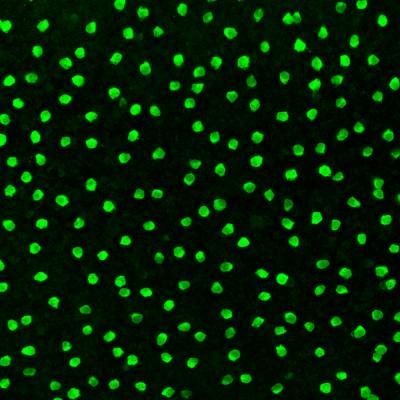
Neurons are vital to the functional organization of the central nervous system. Multiple cell types are present within any brain structure, but the rules governing their positioning, and the molecular mechanisms mediating those rules, are unknown.

A new study finds that a particular neuron, the cholinergic amacrine cell, creates a "personal space" in much the same way that people distance themselves from one another in an elevator. The study also says that this feature is heritable and identifies a genetic contributor to it, pituitary tumor-transforming gene 1 (Pttg1).