Banner
Here's Where Your Backyard Was 300 Million Years Ago

We may use terms like "grounded" and terra firma to mean stability and consistency but geology...

Convergent Evolution Cheat Sheet Now 120 Million Years Old

One tenet of natural selection is a random walk of genes but nature may be more predictable than...

Synchrotron Could Shed Light On Exotic Dark Photons

There are many hypothetical particles proposed to explain dark matter and one idea to explore how...

The Pain Scale Is Broken But This May Fix It

Chronic pain is reported by over 20 percent of the global population but there is no scientific...

User picture.
News StaffRSS Feed of this column.

News Releases From All Over The World, Right To You... Read More »

Blogroll

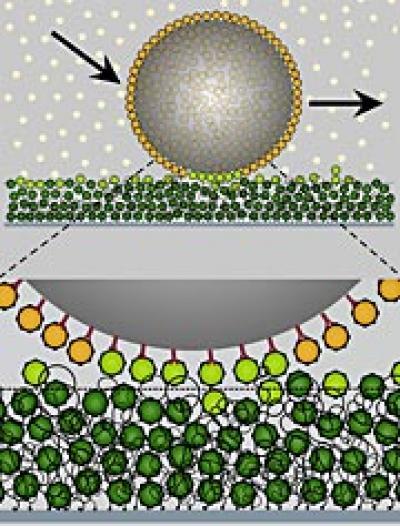
Biological membranes are like a guarded border. They separate the cell from the environment and at the same time control the import and export of molecules.

The nuclear membrane can be crossed via many tiny pores. Scientists have discovered that proteins found within the nuclear pore function similar to a velcro. In a new paper, they report how these proteins can be used for controlled and selective transport of particles.

There is much traffic in our cells. Many proteins, for example, need to travel from their production site in the cytoplasm to the nucleus, where they are used to read genetic information. Pores in the nuclear membrane enable their transport into and out of the cell nucleus.

If you have read about feminized frogs due to pesticides, or other scary claims by environmentalists, you may wonder why the EPA does not use those studies when registering chemicals.

The reason is because they often have no parallel to the real world. Chemical companies, despite claims by their cultural detractors, want to be overly cautious, while anti-science activists want to use enough exposure to create the effect they want to write about. In both cases, they use gavage dosing.

Anti-nuclear activists have done everything they can to keep the best green energy available, out of America, continuing a successful blockade they got President Clinton to implement 20 years ago. Back then, they misstated the science and insisted any nuclear physics was going to lead to nuclear bombs. Today, they insist that, thanks to gigantic regulatory hurdles, including a Nuclear Regulatory Commission run by an anti-nuclear activist, nuclear energy is too expensive.

Scare journalism is big business. Hardly a day goes by without mainstream media promoting "X is harmful to your health" claims based on surveys, epidemiology and suspect methodology.

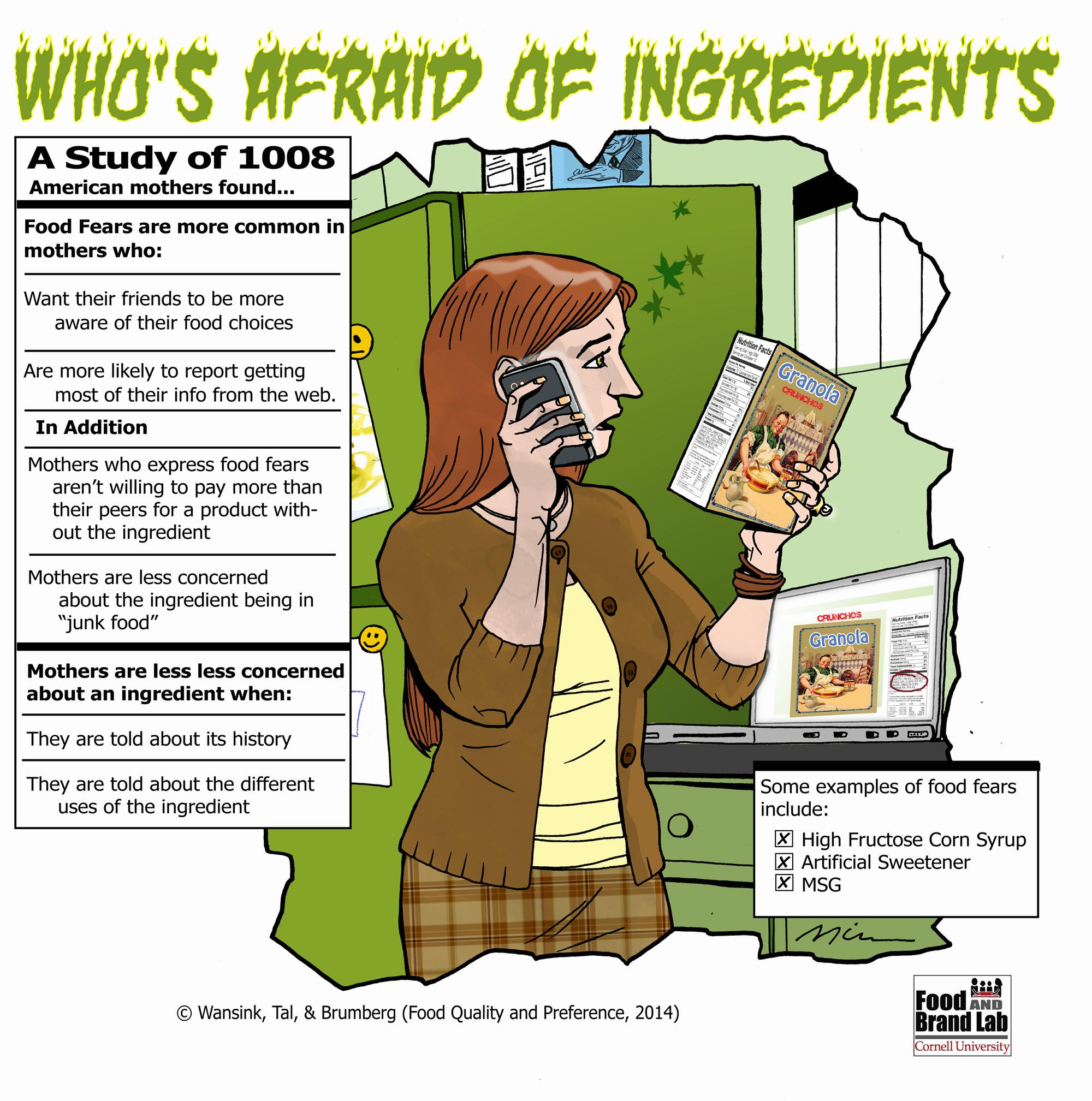
As a result, people are taught to be afraid of Subway bread, beer, high fructose corn syrup, MSG and even gluten without a reason.

It's not a shock that a certain demographic is going to be be easily driven by fear and misperception. But who? The easy answer has long been Whole Foods shoppers, because they are against vaccines, traditional farming and increasingly seek more laws and regulations to save them from the unknown. States like California, New York and Washington are hotbeds of anti-science beliefs.

Elites in California and Washington and New York like to claim they are showing leadership with every fad they embrace - they should be showing leadership by telling their citizens to stop promoting anti-vaccine nonsense. 

Otherwise, the US could end up like the UK, where an ongoing culture war against genetic modification, vaccines and the other science wars of progressives have results in a 20 percent chance that a child with a persistent cough have Pertussis - whooping cough - even if they have been vaccinated.  Whooping cough is a highly transmissible infection which can cause symptoms such as coughing, vomiting and whooping. However, whooping cough can lead to serious complications in unvaccinated infants. 

Adults diagnosed with Asperger Syndrome are nine times more likely to have suicidal thoughts than people from the UK general population, according to a paper The Lancet Psychiatry which consisted of a survey of 374 individuals (256 men and 118 women) diagnosed with Asperger Syndrome as adults between 2004 and 2013 at the Cambridge Lifetime Asperger Syndrome Service (CLASS) clinic in Cambridge.

Asperger Syndrome is an autism spectrum condition. In Asperger Syndrome, people show some of the social symptoms of autism but don't have delayed language or intellectual disability. In the UK, one in 100 people (around 700,000) has one form of autism spectrum condition or another.