Banner
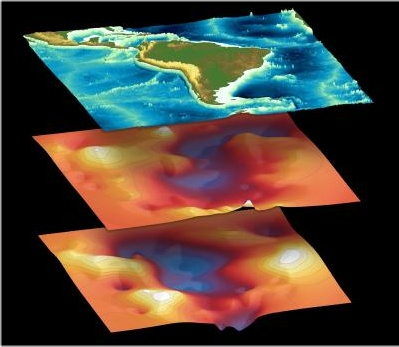
Here's Where Your Backyard Was 300 Million Years Ago

We may use terms like "grounded" and terra firma to mean stability and consistency but geology...

Convergent Evolution Cheat Sheet Now 120 Million Years Old

One tenet of natural selection is a random walk of genes but nature may be more predictable than...

Synchrotron Could Shed Light On Exotic Dark Photons

There are many hypothetical particles proposed to explain dark matter and one idea to explore how...

The Pain Scale Is Broken But This May Fix It

Chronic pain is reported by over 20 percent of the global population but there is no scientific...

User picture.
News StaffRSS Feed of this column.

News Releases From All Over The World, Right To You... Read More »

Blogroll
Star Wars Day is May 4th so you are probably wondering how you would build deflector shields in case the US government is worried about turtles on its former nuclear testing grounds and thinks your cows will harm the ecosystem and sends a Death Star after you.

You're in luck; not only are they scientifically feasible, the principle behind them is already used here on Earth.

If you're too young to have seen the original, and missed the flawed prequels, you needn't feel left out - in almost every science-fiction scenario, spaceships are protected by a shield defense system that deflects enemy laser fire. 

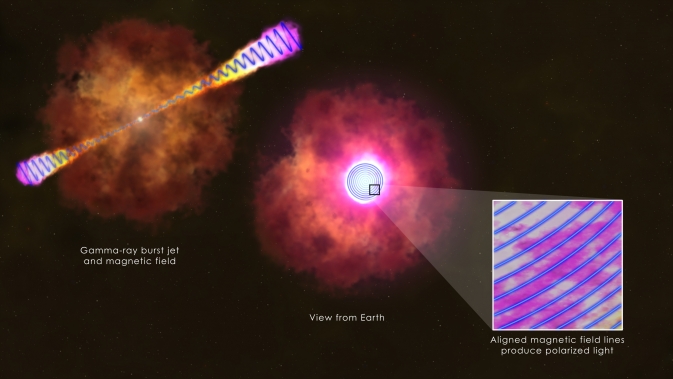
One of the most powerful events in our universe – Gamma-Ray Bursts (GRB) – behave differently than previously thought, and this evidence from observation of a GRB rules out most of the existing hypothetical predictions concerning the afterglow of the explosions.

Parents are always worried about their special snowflakes - unless a phone call needs to be  made. Then, parents are no less likely to engage in cell phone and other distracting behavior than the general public, according to a new paper in Academic Pediatrics.

The use of lamps that emit UV radiation in nail salons has raised some concern about the risk of cancer, but previous studies have lacked a large enough sampling of lights from a variety of salons.

To create a more authoritative sample, the authors of a new study tested 17 light units from 16 salons with a wide range of bulbs, wattage and irradiance emitted by each device for their research letter.

Higher-wattage light sources were correlated with higher UV-A irradiance emitted.

University of California, Berkeley, geologist William Dietrich pioneered the application of airborne LIDAR, light detection and ranging, to map mountainous terrain, stripping away the vegetation to see the underlying ground surface - but he still couldn't see what was under the surface: the depth of the soil, the underlying weathered rock and the deep bedrock.

He and geology graduate student Daniella Rempe have now proposed a method to determine these underground details without drilling, potentially providing a more precise way to predict water runoff, the moisture available to plants, landslides and how these will respond to climate change.

Over 60 years of data collected across 8 states by citizen scientists may demonstrate their potential to contribute to monitoring long-term lake water trends over a large area, according to results published April 30, 2014, in the open access journal PLOS ONE by Noah Lottig from University of Wisconsin and colleagues.