Banner
Synchrotron Could Shed Light On Exotic Dark Photons

There are many hypothetical particles proposed to explain dark matter and one idea to explore how...

The Pain Scale Is Broken But This May Fix It

Chronic pain is reported by over 20 percent of the global population but there is no scientific...
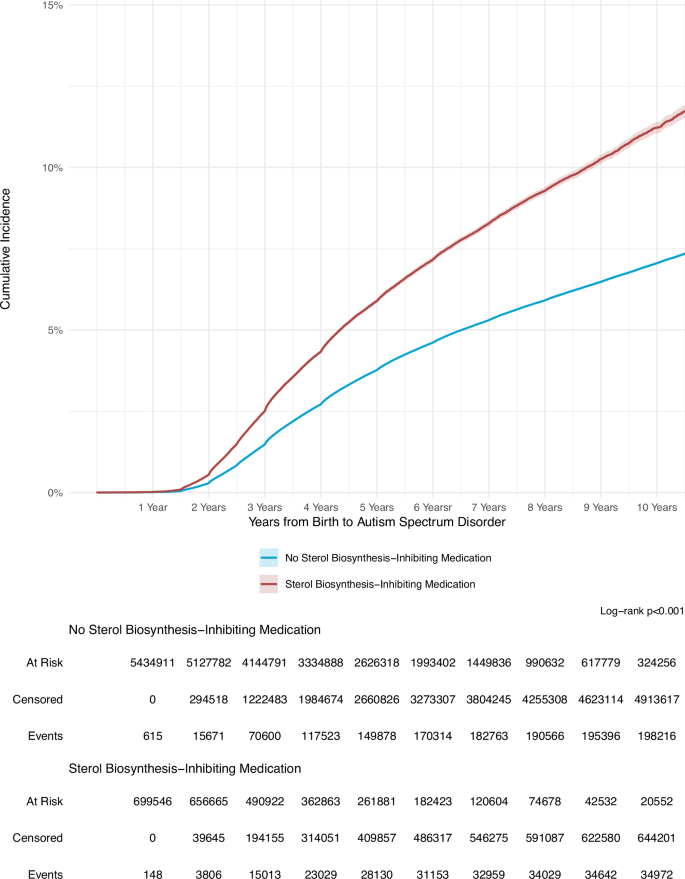
Study Links Antidepressants, Beta-blockers and Statins To Increased Autism Risk

An analysis of 6.14 million maternal-child health records  has linked prescription medications...

Pilot Study: Fibromyalgia Fatigue Improved By TENS Therapy

Fibromyalgia is the term for a poorly-understood condition where people experience pain and fatigue...

User picture.
News StaffRSS Feed of this column.

News Releases From All Over The World, Right To You... Read More »

Blogroll
The Nazis studied everything to gain an advantage. Those stories about mysticism and artifacts aren't wrong, and the advanced weapons projects are well known, that is why US President Harry Truman authorized "Operation Paperclip" to recruit their scientists and engineers, rather than just kidnapping them the way Communist leaders in the USSR did.

But they weren't just interested in big weapons, they studied small ones, like bugs, though not to use them for biowarfare or weird experiments. Hitler had a ban on that.

Peregrine falcons are one of the world's fastest birds, reaching up to 200 miles per hour when diving.

Scientists are studying the body shape and wing contour of the bird to better understand how they reach these high diving speeds while maintaining maneuverability - in human planes, flaps slow you down to make the aircraft more maneuverable. 

Researchers trained peregrine falcons to dive in front of a 200 foot dam and captured 35 dives with a stereo high-speed camera system and hi-res camera. The images allowed researchers to reconstruct the flight path and body shape of the falcon during certain flight phases, and to build a life size model of the falcons. They then analyzed the aerodynamics of the model bird in a wind tunnel. 

Anthropologists have developed mathematical models that they say describe development patterns in both modern urban areas and ancient cities settled thousands of years ago.

One major challenge in stem cell research has been to reprogram differentiated cells to a totipotent state. Researchers from RIKEN in Japan have identified a duo of histone proteins that dramatically enhance the generation of induced pluripotent stem cells (iPS cells) and may be the key to generating induced totipotent stem cells.

Differentiated cells can be coaxed into returning to a stem-like pluripotent state either by artificially inducing the expression of four factors called the Yamanaka factors, or as recently shown by shocking them with sublethal stress, such as low pH or pressure. However, attempts to create totipotent stem cells capable of giving rise to a fully formed organism, from differentiated cells, have failed.

A University of Texas at Arlington team exploring pigeons as a model for vertebrate evolution has uncovered that mutations and interactions among just three genes create a wide variety of color variations. One of those genes, they also found, may be an example of a "slippery gene" more prone to evolutionary changes.

Tampa, FL (Feb. 6, 2014) – Declines in the underlying brain skills needed to think, remember and learn are normal in aging. In fact, this cognitive decline is a fact of life for most older Americans.

Therapies to improve the cognitive health of older adults are critically important for lessening declines in mental performance as people age. While physical activity and cognitive training are among the efforts aimed at preventing or delaying cognitive decline, dietary modifications and supplements have recently generated considerable interest.

Now a University of South Florida (USF) study reports that a formula of nutrients high in antioxidants and other natural components helped boost the speed at which the brains of older adults processed information.