Banner
Pilot Study: Fibromyalgia Fatigue Improved By TENS Therapy

Fibromyalgia is the term for a poorly-understood condition where people experience pain and fatigue...

High Meat Consumption Linked To Lower Dementia Risk

Older people who eat large amounts of meat have a lower risk of dementia and cognitive decline...

Long Before The Inca Colonized Peru, Natives Had A Thriving Trade Network

A new DNA analysis reveals that long before the Incan Empire took over Peru, animals were...

Mesolithic People Had Meals With More Tradition Than You Thought

The common imagery of prehistoric people is either rooting through dirt for grubs and picking berries...

User picture.
News StaffRSS Feed of this column.

News Releases From All Over The World, Right To You... Read More »

Blogroll

In what the authors are calling perhaps the most comprehensive and definitive effort to date, zoologists say they have explained the processes that drove male mammals to adopt social monogamy as a breeding strategy. 

Because male mammals have a much higher potential to produce offspring in a single breeding season than do their female counterparts (who must endure long gestation periods), it would seem that mating with one female per cycle would be limiting. Yet a percentage of mammalian males do this -- and researchers have debated why, seeking to identify selective advantages social monogamy offers, for decades.

There's still no free lunch. Finite budgets based on taxes that give equal treatment to everyone aren't really resulting in equal quality. Instead, most ward nurses in NHS hospitals say they are forced to ration care, or not complete certain aspects of it — including adequate monitoring of patients — because they don't have enough time, indicates a new paper.

New biological insecticides, which make use of “entomopathogenic” viruses that are harmful to insects, have emerged in recent years. The big advantage versus regular pesticides is that they are innocuous to man, vertebrae and plants, and environmental activists have not heard of them yet. Each viral strain attacks a very limited number of insect species.

The baculovirus is frequently studied and to identify the virus in this family that will most effectively control the Guatemalan potato moth, a French-Ecuadorian research team from Institut de Recherche pour le Développement (IRD) has analyzed the pathogens among moths from all over the world.  
2 000 years ago, Roman fishermen knew that some species of fish liked to gather under floating objects.

No one knew why and it didn't matter, that behavioral mechanism was just used to catch more fish in the Mediterranean. Today, artisanal and industrial tuna fisheries exploit this “aggregating phenomenon” in much the same way. Over the last thirty years, seine fishing in particular has developed rapidly through the use of massive floating objects, natural at first, then more recently fish aggregation devices (FADs) remotely monitored using electronic beacons. 

These floating objects help enable 40 % of worldwide tropical tuna catches today.
In J.R.R. Tolkeins's fantasy epic "The Lord of the Rings", a hobbit discovers a giant in the caves under Mt. Doom.

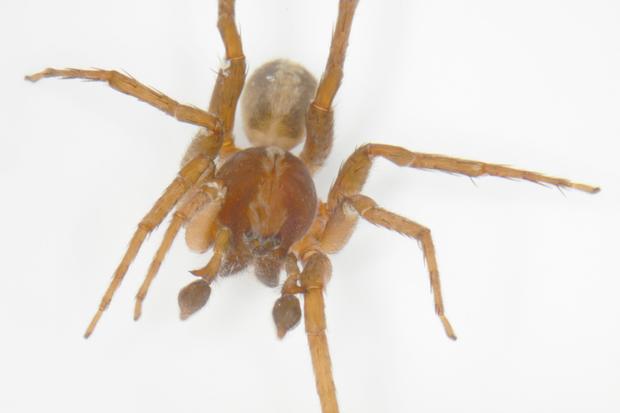
More recently, another famous hobbit helped discover a much smaller kind of spider. And the researchers who get credit for it named Ctenus monaghani after him.

Actor Dominic Monaghan, who played  Hobbit Meriadoc “Merry” Brandybock in the recent motion picture trilogy, has a new nature documentary called “Wild Things” and Dr. Peter Jäger, expert consultant to the “Wild Things” team in the forests and caves of Laos, discovered the new, eight-legged critter and named it after the actor in recognition of Monaghan's natural world enthusiasm, which even extends to inconspicuous and unpopular animals such as spiders.

A year-round ice-free Arctic Ocean surface could explain why the Earth of the Pliocene Epoch had the levels of carbon dioxide in the atmosphere that we have today, but we remain 3 to 9 degrees cooler than the Earth was then.