Banner
Pilot Study: Fibromyalgia Fatigue Improved By TENS Therapy

Fibromyalgia is the term for a poorly-understood condition where people experience pain and fatigue...

High Meat Consumption Linked To Lower Dementia Risk

Older people who eat large amounts of meat have a lower risk of dementia and cognitive decline...

Long Before The Inca Colonized Peru, Natives Had A Thriving Trade Network

A new DNA analysis reveals that long before the Incan Empire took over Peru, animals were...

Mesolithic People Had Meals With More Tradition Than You Thought

The common imagery of prehistoric people is either rooting through dirt for grubs and picking berries...

User picture.
News StaffRSS Feed of this column.

News Releases From All Over The World, Right To You... Read More »

Blogroll

Our immune system does not shut down with age, says a new study published in PLOS Pathogens today. T cells can respond to virus infections in an older person with the same vigor as T cells from a young person.

Researchers examined individuals, younger than 40, between 41 to 59 years of age and older than 60, infected with three different viruses, including West Nile, and found the older group demonstrated perfectly normal immune responses.

Both the number of virus-fighting T cells and the functionality of the T cells were equivalent in all three groups.

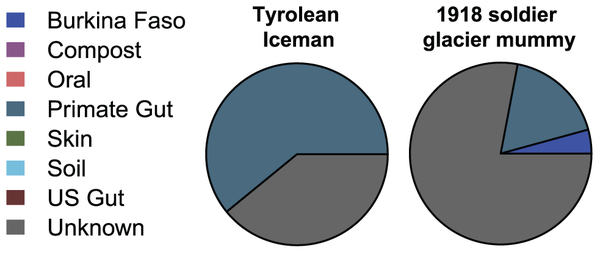
If you are an organic food or paleo diet lover and think it means your gut microbiome resembles your ancestors in any way, you are wrong.  We aren't even close to 100 years ago much less ancient times.  The microbiome does not lie.

A team analyzed microbiome data from ancient human fecal samples collected from three different archaeological sites in the Americas, each dating to over 1000 years ago. They also did a new analysis of published data from two samples that reflect rare and extraordinary preservation: Otzi the Iceman and a soldier frozen for 93 years on a glacier. 

Science can make better corn and, well, better everything - except perhaps the Christmas tree.

The genome of conifers like spruce, pine and fir has remained pretty much the same for the last 100 million years - a remarkable feat of genomic stability. Researchers analyzed the genome of conifers and compared it to that of flowering plants. Both plant groups stem from the same ancestor but diverged about 300 million years ago.

The Linac Coherent Light Source (LCLS) at the SLAC National Accelerator Laboratory is using X-rays to measure, in atomic detail, a key process at work in extreme plasmas like those found in stars, the rims of black holes and other massive cosmic phenomena.

Wilms' tumors, a type of cancer typically found in the kidneys of young children, might have a new weapon against them. A new therapeutic approach that one day might be used to treat some of the more aggressive types of this disease could be possible now that  scientists have isolated cancer stem cells that lead to the growth of the tumors.

The Hubble Space Telescope has detected seven primitive galaxies formed more than 13 billion years ago, and also a candidate, at redshift 11.9, for the record for the most distant galaxy found to date. 

The images offer the deepest ever view of the Universe at near-infrared wavelengths, which capture the redshifted light of early galaxies. Because light takes so long to travel from these remote objects, astronomers are looking back in time and seeing those galaxies as they appeared just 600 million years after the Big Bang.