Some microorganisms lose the ability to perform a function that appears to be necessary for their survival, and yet they still somehow manage to endure and multiply. How can that be?
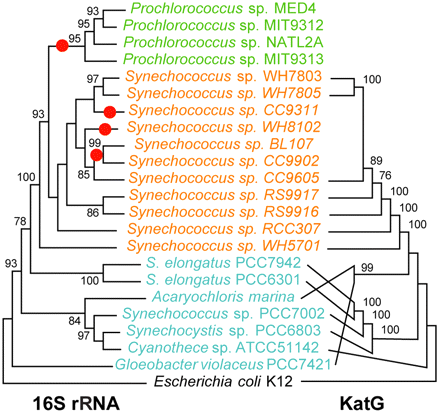
One hypothesis says microbes that shed necessary functions are getting others to 'do that work' for them, an adaptation that can encourage microorganisms to live in cooperative communities. Yes, genetic inter-organism cooperation and adaptive gene loss.
Approaching the 100th anniversary of the maiden voyage and subsequent nearly immediate sinking of the ship marketed as 'unsinkable' - the RMS Titanic, also known as the world's largest metaphor - it has become synonymous with bold claims that ironically come back to haunt the claimants.
In science, Lord Kelvin is a popular example of that, believed to have said "There is nothing new to be discovered in physics now, All that remains is more and more precise measurement" shortly before Albert Einstein took the lid off of physics and shook the whole concept around.
Scientists think they have found a way to prevent and possibly reverse the most debilitating symptoms of the rare, progressive childhood degenerative disease called ataxia-telangiectasia, or A-T disease, that leaves children with slurred speech, unable to walk, and in a wheelchair before they reach adolescence.
Most breast cancers are categorized as estrogen-receptor positive, which means they are hormone sensitive and may need estrogen to grow. Patients with this type of cancer often respond favorably to aromatase inhibitors, like tamoxifen, which cause cell death by preventing estrogen from reaching the cancerous cells. Over time, the disease often becomes resistant to estrogen deprivation from the drugs, making treatment options more limited.
New findings from the AACR Annual Meeting identified a pair of proteins that could play a crucial role in restoring treatment sensitivity to these resistant cancerous cells—possibly leading to more treatment options in the future.
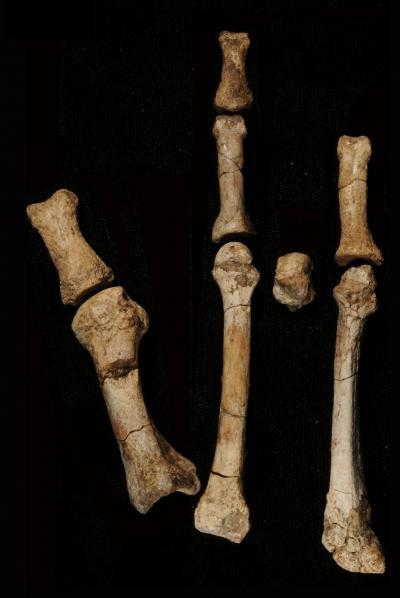
Lucy, Australopithecus afarensis, was not walking around Africa alone three million years ago.
Biologists knew that, of course, the neatly linear line from critter to modern man does not exist, it happened in fits and starts and sometimes different ways numerous times. But as the study of evolution becomes more multi-discplinary our chances of finding new fossils increases, and ideas of what ancestors looked like go from theoretical to real.
A chemical analysis of lunar soil collected by Apollo astronauts forty years disputes the belief that a giant collision between Earth and a Mars-sized object gave birth to the moon 4.5 billion years ago.
In the giant-collision scenario, computer simulations suggest that the moon had two parents: Earth and a hypothetical planetary body called “Theia” but a comparative analysis of titanium from the moon, Earth and meteorites indicates the moon’s material came from Earth alone.


 Pilot Study: Fibromyalgia Fatigue Improved By TENS Therapy
 High Meat Consumption Linked To Lower Dementia Risk
 Long Before The Inca Colonized Peru, Natives Had A Thriving Trade Network
 Mesolithic People Had Meals With More Tradition Than You Thought