It's not a cartoon, an ancient flightless bird was actually able to use its wings like a flail - or nunchaku, if your perspective is more Asian.
Paleontologists have discovered that Xenicibis, a member of the ibis family found only in Jamaica and that lived about ten thousand years ago used its specialized wings like a flail, swinging its upper arm and striking its enemies with its thick hand bones.
"No animal has ever evolved anything quite like this," said Nicholas Longrich of Yale, who led the research. "We don't know of any other species that uses its body like a flail. It's the most specialized weaponry of any bird I've ever seen."
Randomized, controlled trials have shown the effectiveness of implantable cardioverter-defibrillators (ICDs) for preventing sudden cardiac death in patients with advanced systolic heart failure but a new study shows that far too many patients receiving ICDs do not meet evidence-based guidelines for receipt of an ICD, and that these patients had a significantly higher risk of in-hospital death than individuals who met criteria for receiving an ICD.
The study included more than 100,000 patients who received ICDs and found that about 20 percent did not meet evidence-based guidelines. In times of growing concern about cost versus quality of health care, there will be increased focus on ways to optimize health care, including cost and benefit.
While hundreds of millions of dollars are spent on masking and treating male pattern baldness, surprisingly little is known about its cause at the cellular level.
A Journal of Clinical Investigation study has found that stem cells play an unexpected role in explaining what happens in bald scalps. Using cell samples from men undergoing hair transplants, researchers compared follicles from bald scalps and non-bald scalps and found that bald areas had the same number of stem cells as normal areas in the same person but noted that another, more mature cell type called a progenitor cell was markedly depleted in the follicles of bald scalps.
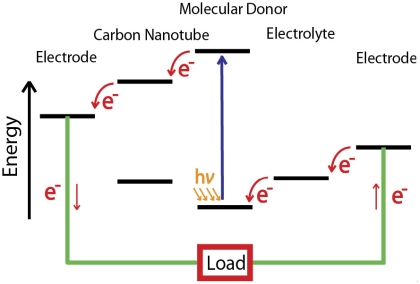
In an ideal energy future, man-made solar cells would mimic much of the functionality of efficient plant life. Currently solar cell technology is expensive and a maintenance headache but Purdue researchers are working a new type of solar cell that uses carbon nanotubes and DNA to come closer to plant life that can be durable enough for commercials use,
Their design exploits the unusual electrical properties of structures called single-wall carbon nanotubes, using them as "molecular wires in light harvesting cells," said Jong Hyun Choi, an assistant professor of mechanical engineering in the Birck Nanotechnology and Bindley Bioscience centers at Purdue's Discovery Park.
2000 years from now, if future researchers find our Science 2.0 mug, what would it tell them?
Quite a bit, it turns out - at least regarding the social structure of the period in which we live. Coffee is big in society. But America is a young country compared to an ancient empire like Greece. Studying drinks in ancient Greece over a long period can help researchers piece together what the social structure may have been like beyond select older writings.
It's no secret that humans are not the only species with circadian rhythm - a biological clock. Studying red bread mold may teach us how our own internal clock works and by experimenting with the fungus’ response to light and darkness, researchers can explore its reaction to different substances, food and temperatures.
Basically, giving mold jet lag may help us mitigate it in humans.


 Pilot Study: Fibromyalgia Fatigue Improved By TENS Therapy
 High Meat Consumption Linked To Lower Dementia Risk
 Long Before The Inca Colonized Peru, Natives Had A Thriving Trade Network
 Mesolithic People Had Meals With More Tradition Than You Thought