Chronic jet lag alters the brain in ways that cause memory and learning problems long after returning to a regular 24-hour schedule, according to research by Berkeley psychologists.
Twice a week for four weeks, the researchers subjected female Syrian hamsters to six-hour time shifts, the equivalent of a New York-to-Paris airplane flight. During the last two weeks of jet lag and a month after recovery from it, the hamsters' performance on learning and memory tasks was measured. As expected, during the jet lag period, the hamsters had trouble learning simple tasks that the hamsters in the control group did well on. What surprised the researchers was that these deficits persisted for a month after the hamsters returned to a normal day-night schedule.
Sensorineural hearing loss (SSHL) is a condition that causes deafness in 40,000 Americans each year, usually in early middle-age.
A new treatment has been developed SSHL, say researchers writing in BMC Medicine who describe the positive results of a preliminary trial of insulin-like growth factor 1 (IGF1) applied as a topical gel.
Will polar bears survive in a warmer world? New evidence says their numbers are likely to dwindle.
As polar bears lose habitat due to global warming, biologists say, they will be forced southward in search of alternative sources of food, where they will increasingly come into competition with grizzly bears. Polar bears probably evolved very rapidly in response to glacial climates during the ice ages but rapidly on an evolutionary scale is not a realistic timeline for climate change.
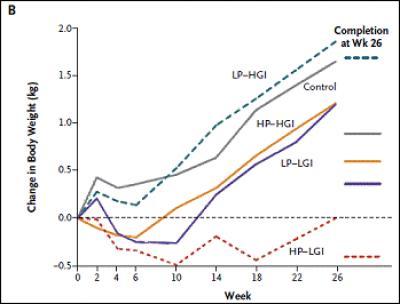
Researchers at the Faculty of Life Sciences (LIFE), University of Copenhagen have published the results of the world's largest diet study, called called Diogenes.
Like anything obvious, the formula is simple but the application can be difficult for those who already have a weight problem; if you want to lose weight, you should maintain a diet that is high in proteins with more lean meat, low-fat dairy products and beans and fewer finely refined starch calories such as white bread and white rice.
Maintaining that diet, you can eat until you are full without counting calories and without gaining weight.
Women may regard love and affection and consideration as most important in a mate, but if research in African cichlid fish applies to humans, they are suppressing a more primitive instinct to like winners.
In African cichlid fish, even when a female shows a preference for a male, if witnesses him losing a fight with another male, her feelings toward him change. Areas of the female's brain associated with anxiety showed increased activity after witnessing an altercation. Of course, being a winner in the eyes of cognitively diverse human females can take many different forms than pure combat.
Climatology might replace economics as the 'gloomy science'. Projections that the lousy economy might mean a slowdown in fossil fuels were cause for joy among activists, without realizing that people without jobs or food or houses aren't as concerned about abstract things like the future of the planet.
Whether or not global warming is a fashionable media topic in 2010, global carbon dioxide (CO2) emissions, the main contributor to man-made global warming, show no sign of lessening and could still reach a new record this year, according to a study that is part of the annual carbon budget update by the Global Carbon Project.


 Pilot Study: Fibromyalgia Fatigue Improved By TENS Therapy
 High Meat Consumption Linked To Lower Dementia Risk
 Long Before The Inca Colonized Peru, Natives Had A Thriving Trade Network
 Mesolithic People Had Meals With More Tradition Than You Thought