Banner
Pilot Study: Fibromyalgia Fatigue Improved By TENS Therapy

Fibromyalgia is the term for a poorly-understood condition where people experience pain and fatigue...

High Meat Consumption Linked To Lower Dementia Risk

Older people who eat large amounts of meat have a lower risk of dementia and cognitive decline...

Long Before The Inca Colonized Peru, Natives Had A Thriving Trade Network

A new DNA analysis reveals that long before the Incan Empire took over Peru, animals were...

Mesolithic People Had Meals With More Tradition Than You Thought

The common imagery of prehistoric people is either rooting through dirt for grubs and picking berries...

User picture.
News StaffRSS Feed of this column.

News Releases From All Over The World, Right To You... Read More »

Blogroll
A new study in rats says growing up with lots of sisters makes a male less sexy to females, because the sex ratio of a male rat's family while young influences his sexual behavior and therefore how female rats respond to him later.

Early life obviously affects later behavior but how early and how much of an impact and how can it be quantified in a less 'soft' fashion.    There are correlation studies that even conclude the position of a fetus in the uterus matters and that a female fetus that spends the pregnancy sandwiched between two brothers grows up to be more masculine because she's been exposed to their hormones.    
Lithium-ion batteries are commonly regarded as promising for the cars of the future (at least until hydrogen fuel cells are ready for prime time) but environmentalists interested in electric or hybrid vehicles are concerned about the acid rain caused by battery manufacturing and high replacement cost for the batteries, which will last about the same as a standard car battery but are a terrific expense.
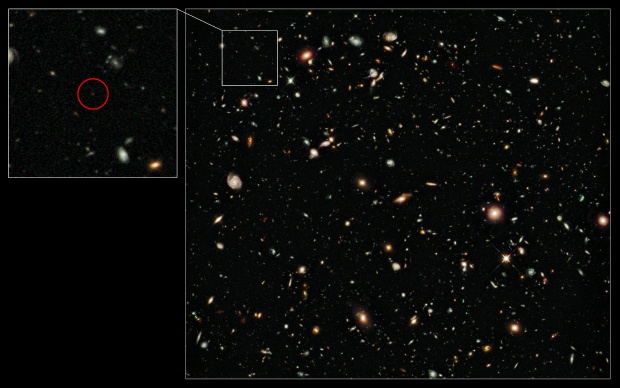
Astronomers report they have measured the distance to the most remote galaxy and have found that they are seeing it when the Universe was only about 600 million years old (a redshift of 8.6), making those the first confirmed observations of a galaxy whose light is clearing the opaque hydrogen fog that filled the cosmos at this early time. 

comScore, Inc. , a leader in measuring the digital world, today released a study of Internet usage in Russia based on August 2010 data from the comScore Media Metrix service and the data revealed that Russians are the heaviest social networkers worldwide in terms of time spent per user and that Yandex is the leading property in the Russian Federation. 

 Russia #1 Worldwide in Time Spent on Social Networking Sites 

 In August 2010, 34.5 million Russian Internet users (74.5 percent of the online population) visited at least one social networking site.

Leopards have but tigers have stripes.  Why the difference?   British Nobel laureate Rudyard Kipling, author of "The Jungle Book" and other stories, suggested the difference was because the leopard moved to an environment "full of trees and bushes and stripy, speckly, patchy-blatchy shadows".   Was he right or was that a just-so story?

Experimental psychologists (nee behavioral ecologists(!)) from the University of Bristol wanted to know and they investigated the flank markings of 35 species of wild cats to understand what drives the evolution of such variation. They captured detailed differences in the visual appearance of the cats by linking them to a mathematical model of pattern development.

Energy storage optimization takes a great deal of wisdom, such as the proper trade-offs between energy density or power density.   Batteries, which store energy by separating chemicals and are better for delivering lots of energy, while capacitors, which store energy by separating electrical charges, are better for delivering lots of power (energy per time).  

Life would be simpler if both were always available without high cost.  

At the AVS 57th International Symposium&Exhibition in Albuquerque, MIT reported on efforts to store energy in thin carbon nanotubes by adding fuel along the length of the tube - chemical energy, which can later be turned into electricity by heating one end of the nanotubes.