Stem cells help regenerate or repair damaged tissues, primarily by releasing growth factors that encourage existing cells in the human body to function and grow.
There has been an ongoing ethical controversy about human embryonic stem cell research but progress has been made nicely using adult stem cells, such as from marrow donors.
It may be just a coolness factor for kids, but one classroom in Canada is getting a big boost in reading thanks to canine teaching assistants.
University of Alberta researcher Lori Friesen's says one Alberta classroom showed positive success when small children signed up for weekly reading or writing sessions with her and one of her dogs. During that time, they would read children's literature or work on the student's writing.
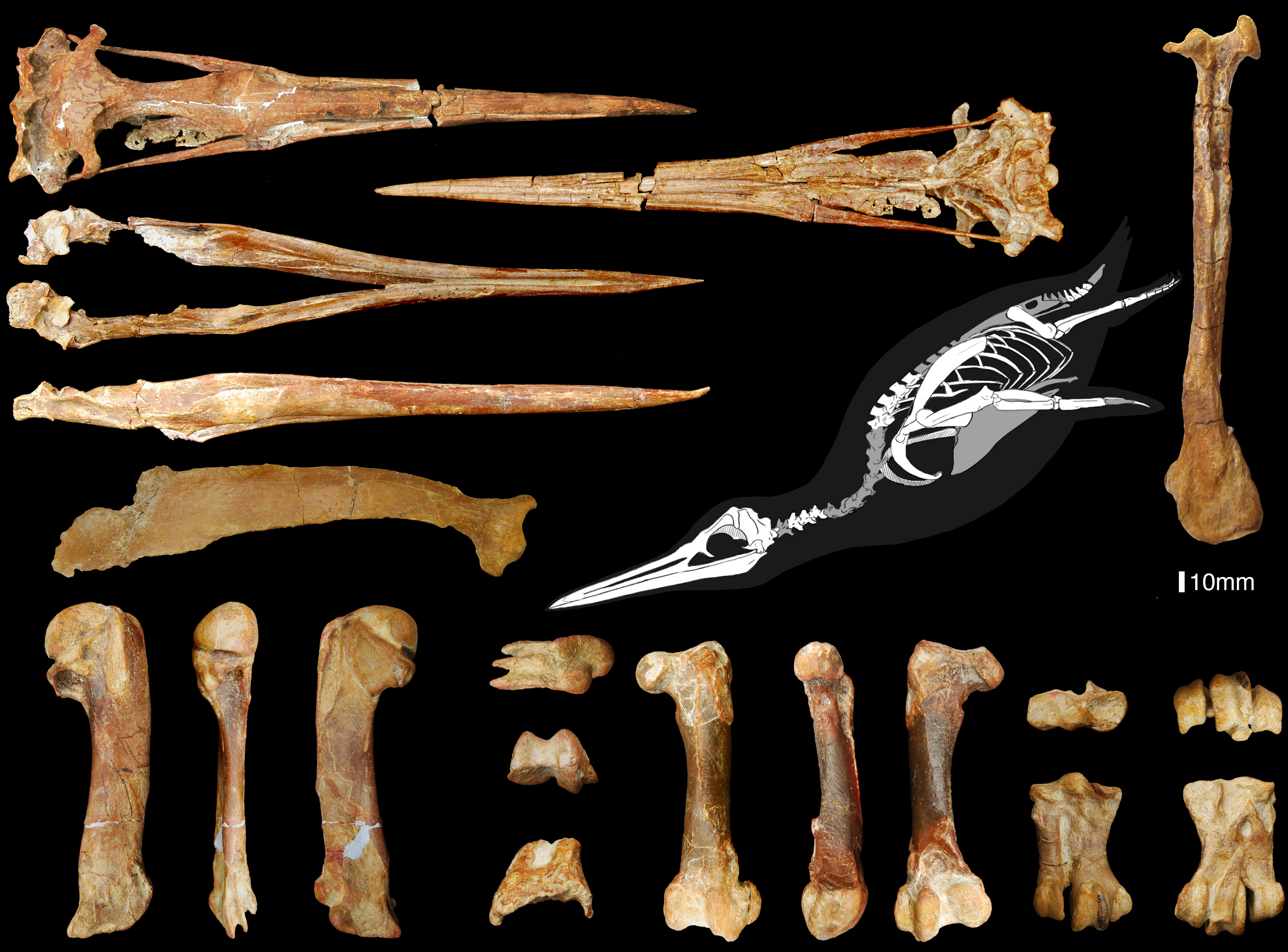
A 36-million-year-old penguin fossil from Peru shows the new giant penguin's feathers were reddish brown and grey, much different from the black tuxedoed look of living penguins - and it had scales.
The new species, Inkayacu paracasensis, or Water King, was nearly five feet tall - twice the size of an Emperor penguin, the largest penguin today. The fossil shows the flipper and feather shapes that make penguins such powerful swimmers evolved early, while the color patterning of living penguins is likely a much more recent innovation.
Proteins are the heavy lifters of cells, doing numerous tasks, but how the shape of a protein determines function remains one of the most important questions in the physics of biology.
Proteins are not the static, Lego-like objects you might see in an x-ray photograph in a textbook, they are made from long chains of amino acids scrunched into various blobs and a protein is always changing to slightly different structural arrangements due to thermal motion of its atoms. Even a modest-sized protein like myoglobin has an unimaginable number of possible arrangements of its atoms and each of these arrangements slightly changes its function.
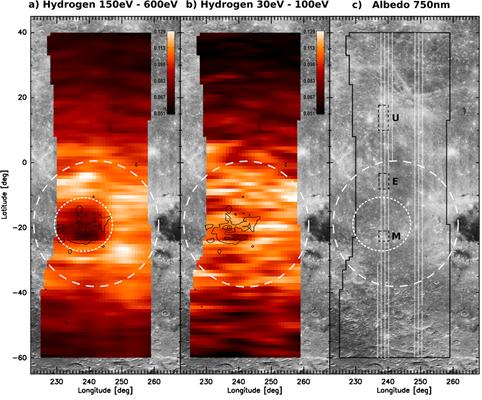
Scientists have discovered a new type of solar wind interaction with airless bodies in our solar system. Magnetized regions called magnetic anomalies, mostly on the far side of the Moon, were found to strongly deflect the solar wind, shielding the Moon’s surface, a discovery which will help us to understand solar wind behavior near the lunar surface and how water may be generated in its upper layer.
Researchers have created artificial neural networks that can distinguish between different kinds of tea leaves - most people can't do that. But they do it by analyzing the mineral content.
Their method makes it possible to distinguish between the five main tea varieties (white, green, black, Oolong and red) using chemometrics, a branch of chemistry that uses mathematics to extract useful information from data obtained in the laboratory.


 Pilot Study: Fibromyalgia Fatigue Improved By TENS Therapy
 High Meat Consumption Linked To Lower Dementia Risk
 Long Before The Inca Colonized Peru, Natives Had A Thriving Trade Network
 Mesolithic People Had Meals With More Tradition Than You Thought