Banner
Pilot Study: Fibromyalgia Fatigue Improved By TENS Therapy

Fibromyalgia is the term for a poorly-understood condition where people experience pain and fatigue...

High Meat Consumption Linked To Lower Dementia Risk

Older people who eat large amounts of meat have a lower risk of dementia and cognitive decline...

Long Before The Inca Colonized Peru, Natives Had A Thriving Trade Network

A new DNA analysis reveals that long before the Incan Empire took over Peru, animals were...

Mesolithic People Had Meals With More Tradition Than You Thought

The common imagery of prehistoric people is either rooting through dirt for grubs and picking berries...

User picture.
News StaffRSS Feed of this column.

News Releases From All Over The World, Right To You... Read More »

Blogroll
Theories of physics rest on fundamental assumptions and those assumptions are based on how the real world works, and often produce amazingly precise predictions. 

The most comprehensive theory of elementary particles to-date, Quantum Field Theory, explains nature's electromagnetic, weak and strong nuclear forces (though not gravity).
An international team of scientists say a new  technique could turn pulsars into superbly accurate time-keepers.

A pulsar is the spinning, collapsed core of a massive star that ended in a supernova explosion and was first discovered in 1967.   A pulsar weighs more than our Sun but can be the size of New York City and produces beams of radio waves which sweep around the sky hundreds of times a second. Radio telescopes receive a regular train of pulses as the beam repeatedly crosses the Earth so that the object is observed as a pulsating radio signal.
When light is used to transmit information,  modulated light pulses travel along optical fibers, which can become weaker due to optical attenuation in the fiber and so are refreshed in signal regeneration stations along the way, where the signals are amplified and filtered.

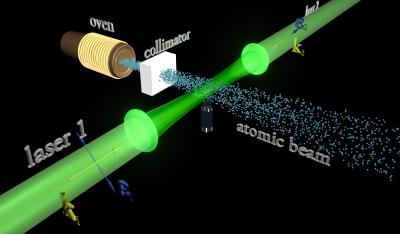
But when light itself, or more precisely its optical frequency, is the information, and when this information is to be transmitted with extreme precision, conventional amplification techniques reach their limits.
A neutrino has a mass, physics says, but it is elusive to figure out and extremely hard to measure – a neutrino is capable of passing through a light year (about six trillion miles) of lead without hitting a single atom.

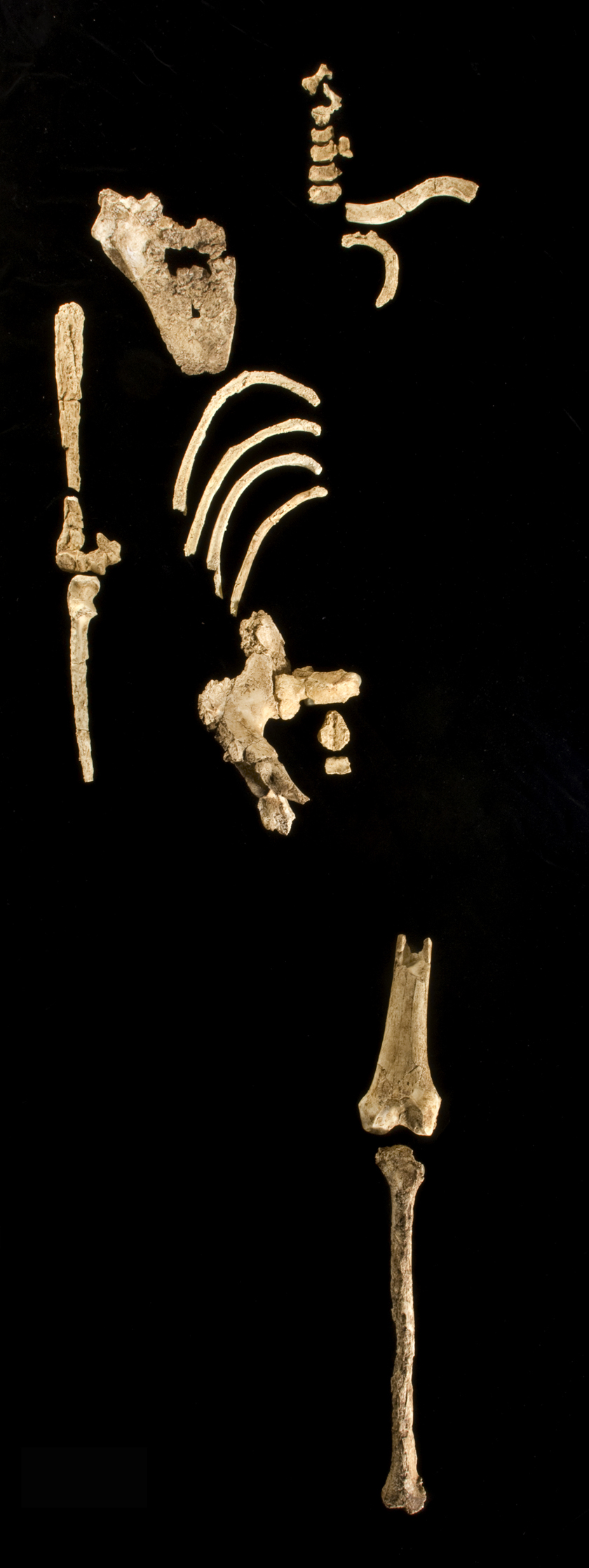
Meet Lucy's 'great-grandfather'.   Scientists from The Cleveland Museum of Natural History, Kent State University, Case Western Reserve University, Addis Ababa University and Berkeley Geochronology Center were part of an international team that discovered and analyzed a 3.6 million-year-old partial skeleton found in Ethiopia. They say the early hominid is 400,000 years older than the famous Lucy skeleton and that their research on this new specimen indicates that advanced human-like, upright walking occurred much earlier than previously thought. 

The partial skeleton belongs to Lucy's species, Australopithecus afarensis. It was found in the Woranso-Mille area of Ethiopia's Afar region by a team led by first author Dr.

In the year since their 2008 preliminary ranking, Cell Stem Cell and Cell Host and Microbe saw their Impact Factors surge, according to new data released in the 2009 Journal Citation Reports(c) published by ThomsonReuters.   The Impact Factor is a measure of the frequency with which the average article in a journal has been cited in a particular year. The Impact Factor helps to evaluate a journal's relative importance, especially when compared with others in the same field.

In the report released June 17, Cell Stem Cell's rating rose to 23.563 - a growth of 40% from the journal's previous score. Cell Host and Microbe ranks 13.021 - boasting an increase of 75% from the journal's 2008 Impact Factor.