A study published in Environmental Research Letters suggests a link between low solar activity and jet streams could explain why regions North East of the Atlantic Ocean might experience more frequent cold winters in years to come.
Scientists say the UK and Europe could experience temperatures not seen since the end of the seventeenth century as a result of the changes in solar activity.
"This year's winter in the UK has been the 14th coldest in the last 160 years and yet the global average temperature for the same period has been the 5th highest," said Lead author Mike Lockwood of the University of Reading. "We have discovered that this kind of anomaly is significantly more common when solar activity is low."
The 84 members of the Donner Party, trapped by a Sierra Nevada snowstorm on their way to California, did not resort to cannibalism, according to a new analysis of bones found at their Alder Creek campsite.
Instead of each other, anthropologists say the Donner Party probably ate cattle, deer, horse and dog and did their best to maintain a civilized lifestyle in an otherwise harsh setting.
Details of the analysis will appear in the July issue of American Antiquity.
The Donner Party has long been infamous for reportedly resorting to cannibalism after becoming trapped in the Sierra Nevada Mountains of California for months during the winter of 1846-1847.
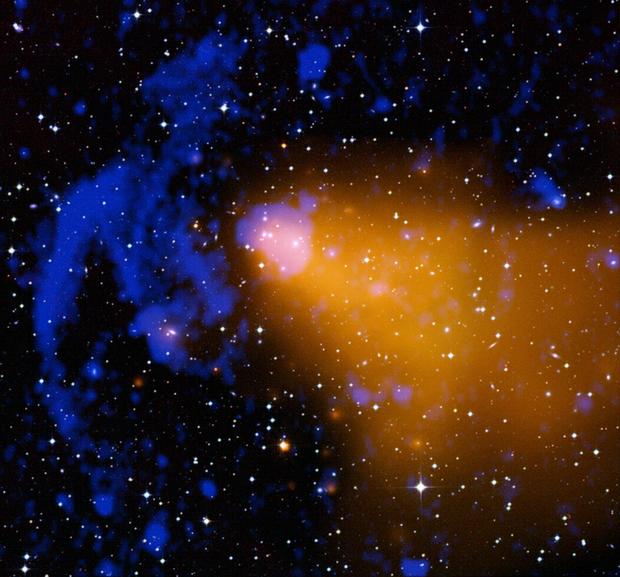
Two new studies made using NASA's Chandra X-ray Observatory have put Einstein's General Theory of Relativity to the test (again) and the results show it is still the best game in town.
Each team used observations of galaxy clusters, the largest objects in the Universe bound together by gravity, and one result undercuts a rival gravity model to General Relativity, known as "f(R) gravity", while the other shows that Einstein's theory works over a vast range of times and distances across the cosmos.
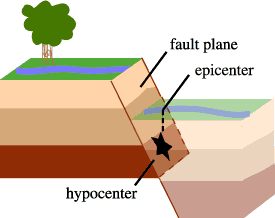
The earth has four major layers: the inner core, outer core, mantle and crust. The crust is what we need to think about here and the earth's crust is divided into 'plates' that are like puzzle pieces but are up to 50 miles thick and they are in constant motion in the earth's interior. These puzzle pieces are tectonic plates and the edges of the plates are called the plate boundaries. The plate boundaries are made up of many faults, and most of the earthquakes around the world occur on these faults. Most earthquakes are due to pressure that builds up over time and that pressure causes the ground to 'slip' along a geological fault plane on or near a plate boundary.
Anthropologists writing in the Journal of Social Archaeology say they have found evidence indicating that Mayan citizens recorded their family history by burying it within their homes.
Maya in the Classic period (A.D. 250-900) regularly "terminated" their homes, razing the walls, burning the floors and placing artifacts and (sometimes) human remains on top before burning them again.
Evidence suggests these rituals occurred every 40 or 50 years and likely marked important dates in the Maya calendar. After termination, the family built a new home on the old foundation, using broken and whole vessels, colorful fragments, animal bones and rocks to mark important areas and to provide ballast for a new plaster floor.
Researchers have identified the brain circuit that underlies our ability to resist instant gratification in order to earn a better payoff.
The effort provides insight, scientists say, into the capacity for "mental time travel," also known as episodic future thought, that enables humans to make choices with high long-term benefits. Results of the research are published in Neuron.
Several models have been proposed to explain the neural basis of assigning relative value to multiple rewards at different points in time (also known as "intertemporal decision making") in humans. Until now, however, many questions remained unanswered, and the brain regions and mechanisms involved in this process were unclear.


 Pilot Study: Fibromyalgia Fatigue Improved By TENS Therapy
 High Meat Consumption Linked To Lower Dementia Risk
 Long Before The Inca Colonized Peru, Natives Had A Thriving Trade Network
 Mesolithic People Had Meals With More Tradition Than You Thought