Banner
Pilot Study: Fibromyalgia Fatigue Improved By TENS Therapy

Fibromyalgia is the term for a poorly-understood condition where people experience pain and fatigue...

High Meat Consumption Linked To Lower Dementia Risk

Older people who eat large amounts of meat have a lower risk of dementia and cognitive decline...

Long Before The Inca Colonized Peru, Natives Had A Thriving Trade Network

A new DNA analysis reveals that long before the Incan Empire took over Peru, animals were...

Mesolithic People Had Meals With More Tradition Than You Thought

The common imagery of prehistoric people is either rooting through dirt for grubs and picking berries...

User picture.
News StaffRSS Feed of this column.

News Releases From All Over The World, Right To You... Read More »

Blogroll
Now that people have finally realized ethanol is a government-run, unscientific boondoggle, efforts are under way to make legitimate biofuels efficient enough for mass usage.

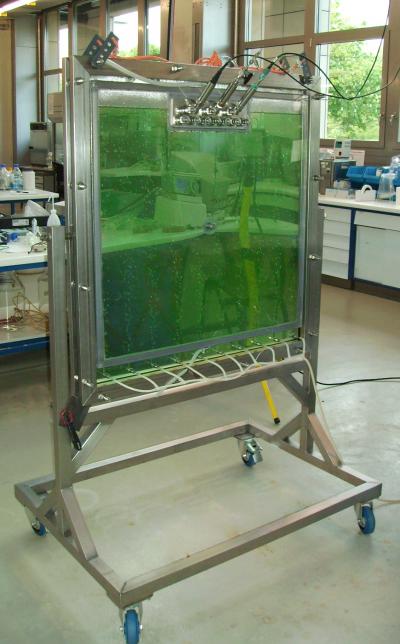
Microalgae are monocellular, plant-like organisms that use photosynthesis and convert carbon dioxide (CO2) into biomass. From this biomass, both potential resources and active substances as well as fuels like biodiesel may be produced. While growing, algae take up the amount of CO2 that is later released again when they are used for energy production. Hence, energy from algae could potentially be produced in a CO2-neutral manner contrary to fossil fuels or current biofuels.
As kids, we all liked to imagine scenes where big dinosaurs squared off against each other for gigantic battles - if you're young, imagination is like a Transformers movie, but without $100 million for special effects.  

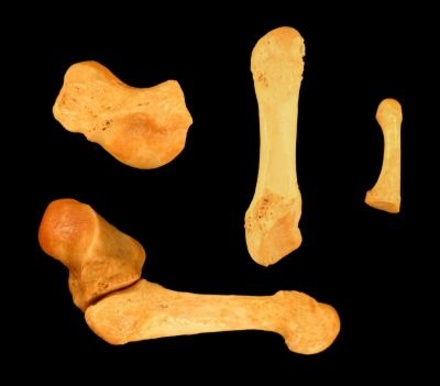
Those battles rarely happened, if at all, goes a new hypothesis.    Dinosaurs became chickens in evolution (well, maybe) but they were already chickens at heart, say paleontologists at Ludwig-Maximilians-Universität (LMU) in Munich.
Usain Bolt, sprinter from Jamaica, currently holds the world record in the 100 meter sprint with a time of 9.69 seconds.  Whenever new records are set, people ask 'what is the limit on human performance?'

So how fast can a human run?  

Two econometricians from Tilburg University in the Netherlands, Professor of Statistics John Einmahl and former student Sander Smeets, say have calculated the ultimate records for the 100-meter sprint. The good news; there is still room for improvement in both the men's and women's times in the near future.
Uncompressed hydrogen will require a tank the size of a bus to take your car 300 miles but compressed hydrogen can be ... explosive ... unless the materials for storage get a lot better.

Engineers in the Department of Energy's Pacific Northwest National Laboratory have a different idea entirely:  they want to pack hydrogen into a larger molecule.

There are obstacles.   A gas flows easily out of a tank but getting hydrogen out of a molecule requires a catalyst. New details about one such catalyst in the Journal of the American Chemical Society may be a step toward better hydrogen energy applications such as fuel cells.
It's easy for Arizona residents to hope for widespread solar power usage - they don't have to think about the thousands of miles of new power lines on land that will be grabbed under eminent domain.

And you'd think hockey stick analogies regarding climate issues would be bad, since the most famous one turned out to be made up.

But University of Arizona postdoctoral electrochemist Erin Ratcliff can't resist.  She says solar power is ready to take off.   "We're right at the magic moment when the hockey stick starts to take off, when you go from flat to hockey stick. We're right there. It's exciting to read the literature and hope that, yes, we will take off. It will be exciting to look back and say 'I was there for that.'"
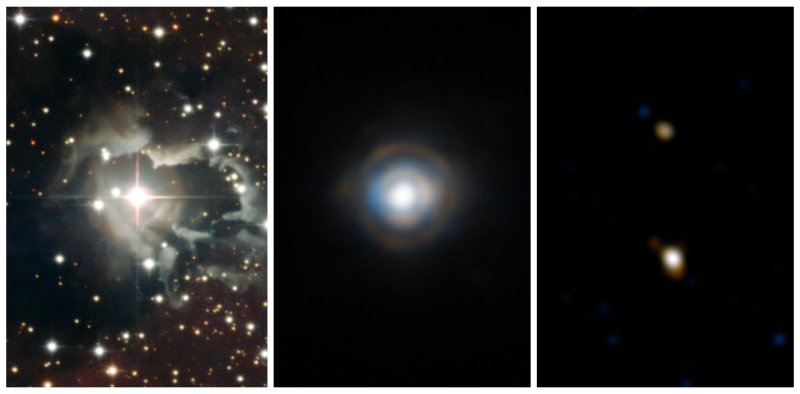
HD 87643, a member of the exotic class of B[e] stars, is in a very rich field of stars towards the Carina (the Keel) arm of the Milky Way. It recently became part of a set of observations that provide astronomers with the best ever picture of a B[e] star.

B[e] stars are stars of spectral type B, with emission lines in their spectra, hence the "e". They are surrounded by a large amount of dust.