Banner
Pilot Study: Fibromyalgia Fatigue Improved By TENS Therapy

Fibromyalgia is the term for a poorly-understood condition where people experience pain and fatigue...

High Meat Consumption Linked To Lower Dementia Risk

Older people who eat large amounts of meat have a lower risk of dementia and cognitive decline...

Long Before The Inca Colonized Peru, Natives Had A Thriving Trade Network

A new DNA analysis reveals that long before the Incan Empire took over Peru, animals were...

Mesolithic People Had Meals With More Tradition Than You Thought

The common imagery of prehistoric people is either rooting through dirt for grubs and picking berries...

User picture.
News StaffRSS Feed of this column.

News Releases From All Over The World, Right To You... Read More »

Blogroll
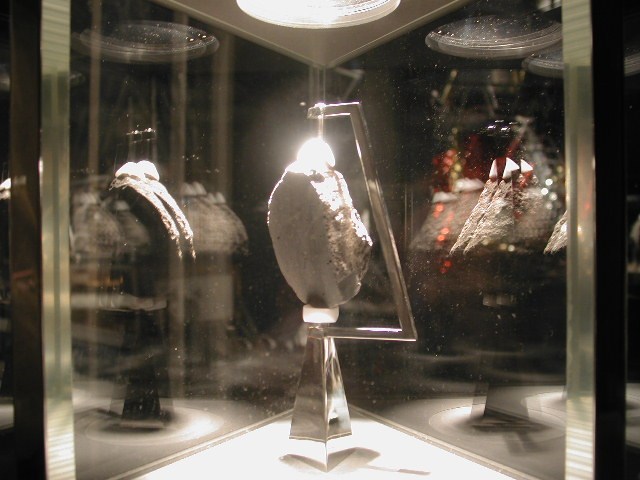
A lunar geochemist at Washington University in St. Louis says that there are still many answers to be found in moon rocks brought back by the Apollo 11 astronauts nearly 40 years ago.   And he's been studying them since then, so he should know.

Randy L. Korotev, Ph.D., a research professor in the Department of Earth and Planetary Sciences in Arts&Sciences, has studied lunar samples and their chemical compositions since he was an undergraduate at the University of Wisconsin and "was in the right place at the right time" in 1969 to be a part of a team to study some of the first lunar samples.

Apollo 11 moon rock

Synthetic Genomics Inc. (SGI), a privately held company co-founded by Craig Ventner in the business of applying genomic-driven commercial solutions to challenges like energy and the environment, announced a multi-year research and development agreement with ExxonMobil Research and Engineering Company (EMRE) to develop next generation biofuels using photosynthetic algae. 

SGI will receive milestone payments for achievements in developing biofuel products. Total funding for SGI in research and development activities and milestone payments could amount to more than US$300 million with the potential for additional income from licensing to third parties. 

Scientists in Atlantic Canada say they have found a gene that may play a role in skin aging. Researchers were investigating the genetic cause of a rare disorder known as cutis laxa type 2 (CL2), which causes skin on the hands, feet and face to be loose and older looking, as well as growth and developmental delays including effects on the brain. In the process, researchers found some interesting correlations with the synthesis of proline, a chemical associated with skin and joint health.

Several maritime Canadian families with CL2 were identified by clinicians at the IWK Health Centre’s Maritime Medical Genetics service.

You want to live healthier and probably look better; that's a good start.  Diet popularity can either be a sign that something works or an indication that people believe in crazy stuff.   Either way, it can't hurt to spend 5 minutes reading an article on the Internet before you commit.

A site called Realbuzz.com says it has put popular dieting approaches to the test - giving you the pros, the cons and each one has been rated on how they satisfy hunger, their ease to follow, expense and most importantly - the impact they can have on your overall health.

Accera, Inc., a biotechnology company delivering therapies in central nervous system diseases, today announced further evidence for genetic interactions impacting the efficacy of the ketogenic compound AC-1202 (Axona(TM)) in Alzheimer’s disease.

New data from the company’s previously completed double-blind, placebo-controlled trial in patients with mild-to-moderate Alzheimer’s disease demonstrates an interaction between two genetic markers that strongly influence the therapeutic response in patients. Dr. Samuel Henderson, Executive Director of Research, will present these results at the 2009 International Conference on Alzheimer’s Disease (ICAD) sponsored by the Alzheimer’s Association.

It's not a secret to you if you have watched football for the last 40 years;  a guy once almost big enough to be a linebacker can't even be a safety today.   Elite athletes are getting bigger.

Specifically, while the average human has gained about 1.9 inches in height since 1900, new research showed that the fastest swimmers have grown 4.5 inches and the swiftest runners have grown 6.4 inches.

In a new analysis, Jordan Charles, an engineering student who graduated this spring, collected the heights and weights of the fastest swimmers (100 meters) and sprinters (100 meters) for world record winners since 1900. He then correlated the size growth of these athletes with their winning times.