Banner
Pilot Study: Fibromyalgia Fatigue Improved By TENS Therapy

Fibromyalgia is the term for a poorly-understood condition where people experience pain and fatigue...

High Meat Consumption Linked To Lower Dementia Risk

Older people who eat large amounts of meat have a lower risk of dementia and cognitive decline...

Long Before The Inca Colonized Peru, Natives Had A Thriving Trade Network

A new DNA analysis reveals that long before the Incan Empire took over Peru, animals were...

Mesolithic People Had Meals With More Tradition Than You Thought

The common imagery of prehistoric people is either rooting through dirt for grubs and picking berries...

User picture.
News StaffRSS Feed of this column.

News Releases From All Over The World, Right To You... Read More »

Blogroll
There's a reason religious cults do things in groups; peer pressure and mutual awareness keeps them on message.   Likewise, young people are more likely to participate in conservation if their peers do - a tendency that should be exploited when it comes to protecting the environment, according to results of a new study.

The research, which focused on a mammoth government initiative called Grain-to-Green that pays Chinese farmers to convert cropland back to forest, is the first to focus on the phenomenon of social norms in the context of China's conservation efforts, said scientist Jianguo "Jack" Liu of Michigan State University (MSU).
The front portion of the brain that handles tasks like decision-making, the left inferior frontal sulcus, also helps decipher different phonetic sounds, according to new Brown University research.  This section of the brain treats different pronunciations of the same speech sound (such as a 'd' sound) the same way, they say, and in determining this they believe they have solved a mystery.

Elsevier today announced the highlights of its journal impact factor performance in 2008. Elsevier overall saw 75% of its journal impact factors (IF) increase from 2007 to 2008. According to the 2008 Journal Citation Report(R) published by ThomsonReuters, Elsevier journals took the #1 position in 51 categories (of 229) across all of the sciences and social sciences.

In addition, 30 Elsevier journals got their first impact factor this year. Cell Stem Cell (http://www.cell.com/cell-stem-cell/home) (16.826) entered the Cell Biology category ranked 6th (of 157 journals), while Cell Host Microbe (http://www.cell.com/cell-host-microbe/home) (7.436) entered the Microbiology category ranked 10th (of 91 journals).

An international team of researchers has modified chlorophyll from an alga so that it resembles the extremely efficient light antennae of bacteria. The team was then able to determine the structure of these light antennae. This is the first step to converting sunlight into energy using an artificial leaf.

Leiden researcher Swapna Ganapathy has obtained her PhD based on this subject, under the supervision of Professor Huub de Groot, one of the initiators of the research. 
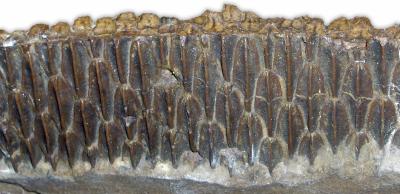
Microscopic analysis of scratches on dinosaur teeth may have helped scientists unravel an ancient riddle of what a major group of dinosaurs - the Hadrosaurs - ate and exactly how they did it.

A study led by the University of Leicester has found evidence that the duck-billed dinosaurs called  Hadrosaurs had a unique way of eating, unlike any living creature today.  Working with researchers from the Natural History Museum, the study used a new approach to analyze the feeding mechanisms of dinosaurs and understand their place in the ecosystems of tens of millions of years ago.
Scientists at Queen Mary, University of London have discovered that an ingredient in human breast milk called pancreatic secretory trypsin inhibitor, or PSTI, protects and repairs the delicate intestines of newborn babies.

PSTI is found at its highest levels in colostrum, the milk produced in the first few days after birth.   The lining of a newborn's gut is particularly vulnerable to damage as it has never been exposed to food or drink. The new study highlights the importance of breastfeeding in the first few days after the birth.

The researchers found small amounts of PSTI in all the samples of breast milk they tested but it was seven times more concentrated in colostrum samples. The ingredient was not found in formula milk.