The clothing industry discovered decades ago that a mix of natural and synthetic fibers, like taking cotton and adding polyester, can make clothing that's soft, breathable and wrinkle free.
Now researchers at the University of Washington are using the same principle for biomedical applications. Mixing chitosan, found in the shells of crabs and shrimp, with an industrial polyester creates a promising new material for the tiny tubes that support repair of a severed nerve, and could serve other medical uses. The hybrid fiber combines the biologically favorable qualities of the natural material with the mechanical strength of the synthetic polymer.
If we're lucky, fossils can at least tell us whether an extinct species was carnivore or vegetarian but the skull characteristics of a new species of parrot-beaked dinosaur and its associated gizzard stones indicate that the animal fed on nuts and/or seeds;the first solid evidence of nut-eating in any dinosaur.
Paleontologists discovered the new dinosaur, which they've named Psittacosaurus gobiensis, in the Gobi Desert of Inner Mongolia in 2001, and spent years preparing and studying the specimen. The dinosaur is approximately 110 million years old, dating to the mid-Cretaceous Period.
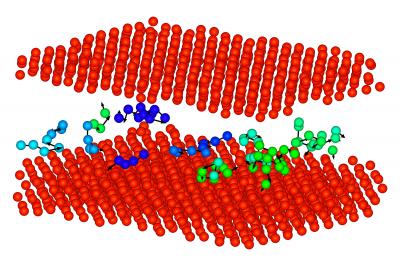
Stress and strain research got a boost thanks to research from NIST, where scientists have recently found evidence of an important similarity between the behavior of polycrystalline materials, like metals and ceramics, and glasses.
Most metals and ceramics used in manufacturing are polycrystals. The steel in a bridge girder is formed from innumerable tiny metal crystals that grew together in a patchwork as the molten steel cooled and solidified. Each crystal, or “grain,” is highly ordered on the inside, but in the thin boundaries it shares with the grains around it, the molecules are quite disorderly.
One odd characteristic of H1N1 influenza A (swine flu) in 2009 is that it seems to hit children much harder than the elderly, an about-face from ordinary flu. So targeting children may be an effective use of limited supplies of flu vaccine, according to research at the University of Warwick funded by the Wellcome Trust and the EU. The study suggests that, used to support other control measures, this could help control the spread of pandemics such as the current swine flu.
Fluctuating temperatures in Africa have always made reliable agriculture production difficult and global warming could make it even worse. If local varieties of maize and other food staples are unsuitable, the food security of many Africans will depend on farmers in one country gaining access to climatically suitable varieties now being cultivated in other African nations, and beyond, according to a study published in Global Environmental Change.
A new National Institute of Standards and Technology (NIST) assay using a “glow or no glow” technique may soon help the U.S. Department of Homeland Security (DHS) defend the nation against a spectrum of biological weapons that could be used in a terrorist attack.
One very dangerous toxin on the list is ricin, a protein derived from castor beans that is lethal in doses as small as 500 micrograms—about the size of a grain of salt.


 Pilot Study: Fibromyalgia Fatigue Improved By TENS Therapy
 High Meat Consumption Linked To Lower Dementia Risk
 Long Before The Inca Colonized Peru, Natives Had A Thriving Trade Network
 Mesolithic People Had Meals With More Tradition Than You Thought