Banner
Pilot Study: Fibromyalgia Fatigue Improved By TENS Therapy

Fibromyalgia is the term for a poorly-understood condition where people experience pain and fatigue...

High Meat Consumption Linked To Lower Dementia Risk

Older people who eat large amounts of meat have a lower risk of dementia and cognitive decline...

Long Before The Inca Colonized Peru, Natives Had A Thriving Trade Network

A new DNA analysis reveals that long before the Incan Empire took over Peru, animals were...

Mesolithic People Had Meals With More Tradition Than You Thought

The common imagery of prehistoric people is either rooting through dirt for grubs and picking berries...

User picture.
News StaffRSS Feed of this column.

News Releases From All Over The World, Right To You... Read More »

Blogroll
Want to know how gravestones will weather due to pollution?   Can you help measure hailstones?   If so, or you are wondering what else one person can contribute to solving global climate issues, controlling the spread of invasive plant species or managing severe weather risk, EarthTrek is for you.

EarthTrek is a new worldwide program developed by the Geological Society of America and an array of national and international partners to provide a new tool allowing concerned citizens  to collect data that will provide answers in understanding our planet
Did animals teach us one of the oldest forms of human technology, basketry? Did that help us learn to count? These are just two of the themes due to be explored at a University of East Anglia event which takes place June 5-6) is part of Beyond the Basket, a new research project led by the university exploring the development and use of basketry in human culture over 10,000 years.

Basketry has been practiced for millennia and ranges from mats for sitting on, containers and traps for hunting, to partitions and walls - all of which have been central to advancing our culture.
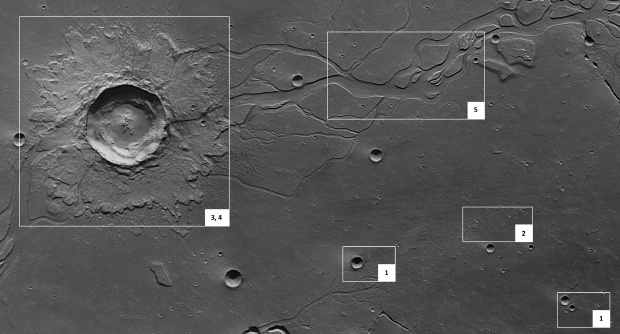
ESA’s Mars Express orbiter has obtained images of Hephaestus Fossae, , which lies at about 21° North and 126° East on Mars. Named after the Greek god of fire, Hephaestus Fossae extends for more than 600 km on the western flank of Elysium Mons in the Utopia Planitia region. 

The images have a ground resolution of about 16 m/pixel. They show that the region has channel systems of unknown origin.  The images cover 170 x 80 sq km, an area almost as large as Montenegro. The surface is mostly smooth, and is covered by several small impact craters 800-2800 m in diameter. Smaller craters are scattered across the entire region.
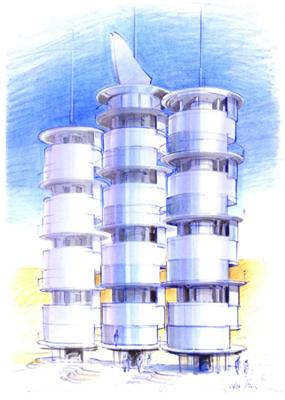
Research scientists at the Fraunhofer Institute for Interfacial Engineering and Biotechnology IGB in Stuttgart working in conjunction with their colleagues from the company Logos Innovationen have found a way of converting this air humidity autonomously and decentrally into drinkable water. 

Even in deserts the air contains water and the research scientists have found a way of obtaining drinking water from air humidity using a system is based completely on renewable energy, making it autonomous.

Even in places with no lakes, rivers or groundwater, considerable quantities of water are stored in the air. In the Negev desert in Israel, for example, annual average relative air humidity is 64 percent – in every cubic meter of air there are 11.5 milliliters of water.
The thinking, talking robots of Isaac Asimov science fiction are nothing like what we actually have - programmed machines that do the simplest things.   European researchers in robotics, psychology and cognitive sciences say they have developed a robot that can predict the intentions of its human partner; this ability to anticipate (or even question) actions could make human-robot interactions more natural.

You cannot make human-robot interaction more natural unless you understand what 'natural' actually means. But few studies have investigated the cognitive mechanisms that are the basis of joint activity (i.e. where two people are working together to achieve a common goal).
New research suggests that the hunger hormone ghrelin is activated by fats from the foods we eat in order to optimize nutrient metabolism and promote the storage of body fat.  The findings, the study's author says, turn the current model about ghrelin on its head and point to a novel stomach enzyme (GOAT) responsible for the ghrelin activation process that could be targeted in future treatments for metabolic diseases. 

The laboratory study, led by Matthias Tschöp, MD, UC associate professor of psychiatry and internal medicine, is published online ahead of print Friday, June 5, 2009, in the journal Nature Medicine.