Boys who carry a particular variation of the gene Monoamine oxidase A (MAOA), called the 'warrior' gene by some, are more likely to join gangs and be among their most violent members, according to a study from a Florida State University criminologist that associates MAOA to gangs and guns.
Findings apply only to males, which makes an unsubstantiated allele argument necessary. Girls with the same variant of the MAOA gene don't show any propensity toward gang membership or weapon use. MAOA has also been implicated in ADHD, bipolar disorder, cancer and smoking. Basically, if you don't have any other explanation for something, MAOA is the way to go.
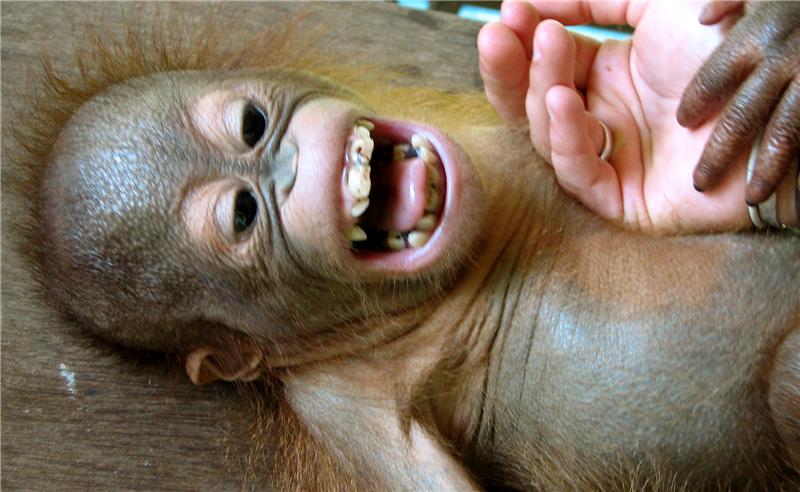
Human laughter can be traced back 10-16 million years to the last common ancestor of humans and great apes, according to new research published today. Dr Marina Davila Ross, a primatologist of the psychology department at the University of Portsmouth, reconstructed the origins of human laughter by mapping the laughter sounds of great apes and humans on an evolutionary tree.
In Davila Ross’s reconstructed evolutionary tree, humans were closest to bonobos and chimpanzees, more distant from gorillas and most distant from orangutans.
Biologists always love when researchers in psychology departments reconfigure the evolutionary tree for them.
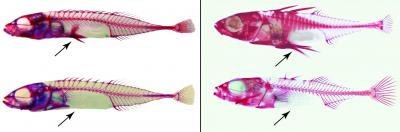
New research shows that when two species of stickleback fish evolved, different genes in each species caused the loss of their pelvises and body armor. Researchers say they were surprised because they expected the same genes would control the same changes in both related fish.
Thank you. Thank you very much.
Using single-molecule manipulation, researchers at Harvard University say they have uncovered a fundamental feedback mechanism that the body uses in regulating the clotting of blood. A new physical, quantitative, and predictive model of how the body works to respond to injury could improve treatment of bleeding disorders.
It also gives insight into how bleeding disorders, such as type 2A von Willebrand disease, disrupt this regulation system, potentially leading to new avenues for treatment and diagnosis.
Dating human migration has always been something of a guess, especially without corroborating archaeological evidence.
Researchers at the University of Leeds say they have devised a more accurate method . That's good news, because the most widely used genetic method works back to find the last common ancestor of any particular set of lineages using samples of mitochondrial DNA (mtDNA), but this method has recently been shown to be unreliable, throwing 20 years of research into doubt.
Bats, unlike most animals, don't primarily use their voices for communication. Instead, they use echolocation to navigate their surroundings but they can also use it, and the characteristics of other bats' voices, to recognize each other, according to a study by researchers from the University of Tuebingen, Germany and the University of Applied Sciences in Konstanz, Germany.
The study published June 5 in PLoS Computational Biology, explains how bats use echolocation for more than just spatial knowledge and it might also help explain how some bats travel at high speed, at night, in formation without interfering with each other.


 Pilot Study: Fibromyalgia Fatigue Improved By TENS Therapy
 High Meat Consumption Linked To Lower Dementia Risk
 Long Before The Inca Colonized Peru, Natives Had A Thriving Trade Network
 Mesolithic People Had Meals With More Tradition Than You Thought