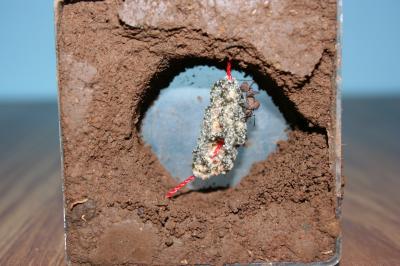
Scientists here have determined that combining bed bugs' own chemical signals with a common insect control agent makes that treatment more effective at killing the bugs. The researchers found that stirring up the bed bugs by spraying their environment with synthetic versions of their alarm pheromones makes them more likely to walk through agents called desiccant dusts, which kill the bugs by making them highly susceptible to dehydration.
A blend of two pheromones applied in concert with a silica gel desiccant dust proved to be the most lethal combination.
In these days of jaw-dropping trillion-dollar budgets and deficits along with current retirement obligations 7X the size of our economy, $6.3 billion may not sound like much. But, hey, a billion here and a billion there, and pretty soon you are talking about real money.
$6.3 billion what the United States potentially could save on each group of adolescents who enter foster care every year - and get better results.
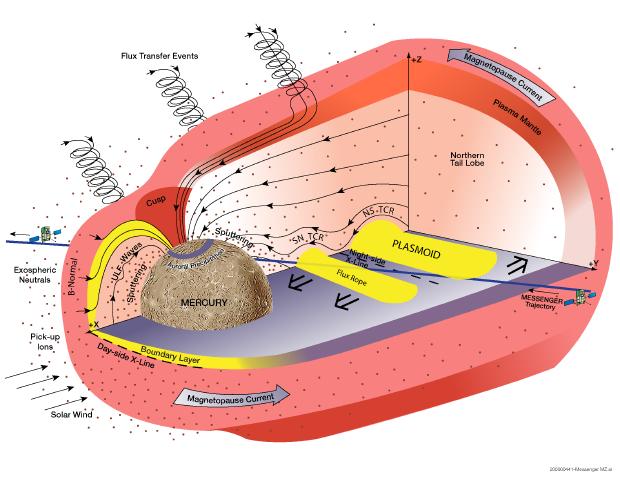
Mercury, closest planet to the sun, is as hot as you would expect, with daytime temperatures of 800 degrees Fahrenheit/450 degrees Celsius and because of its small size, its gravity is weak, only about 38 percent of Earth's.
These conditions make it hard for the planet to hold on to its extremely thin atmosphere, which can can only be seen by special instruments attached to telescopes and spacecraft like MESSENGER (MErcury Surface, Space ENvironment, GEochemistry, and Ranging). Even then it's not easy because Mercury's magnetic field gets in the way. MESSENGER's first flyby on January 14, 2008, confirmed that the planet has a global magnetic field, as first discovered by the Mariner 10 spacecraft during its flybys of the planet in 1974 and 1975.
Sequence gaps in human chromosome 15 have been closed by the application of 454 technology. Researchers writing in Genome Biology have described a simple and scalable method for finishing non-structural gaps in genome assemblies.
Manuel Garber worked with a team of researchers from the Broad Institute of MIT and Harvard, Massachusetts, USA, to develop an approach for closing class III gaps, those non-structural gaps that are refractory to clone-based approaches, using 454 sequencing.
We're somewhat lost in how to meet future carbon footprint goals. Heck, Germany should have been able to just close a few Soviet-era East German factories and hit their Kyoto protocol targets but even they couldn't do it.
The answer, as always, may be in nature. Some parts of outer space are great at getting rid of excess carbon, including an unusual carbon-rich star that was part of a mystery stellar explosion recorded in 2006.
"We were on a break," is just an excuse likely to get you yelled at today but a new study at the Smithsonian Tropical Research Institute in Gamboa, Panama says there may be some long-term value in it - at least if you are an ant.
Fungus-farming ants have cultivated the same fungal crops for 50 million years, they say. Each young ant queen carries a bit of fungus garden with her when she flies away to mate and establish a new nest. Short breaks in the ants' relationship with the fungus during nest establishment may contribute to the stability of this long-term mutualism.


 Pilot Study: Fibromyalgia Fatigue Improved By TENS Therapy
 High Meat Consumption Linked To Lower Dementia Risk
 Long Before The Inca Colonized Peru, Natives Had A Thriving Trade Network
 Mesolithic People Had Meals With More Tradition Than You Thought