Banner
Pilot Study: Fibromyalgia Fatigue Improved By TENS Therapy

Fibromyalgia is the term for a poorly-understood condition where people experience pain and fatigue...

High Meat Consumption Linked To Lower Dementia Risk

Older people who eat large amounts of meat have a lower risk of dementia and cognitive decline...

Long Before The Inca Colonized Peru, Natives Had A Thriving Trade Network

A new DNA analysis reveals that long before the Incan Empire took over Peru, animals were...

Mesolithic People Had Meals With More Tradition Than You Thought

The common imagery of prehistoric people is either rooting through dirt for grubs and picking berries...

User picture.
News StaffRSS Feed of this column.

News Releases From All Over The World, Right To You... Read More »

Blogroll

San Diego, CA, March 17, 2009 – The benefits of moderate physical activity to general health and well-being are well known. It is recommended that people engage in 150 minutes per week of moderate intensity physical activity, equivalent to 30 minutes each day 5 times a week. Although pedometers are widely used as a physical activity monitoring tool, they are unable to measure activity intensity. Researchers have determined that a rate of at least 100 steps per minute achieves moderate intensity activity. Therefore a simple pedometer-based recommendation of 3000 steps in 30 minutes can get people started on a meaningful exercise program. The study is published in the May 2009 issue of the American Journal of Preventive Medicine.

The International Institute for Species Exploration at Arizona State University and an international committee of taxonomists – scientists responsible for species exploration and classification – today announce the top 10 new species for 2009, consisting of those described in 2008.  

Part 1 and Part 2

How were the Top 10 chosen?
The International Institute for Species Exploration at Arizona State University and an international committee of taxonomists – scientists responsible for species exploration and classification – today announce the top 10 new species described in 2008.

The International Institute for Species Exploration at Arizona State University and an international committee of taxonomists – scientists responsible for species exploration and classification – today announce the top 10 new species for 2009, consisting of those described in 2008.

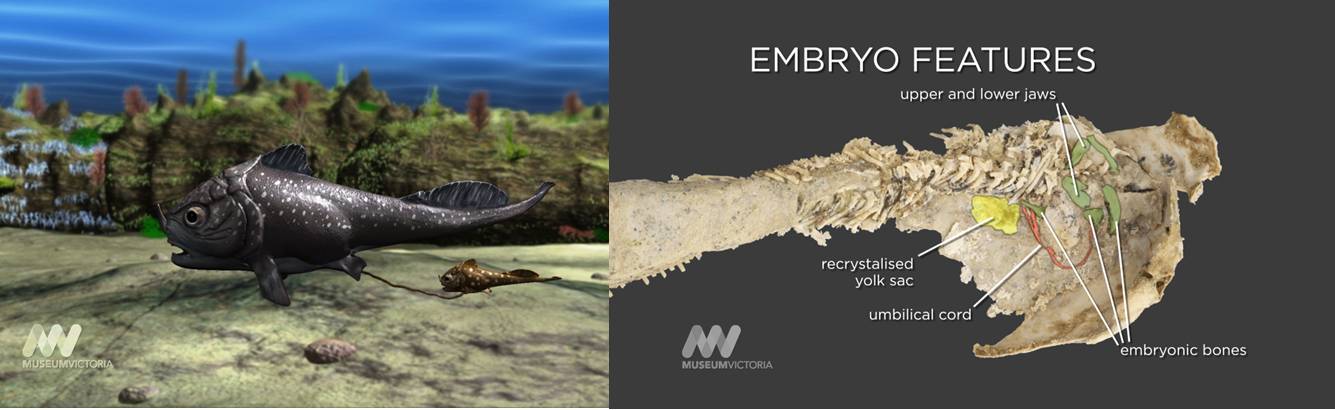
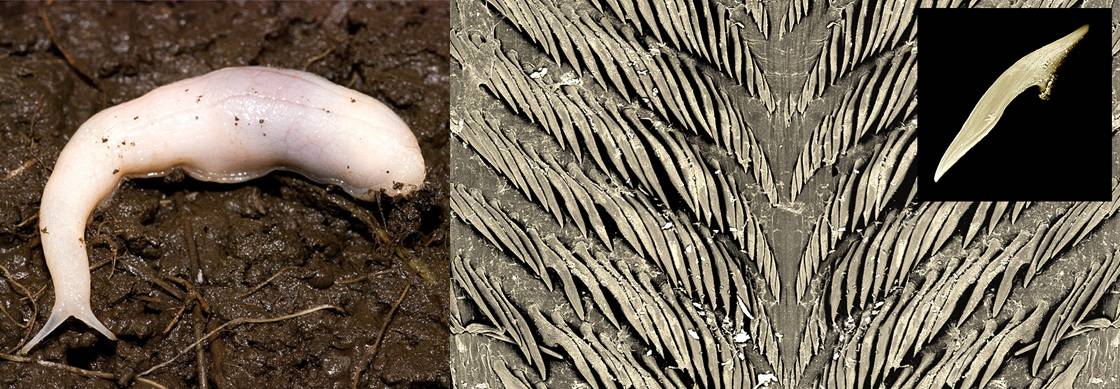
On the list are a pea-sized seahorse, caffeine-free coffee and bacteria that live in hairspray. The top 10 new species also include the very tiny (a snake just a slither longer than 4 inches or 104 millimeters), the very long (an insect from Malaysia with an overall length of 22.3 inches or 56.7 centimeters) the very old (a fossilized specimen of the oldest known live-bearing vertebrate) and the very twisted (a snail whose shell twists around four axes).

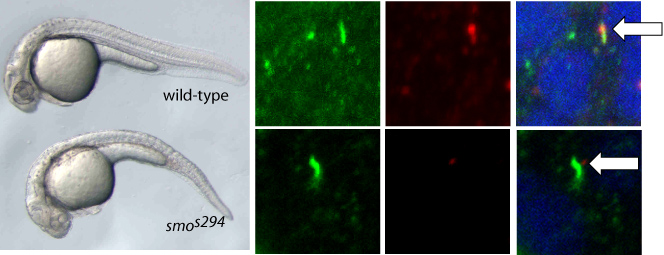
It is the concentration of a few signaling molecules that determines the fate of individual cells during the early development of organisms, say a team of molecular biologists writing in Current Biology.   Pia Aanstad of the University of Innsbruck and colleagues report that a variety of molecular mechanisms accounts for the interpretation of the concentration of the signaling molecule Hedgehog. 

The development of an organism is a complex process to which a dozen or hundreds of signaling molecules contribute. Some of these molecules have dozens of functions in the fruit fly and in humans alike.
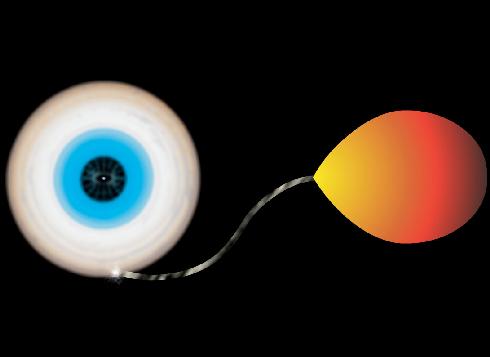
Pulsars are superdense neutron stars, the remnants left after massive stars have exploded as supernovae. Their powerful magnetic fields generate lighthouse-like beams of light and radio waves that sweep around as the star rotates. Most rotate a few to tens of times a second, slowing down over thousands of years.