Banner
Pilot Study: Fibromyalgia Fatigue Improved By TENS Therapy

Fibromyalgia is the term for a poorly-understood condition where people experience pain and fatigue...

High Meat Consumption Linked To Lower Dementia Risk

Older people who eat large amounts of meat have a lower risk of dementia and cognitive decline...

Long Before The Inca Colonized Peru, Natives Had A Thriving Trade Network

A new DNA analysis reveals that long before the Incan Empire took over Peru, animals were...

Mesolithic People Had Meals With More Tradition Than You Thought

The common imagery of prehistoric people is either rooting through dirt for grubs and picking berries...

User picture.
News StaffRSS Feed of this column.

News Releases From All Over The World, Right To You... Read More »

Blogroll

Dutch firm Nexus Technology enters the market for laptop accessories with a new patented liquid cooling solution. The TDD-9000 is a soft black velvet blanket with inside a gel-like liquid. The patented liquid has unique heat dissipating characteristics and works completely passive and noiseless.

"When you put the laptop cooling pad on your lap you will feel your lap turn colder within 10 seconds," says Michael van der Jagt, CEO of Nexus Technology. "The Taiwanese testing institute SGS Taiwan has done independent tests that support these claims.

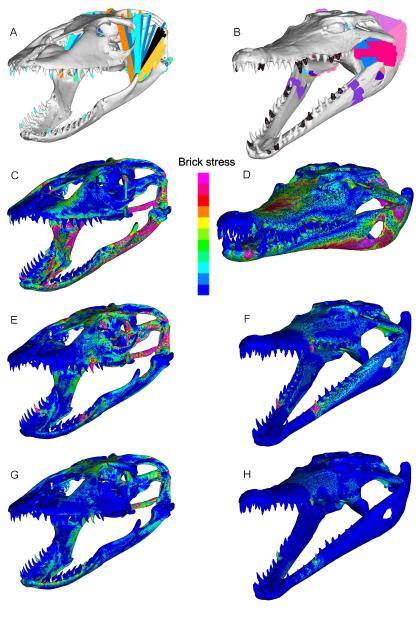
A new study has shown that the effectiveness of the Komodo Dragon bite is a combination of highly specialized serrated teeth and venom and the authors say this dismisses the widely accepted theory that prey die from septicemia caused by toxic bacteria living in the dragon's mouth.

Using sophisticated medical imaging techniques, an international team led by Dr Bryan Fry from the University of Melbourne have revealed that the Komodo Dragon (Varanus komodoensis) has the most complex venom glands yet described for any reptile, and that its close extinct relative Megalania was the largest venomous animal to have lived.
A team of Vanderbilt University Medical Center investigators say they have cracked one of clinical medicine's enduring mysteries – namely, why the once-effective tuberculosis vaccine no longer prevents the bacterial lung infection that kills more than 1.7 million people worldwide each year. 

The solution could lead to an improved TB vaccine and also may offer a novel platform for vaccines against other pathogens. 

The current TB vaccine, known as BCG (bacille Calmette-Guérin), has been around since the 1920s. It was made by weakening (attenuating) a strain of bacteria that causes tuberculosis in cows and that genetically is 98 percent identical to the human TB germ. 
The secret to any good recipe is knowing how things happen in a system and the recipe for diseases is no different.  Many diseases have crucial proteins which change the dynamics of cells from benign to deadly. New findings from an international collaboration involving McGill University, the Research Institute of the McGill University Health Centre (MUHC) and the Human Proteome Organisation (HUPO) just made identifying these changes one step easier. Their findings published in Nature Methods, show how to improve protein analysis to tease out relevant potential disease-causing molecules.
Since April 15 and 17, 2009, when the first two cases of novel influenza A (H1N1) infection were identified from two southern California counties, novel influenza A (H1N1) cases have been documented throughout the world, with most cases occurring in the United States and Mexico.

In the United States, early reports of illnesses associated with novel influenza A (H1N1) infection indicated the disease might be similar in severity to seasonal influenza, with the majority of patients not requiring hospitalization and only rare deaths reported, generally in persons with underlying medical conditions.
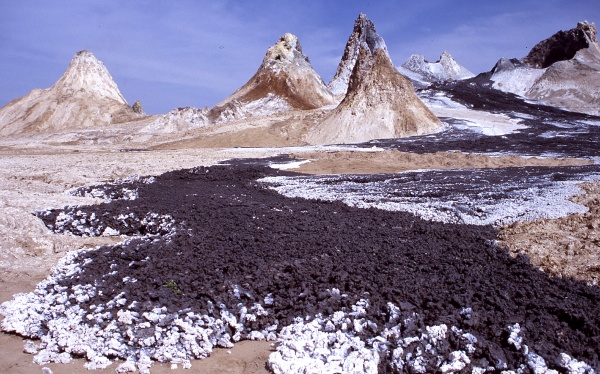
If you didn't know better, you might think the Oldoinyo Lengai volcano in Tanzania was proof of alchemy.

There, in the ancient East African Rift at a place known to local Maasai people as the Mountain of God, Oldoinyo Lengai spews forth carbon dioxide-laden lavas called carbonatites. The carbonatites line the volcano's flanks like snowballs.  Oldoinyo Lengai is the only place on Earth where carbonatites currently erupt -- and where carbon dioxide from a volcano doesn't vanish into thin air as a gas.

In a paper published this week in the journal Nature, scientists report the results of a study of Oldoinyo Lengai's volcanic gas emissions, sampled by the team during a carbonatite lava eruption.