Banner
Pilot Study: Fibromyalgia Fatigue Improved By TENS Therapy

Fibromyalgia is the term for a poorly-understood condition where people experience pain and fatigue...

High Meat Consumption Linked To Lower Dementia Risk

Older people who eat large amounts of meat have a lower risk of dementia and cognitive decline...

Long Before The Inca Colonized Peru, Natives Had A Thriving Trade Network

A new DNA analysis reveals that long before the Incan Empire took over Peru, animals were...

Mesolithic People Had Meals With More Tradition Than You Thought

The common imagery of prehistoric people is either rooting through dirt for grubs and picking berries...

User picture.
News StaffRSS Feed of this column.

News Releases From All Over The World, Right To You... Read More »

Blogroll
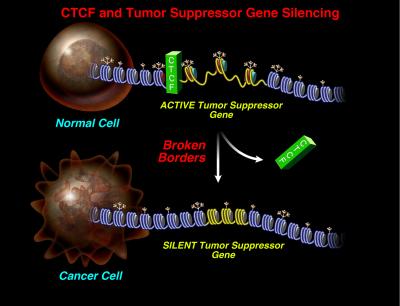
Our genome is a patchwork of neighborhoods that couldn't be more different: Some areas are hustling and bustling with gene activity, while others are sparsely populated and in perpetual lock-down. Breaking down just a few of the molecular fences that separate them blurs the lines and leads to the inactivation of at least two tumor suppressor genes, according to researchers at the Salk Institute for Biological Studies. 

Their findings published in the May 15, 2009 issue of Molecular Cell explain how a single event can put a cell well ahead on the road to becoming a tumor cell.
According to a Time magazine article, “The Male Minority,” women make up almost 60 percent of undergraduate students nationwide.   Science, technology and math are one of the few areas where men have superior numbers but the women are winning there too.

The Spelman College robotics team, SpelBots, tied for first place in the RoboCup Japan 2009 Standard Platform League Nao League humanoid soccer championship on May 10, 2009, in Osaka, Japan.

In today's connected world, networking know-how can be a key resource in finding jobs and business opportunities, but a series of new studies by Dr. Yuval Kalish of the Leon Recanati Graduate School of Business Administration at Tel Aviv University suggests that, in some cases, networking can do more harm than good.

"If you're at the intersection of two previously unconnected niches of a network, you're occupying what I call a 'structural hole,'" says Dr. Kalish. Filling that space can lead to prestige, opportunities and power ― or it may have quite the opposite effect.

When bees collect nectar, how do they hold onto the flower? Cambridge University scientists have shown that it is down to small cone-shaped cells on the petals that act like 'velcro' on the bees' feet. 

New research, published online in today's Current Biology, shows that bumblebees can recognise the texture of petal surfaces by touch alone. More importantly, they choose to land on petals with conical cells that make it easier to grip, rather than on flat, smooth surfaces. With this extra grip, they can extract nectar from the flower more efficiently. 
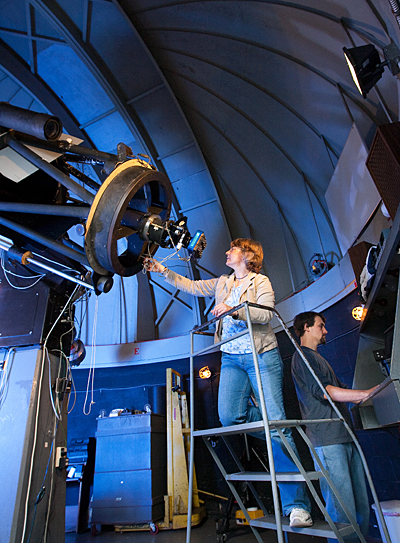
The Whole Earth Telescope (WET), a worldwide network of observatories coordinated by the University of Delaware, is synchronizing its lenses to provide round-the-clock coverage of a cooling star. As the star dims in the twilight of its life, scientists hope it will shed light on the workings of our own planet and other mysteries of the galaxy.

The dying star, a white dwarf identified as WDJ1524-0030, located in the constellation Ophiuchus in the southern sky, is losing its brightness as it cools, its nuclear fuel spent. It will be monitored continuously from May 15 to June 11 by WET, a global partnership of telescopes which was formed in 1986.
Scientists at South Dakota State University are exploring the mechanisms by which a substance derived ultimately from Red Sea coral could help treat skin cancer.

The study built on earlier work by SDSU distinguished professor Chandradhar Dwivedi’s lab looking at the chemopreventive effects of sarcophine-diol, made from a substance called sarcophine that can be isolated from soft coral found in the Red Sea. The new study carried the work beyond looking at sarcophine-diol’s possible use in prevention of skin cancer to consider its potential as a tool in therapies to actually treat skin cancer.

“We are finding that sarcophine-diol could be used both for chemoprevention and as a chemotherapeutic agent,” Dwivedi said.