Most of the world's glaciers are retreating as the planet gets warmer but some, including glaciers south of the equator in South America and New Zealand, are growing.
At least for New Zealand glaciers, scientists have offered an explanation: for the last 7,000 years, they have often moved out of step with glaciers in the Northern Hemisphere, pointing to strong regional variations in climate, the authors write in Science.
Conventional wisdom holds that during the era of human civilization, climate has been relatively stable. The new study is the latest to challenge this view, by showing that New Zealand's glaciers have gone through rapid periods of growth and decline during the current interglacial period known as the Holocene.
MicroRNAs are single-stranded snippets that, not long ago, were given short shrift as genetic junk. Now that studies have shown they regulate genes involved in normal functioning as well as diseases such as cancer, everyone wants to know: What regulates microRNAs?
Scientists at Johns Hopkins were surprised to find an elegantly simple answer: touch.
In a new study, published in the Proceedings of the National Academy of Sciences, the researchers discovered that cell-to-cell contact revs up the manufacture of these small but mighty molecules.
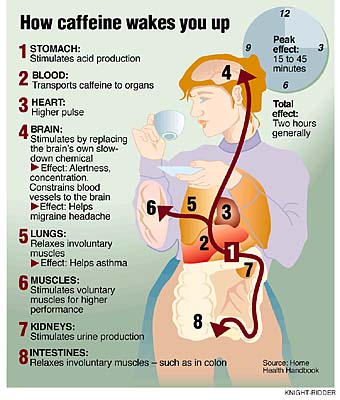
Ever miss your daily cup of coffee and subsequently get a pounding headache? According to reports from consumers of coffee and other caffeinated products, caffeine withdrawal is often characterized by a headache, fatigue, feeling less alert, less energetic and experiencing difficulty concentrating. Caffeine withdrawal is at its worst between 24 to 48 hours and lasts up to a week.
Everyone is blaming H1N1, but could a different strain of Influenza be the cause of Mexican deaths?
A new study by University of Maryland researchers suggests that the potential for an avian influenza virus to cause a human flu pandemic is greater than previously thought and the results also illustrate how the current H1N1 swine flu outbreak likely came about.
Regular hand washing is recommended by both the WHO and the NHS as one of the most effective ways of controlling infections. Using a hand sanitizer when soap and water are not available is also a good idea.


 Pilot Study: Fibromyalgia Fatigue Improved By TENS Therapy
 High Meat Consumption Linked To Lower Dementia Risk
 Long Before The Inca Colonized Peru, Natives Had A Thriving Trade Network
 Mesolithic People Had Meals With More Tradition Than You Thought