During a seminar several years ago, University of Chicago paleontologist David Jablonski fielded a hostile question: Why bother classifying organisms according to their physical appearance, let alone analyze their evolutionary dynamics, when molecular techniques had already invalidated that approach?
With more than a few heads in the audience nodding their agreement, Jablonski, the William Kenan Jr. Professor in Geophysical Sciences, saw more work to be done. The question launched him on a rigorous study that has culminated in a new approach to reconciling the conflict between fossil and molecular data in evolutionary studies.
Autism is a complex brain disorder that strikes in early childhood. The condition disrupts a child's ability to communicate and develop social relationships and is often accompanied by acute behavioral challenges. The Centers for Disease Control and Prevention report that one in 150 American children is diagnosed with an autism spectrum disorder; the disorder affects four times as many boys as girls. The diagnosis of autism has expanded tenfold in the last decade.
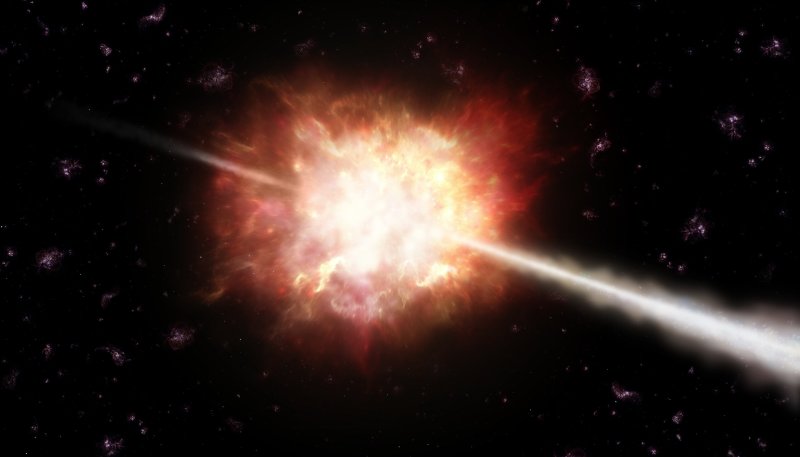
The farthest we have 'seen' in space just got a little farther away, thanks to ESO's Very Large Telescope and GRB (Gamma Ray Burst) 090423.
VLT has shown that a faint gamma-ray burst detected last Thursday is the signature of the explosion of the earliest, most distant known object in the Universe (a redshift of 8.2). The explosion apparently took place more than 13 billion years ago, only about 600 million years after the Big Bang.
An international team of researchers has determined key structural features of the largest known virus -the mimivirus, called by some a possible "missing link" between viruses and living cells. It was discovered accidentally by French scientists in 1992 but wasn't confirmed to be a virus until 2003. The findings may help determine whether the unusual virus causes any human diseases.
The virus infects amoebas, but it is thought to possibly be a human pathogen because antibodies to the virus have been discovered in pneumonia patients. However, many details about the virus remain unknown, said Michael Rossmann, Purdue University's Hanley Distinguished Professor of Biological Sciences.
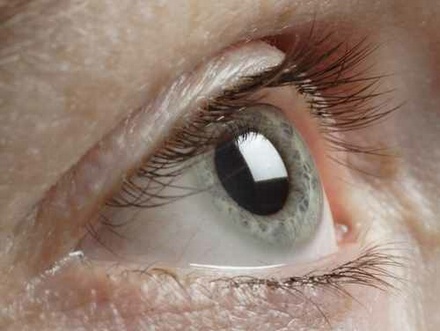
Facial recognition is not as automatic as it may seem, according to researchers who have identified specific areas in the brain devoted solely to picking out faces among other objects we encounter.
Two specific effects have been established as being critical for facial recognition – holistic processing (in which we view the face as a whole, instead of in various parts) and left-side bias (in which we have a preference for the left side of the face). Psychologists Janet H. Hsiao from the University of Hong Kong and Garrison W. Cottrell from the University of California, San Diego wanted to test if these effects were specific for facial recognition or if they help us to identify other objects as well.
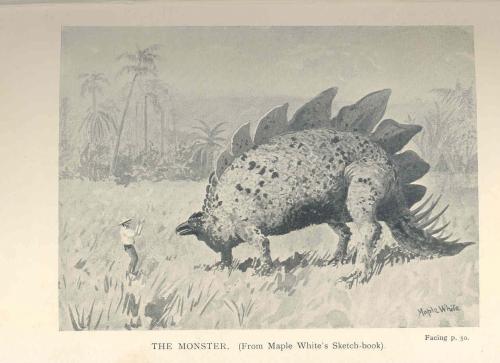
"The Lost World", published in 1912, is not Sir Arthur Conan Doyle's most famous work but his account of an isolated community of dinosaurs that survived the catastrophic extinction event 65 million years ago has lasted into modern times in a way Sherlock Holmes has not -
at least until the new Robert Downey movie comes out with him in the starring role.


 Pilot Study: Fibromyalgia Fatigue Improved By TENS Therapy
 High Meat Consumption Linked To Lower Dementia Risk
 Long Before The Inca Colonized Peru, Natives Had A Thriving Trade Network
 Mesolithic People Had Meals With More Tradition Than You Thought